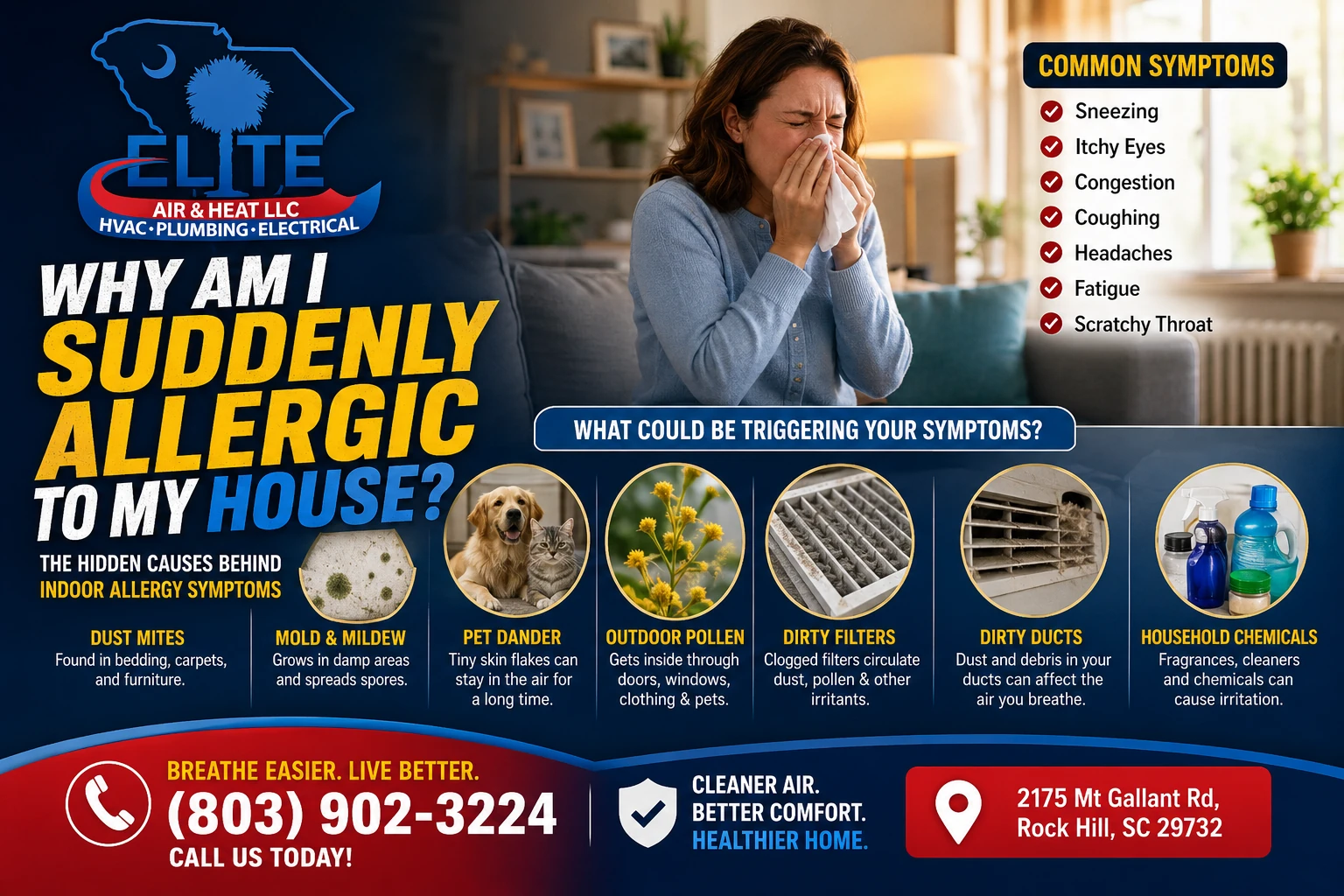

If you feel like you are suddenly allergic to my house, the problem may not be your home itself. It may be something inside the home that has recently changed, increased, or become more concentrated. Dust, mold, pet dander, pollen, dirty air filters, and poor ventilation can all cause allergy-like symptoms indoors.
You may notice sneezing, itchy eyes, congestion, coughing, headaches, or irritated skin shortly after coming home. These symptoms can appear suddenly, even if you have lived in the same house for years. Indoor air conditions can change over time, and your sensitivity to certain allergens can change as well.
Your Allergy Trigger Could Be Indoors
Dust, mold, and other hidden irritants may be affecting your home. Call now to get professional help.
Why Do I Suddenly Feel Allergic Inside My House?
Feeling allergic inside your home usually means you are being exposed to an indoor irritant or allergen. The source may have been present for a while but recently reached a level that your body can no longer tolerate comfortably.
Common indoor allergy symptoms include:
- Sneezing
- Stuffy or runny nose
- Itchy or watery eyes
- Scratchy throat
- Dry coughing
- Wheezing
- Headaches
- Skin irritation
- Fatigue
- Trouble sleeping
One important clue is when your symptoms appear. If you feel worse at home and better after leaving for several hours, your indoor environment may be contributing to the problem.
Can Allergies Develop Suddenly in Adults?
Yes, allergies can develop later in life. You can become sensitive to substances that never bothered you before, including dust mites, mold spores, pet dander, or pollen.
Your immune system can change over time. Illness, stress, hormonal changes, prolonged allergen exposure, or changes in your environment may influence how your body reacts.
It is also possible that you are not experiencing a true allergy. Dry air, household chemicals, smoke, fragrances, and poor ventilation can irritate the eyes, nose, throat, and lungs in ways that feel similar to allergies.
A medical professional can help determine whether your symptoms are caused by an allergy, irritation, infection, or another health condition. However, improving indoor air quality may still help reduce discomfort.
What Inside My House Could Be Causing Allergy Symptoms?
Several common household contaminants can circulate through your living space and trigger symptoms.
Dust Mites
Dust mites are microscopic organisms that live in mattresses, pillows, rugs, upholstered furniture, and bedding. They feed on tiny flakes of skin and thrive in warm, humid environments.
You may be more exposed to dust mites if:
- Bedding is not washed regularly
- Bedrooms have thick carpets
- Indoor humidity is high
- Mattresses and pillows are older
- Upholstered furniture collects dust
Dust mite particles can become airborne when you make the bed, vacuum, sit on furniture, or walk across carpet.
Mold and Mildew
Mold can grow anywhere moisture is present. Common locations include bathrooms, basements, crawl spaces, kitchens, laundry rooms, window frames, and areas near plumbing leaks.
Sometimes mold is visible. In other cases, it may grow behind walls, under flooring, inside ductwork, or near an HVAC drain system.
Possible signs of hidden moisture or mold include:
- Musty odors
- Water stains
- Peeling paint
- Condensation on windows
- Damp carpet
- Recurring bathroom mildew
- Recent roof or plumbing leaks
Mold spores can travel through the air and may contribute to coughing, congestion, itchy eyes, and respiratory irritation.
Pet Dander
Pet dander comes from tiny flakes of skin shed by cats, dogs, and other animals. It can settle into furniture, carpets, bedding, and air ducts.
Even if you have owned a pet for years, your sensitivity may increase. Seasonal shedding, spending more time indoors, or reduced ventilation can also increase the amount of dander in the air.
Pet allergens can remain in a house for a long time, even after the pet is no longer present.
Pollen Entering From Outdoors
Your home may feel like the source of your symptoms even when pollen begins outdoors.
Pollen can enter through:
- Open windows
- Doors
- Clothing
- Shoes
- Pets
- Gaps around windows and doors
- Outdoor air brought into the HVAC system
Once inside, pollen can settle on floors, bedding, furniture, and other surfaces. Your air conditioning system may continue circulating these particles throughout the house.
Dirty HVAC Filters
An air filter helps capture dust, pollen, pet hair, and other airborne particles before they circulate through the HVAC system.
When the filter becomes clogged, airflow may decrease and indoor contaminants may build up. A dirty filter can also place unnecessary strain on your heating and cooling equipment. New homes may need air filter replacements more often, especially when construction dust, drywall particles, and other fine debris remain in the indoor environment after building or renovation work.
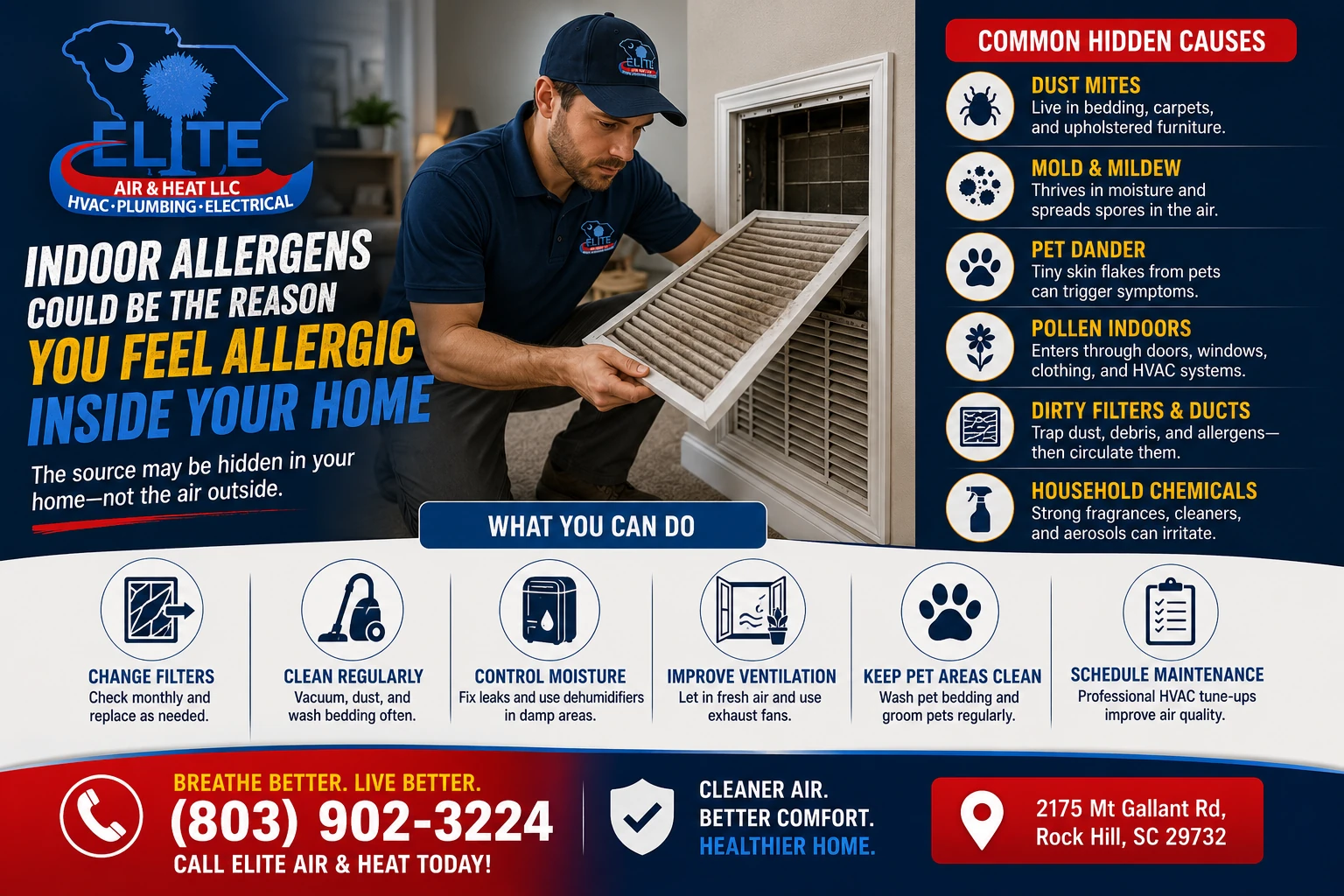
How often you should change the filter depends on:
- The filter type
- The number of people in the home
- Whether you have pets
- Local pollen levels
- Construction or renovation activity
- How often the system operates
Checking the filter regularly is one of the simplest steps you can take when you feel suddenly allergic to my house.

Why is My AC Running But Not Cooling?
Your AC is running, but your house still feels warm. Frustrating, right? This is one of the most common issues…
Dirty Air Ducts or HVAC Components
Dust and debris can collect inside return vents, supply vents, blower compartments, evaporator coils, and other HVAC components.
Not every home needs frequent duct cleaning, but an inspection may be helpful when there is visible debris, pest activity, mold growth, or heavy dust coming from the vents.
A dirty evaporator coil or clogged drain system can also create moisture problems that support microbial growth. Homeowners who want more precise control over airflow throughout the home may also benefit from learning about the impact of HVAC zoning on modern living, especially in properties with rooms that have different comfort needs.
Household Cleaning Products and Fragrances
Strong household chemicals may cause irritation that resembles an allergic reaction.
Possible triggers include:
- Scented candles
- Air fresheners
- Plug-in fragrances
- Aerosol sprays
- Bleach
- Strong disinfectants
- Laundry fragrances
- New paint
- Furniture polish
- Pest control products
Symptoms may appear after switching brands, deep cleaning, painting, remodeling, or bringing new furniture into the house.
Poor Indoor Ventilation
Modern homes are often built to reduce air leakage and improve energy efficiency. While this helps control heating and cooling costs, it can also trap pollutants indoors.
Without enough fresh air, moisture, odors, dust, and chemical vapors may accumulate.
Poor ventilation can be especially noticeable in:
- Bedrooms
- Bathrooms
- Basements
- Kitchens
- Home offices
- Recently renovated rooms
Improving airflow may reduce the concentration of indoor irritants.
Why Are My Allergies Worse When the Air Conditioner Is Running?
If symptoms become worse when the AC turns on, the system may be circulating particles that have collected in the home or HVAC equipment.
This does not always mean the air conditioner is creating the problem. It may simply be moving existing dust, pollen, dander, or mold spores from one area to another.
Possible causes include:
- A dirty filter
- Dusty return vents
- Leaky ductwork
- Moisture near the indoor unit
- Dirty blower components
- Contaminants inside ducts
- Poor humidity control
Your air conditioner also removes moisture from the air. If it is not operating properly, indoor humidity may remain too high, encouraging dust mites and mold growth.
Can Indoor Humidity Make Allergies Worse?
Yes. Both high and low humidity can create problems.
High Humidity
Excess moisture can support:
- Mold growth
- Mildew
- Dust mites
- Musty odors
- Condensation
Indoor humidity that stays too high may make the home feel sticky and uncomfortable.
Low Humidity
Air that is too dry can irritate your nose, throat, skin, and eyes. This irritation may feel similar to allergies, especially during colder months or when the heating system runs frequently.
Balanced humidity can improve comfort and help create a healthier indoor environment.
What Can I Do to Reduce Allergens in My Home?
Start with simple steps that reduce dust, moisture, and airborne particles.
Replace the HVAC Filter
Check the filter and replace it if it appears dirty or clogged. Use the filter type recommended for your HVAC system.
A filter that is too restrictive can reduce airflow, so choosing the highest-rated filter is not always the best option without professional guidance.
Clean High-Contact and Dust-Collecting Areas
Focus on:
- Bedding
- Curtains
- Ceiling fans
- Baseboards
- Return vents
- Upholstered furniture
- Rugs
- Pet sleeping areas
Wash bedding in hot water when appropriate and use a vacuum with a high-efficiency filter.
Control Moisture
Repair leaks quickly and use exhaust fans in bathrooms and kitchens. Make sure the HVAC condensate drain is working properly.
If certain areas stay damp, a dehumidifier may help.
Keep Outdoor Allergens Outside
Remove shoes near the entrance, wipe pets after outdoor activity, and avoid leaving windows open during high-pollen periods.
Changing clothes after yard work can also reduce the amount of pollen brought into bedrooms and living spaces.
Schedule HVAC Maintenance
Professional HVAC maintenance can identify airflow problems, moisture concerns, clogged drains, dirty components, and other issues that may affect indoor air quality.
An HVAC contractor can serve as a first line of defense against indoor pollution by identifying filtration, ventilation, humidity, and equipment issues that allow contaminants to circulate throughout the home.
A technician can also check whether your system is properly sized and operating efficiently. It can also be helpful to understand how heating services affect indoor air quality, since heating maintenance, filtration, duct condition, and humidity control all influence the air circulating through your home.
When Should I Seek Professional Help?
Consider contacting an HVAC professional when:
- Symptoms get worse when the system runs
- There is a musty smell near vents
- Humidity remains high
- Dust quickly returns after cleaning
- Some rooms feel damp or poorly ventilated
- The filter gets dirty unusually fast
- The HVAC system has not been serviced recently
Seek medical advice if symptoms are severe, persistent, or include difficulty breathing. Indoor air improvements can support comfort, but they should not replace appropriate medical care.
Breathe Easier in the Place You Call Home
Feeling like you are suddenly allergic to my house can be frustrating, especially when you cannot identify the cause. Your HVAC system, humidity levels, air filter, ventilation, and indoor moisture can all influence the quality of the air you breathe every day.
At Elite Air & Heat LLC, we help homeowners uncover HVAC-related issues that may contribute to poor indoor air quality. Our team can inspect your system, evaluate airflow, check for moisture concerns, and recommend practical solutions based on your home. A professional assessment can help you create a cleaner, more comfortable indoor environment without guessing at the cause.
Is Your Home Triggering Your Allergies?
Get professional help identifying hidden indoor allergens. Call now to breathe easier and feel comfortable at home.