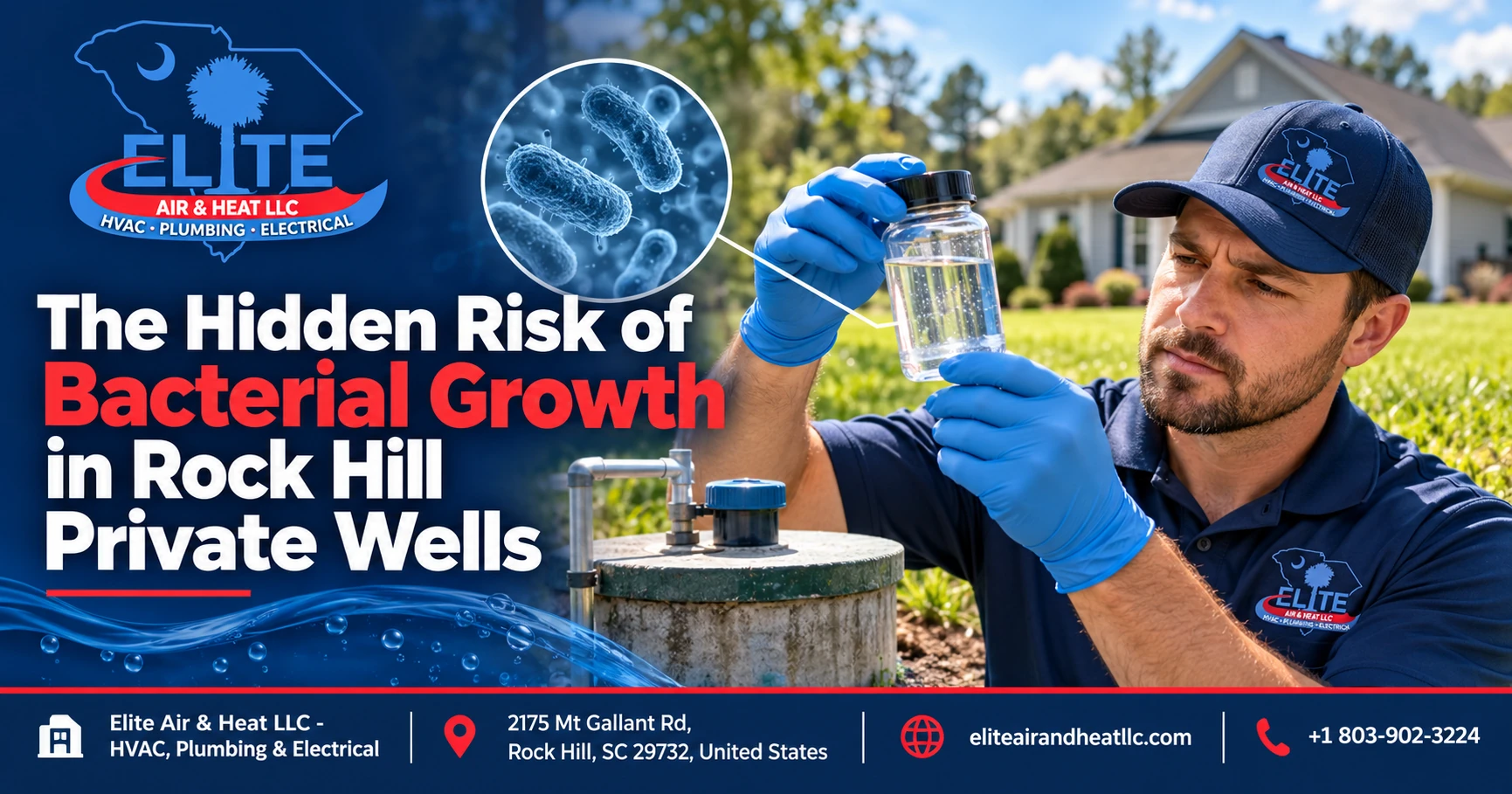

If your home uses a private well, the water may look crystal clear, taste normal, and still contain bacteria.
That’s what makes bacterial contamination different from many other well-water problems.
You cannot always see it.
You cannot always smell it.
And you often cannot taste it.
Here’s the plain answer: private wells can develop bacterial contamination from surface water intrusion, damaged well components, flooding, poor drainage, failing seals, nearby septic systems, or long periods of inactivity. The only way to know for certain is through proper water testing.
For homeowners with private wells, this is one of the most important health and safety issues to understand.
Why Private Wells Are Different
Unlike municipal water systems, private wells are not continuously monitored by a utility.
The homeowner is responsible for:
- Water quality testing
- Well maintenance
- Repairs
- Water treatment systems
- Protecting the well from contamination
Most wells provide safe, reliable water for decades.
The challenge is that contamination can occur without obvious warning signs.
How Bacteria Gets Into a Well
Many homeowners assume bacteria only enters through the groundwater itself.
In reality, contamination often starts at the surface.
Common causes include:
Damaged Well Caps
A missing or damaged well cap can allow:
- Insects
- Rodents
- Surface water
- Debris
To enter the well system.
Heavy Rain and Flooding
After severe storms, contaminated surface water can move toward the well and introduce bacteria.
This is especially important after hurricanes, tropical storms, and prolonged heavy rainfall.
Poor Drainage Around the Well
Water should drain away from the wellhead.
Standing water near the well increases contamination risk.
Failing Well Seals
The sanitary seal helps prevent contaminants from entering around the casing.
When seals fail, contamination pathways can develop.
Nearby Septic System Problems
A failing septic system can introduce bacteria into surrounding groundwater.
This is where homeowners sometimes get into trouble.
The well itself may be functioning perfectly while contamination is occurring elsewhere on the property.
The Most Common Bacterial Concern
When water testing is performed, laboratories often test for:
Total Coliform Bacteria
Coliform bacteria are used as an indicator.
Their presence does not automatically mean the water is dangerous.
However, it suggests that contaminants may be entering the well.
E. coli
The presence of E. coli is more serious.
It typically indicates fecal contamination and requires immediate attention.
A good water-quality professional should explain the difference between these results and what actions are recommended.
Warning Signs You Should Not Ignore
Sometimes bacterial contamination creates obvious symptoms.
Sometimes it does not.
Possible warning signs include:
- Changes in water taste
- Unusual odors
- Cloudy water
- Recent flooding
- Recurring gastrointestinal illness
- Positive bacteria test results
- Slime buildup in plumbing fixtures
- Long periods without well maintenance
The absence of these signs does not guarantee the water is safe.
That’s why testing matters.
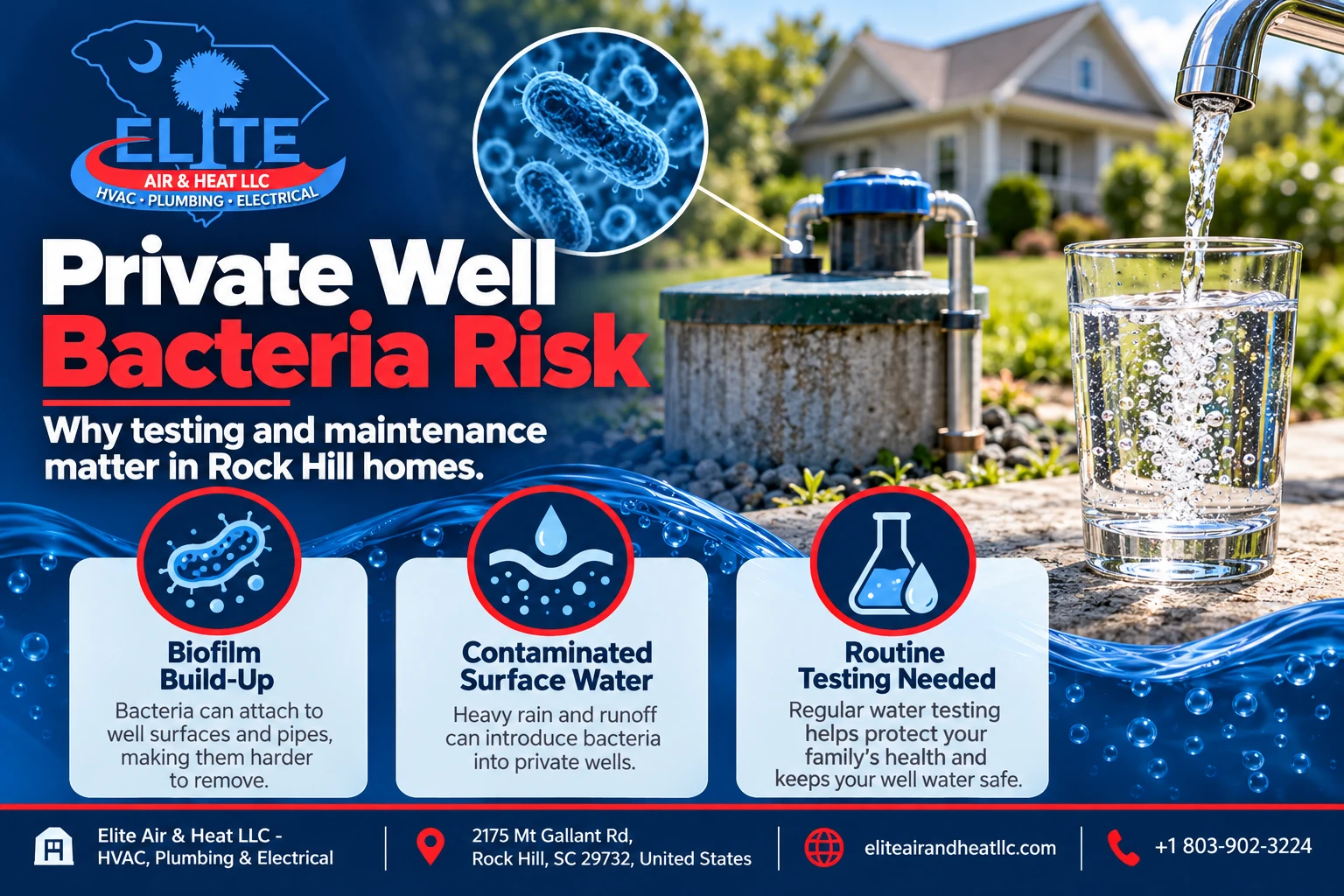
How Often Should a Private Well Be Tested?
The EPA recommends that private well owners test their water regularly, including annual testing for total coliform bacteria and nitrates, with additional testing when conditions change.¹
Additional testing is especially important after:
- Flooding
- Well repairs
- New construction nearby
- Changes in water quality
- Septic system issues
The goal is not to guess.
The goal is to verify.
What Homeowners Can Safely Check
You can inspect:
The Well Cap
Look for:
- Damage
- Missing screens
- Loose fittings
Drainage Around the Well
Water should flow away from the wellhead.
Visible Damage
Check for:
- Cracked casings
- Settling soil
- Exposed components
You can also keep records of previous water tests and note any changes in taste, odor, or appearance.
What Not to DIY
This is where homeowners sometimes get into trouble.
Avoid:
- Guessing at contamination levels
- Adding unapproved chemicals to the well
- Performing shock chlorination without understanding the process
- Ignoring positive bacterial test results
The wrong treatment approach can create additional problems or fail to address the source of contamination.
What a Professional Should Inspect
A thorough well evaluation may include:
- Water testing
- Well cap condition
- Well casing condition
- Sanitary seal inspection
- Drainage assessment
- Pressure tank evaluation
- Water treatment equipment inspection
- Septic separation concerns
A good contractor should help identify not only whether contamination exists, but how it may be entering the system.
Can Bacterial Contamination Be Fixed?
Often, yes.
Depending on the source, solutions may include:
- Shock chlorination
- Well repairs
- Well cap replacement
- Drainage improvements
- Water treatment systems
- UV disinfection systems
- Addressing nearby contamination sources
The correct solution depends on the cause.
Simply disinfecting the well without fixing the entry point may only provide a temporary result.
The Bottom Line
If you only remember one thing, remember this:
Clear water is not the same thing as safe water.
One of the hidden risks of private well ownership is that bacterial contamination can develop without obvious signs. The only reliable way to know what is in your water is through testing.
If your property has experienced flooding, well damage, septic issues, or it has simply been a while since your last water test, the next step is testing not guessing.
A good water-quality professional should be able to explain the results, identify potential contamination sources, and help you understand whether treatment, repairs, or additional monitoring make the most sense for your well system.