

If your home was built in the late 1960s or 1970s, there’s a chance it contains aluminum branch-circuit wiring.
That fact alone should not cause panic.
But it is something homeowners should understand, especially if you’re planning renovations, adding electrical loads, purchasing the home, or experiencing electrical issues.
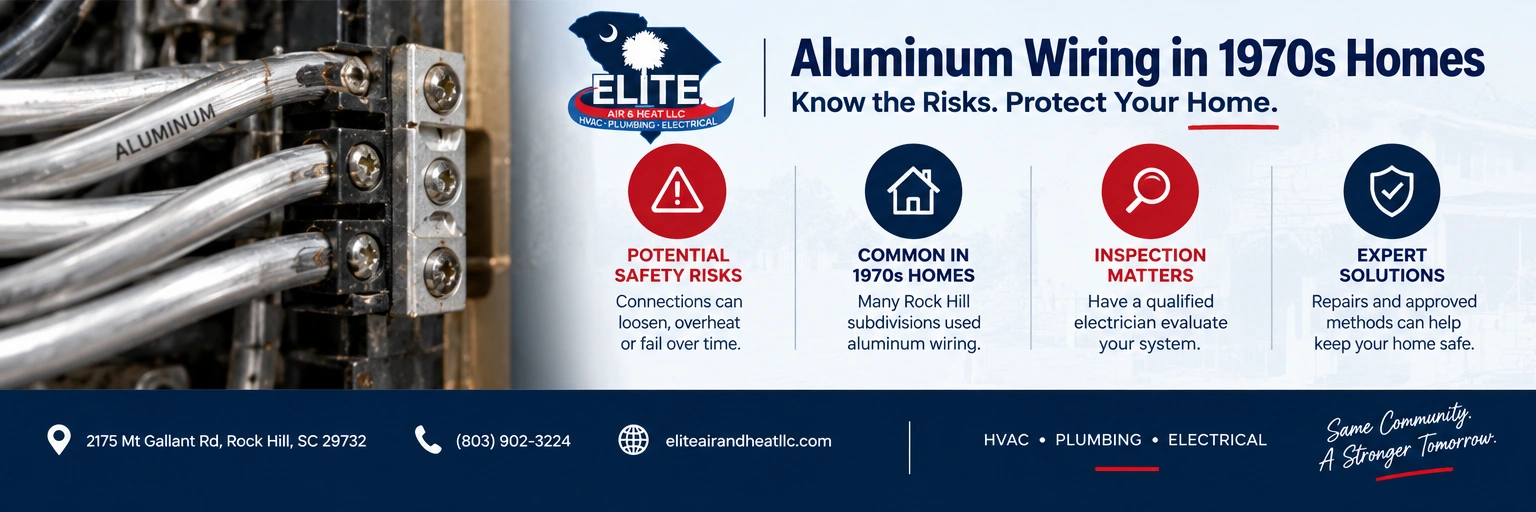
Here’s the plain answer: aluminum wiring is not automatically dangerous, but the connections are where problems often develop. Loose connections, overheating, and improper repairs are what create most of the risk, not the aluminum wire itself.
Why Was Aluminum Wiring Used?
During the late 1960s and early 1970s, copper prices increased significantly.
Builders across the country began using aluminum wiring for many residential branch circuits because it was less expensive and more readily available.
Thousands of homes were built this way.
Many of those systems are still operating today.
The issue is that aluminum behaves differently than copper.
What Makes Aluminum Wiring Different?
Aluminum expands and contracts more than copper when electrical loads heat and cool the wire.
Over time, this movement can cause connections to loosen.
When a connection loosens:
- Electrical resistance increases
- Heat increases
- Arcing can occur
- Devices can fail
- Fire risk increases
This is where homeowners sometimes get into trouble.
The wiring hidden inside the walls may be perfectly fine, while a loose connection at an outlet, switch, light fixture, or breaker creates the actual problem.
Warning Signs of Aluminum Wiring Problems
Many homeowners never know they have aluminum wiring until an electrician points it out.
Common warning signs include:
Warm Outlets or Switches
Electrical devices should not feel hot to the touch.
Warmth can indicate a loose connection.
Flickering Lights
Occasional flickering may seem minor, but recurring flickering can point to connection issues.
Burning Odors
A burning or overheated electrical smell should always be investigated immediately.
Discolored Outlets
Scorch marks, discoloration, or melted plastic around outlets and switches are serious warning signs.
Tripping Breakers
Breakers can trip when connections become unstable or overloaded.
Does Aluminum Wiring Mean You Need a Full Rewire?
Not necessarily.
This is one of the biggest misconceptions homeowners hear.
Many homes with aluminum wiring can be made significantly safer without a complete house rewire.
Possible solutions may include:
- Approved connector systems
- Copper pigtailing methods
- Replacement of incompatible devices
- Connection upgrades
- Panel and circuit evaluations
A good electrician should evaluate the condition of the system before recommending a whole-home rewire.
That does not automatically mean you need the most expensive option.
What a Professional Should Inspect
If aluminum wiring is present, a thorough inspection should include:
- Electrical panel connections
- Branch-circuit connections
- Outlets and switches
- Light fixtures
- Junction boxes
- Signs of overheating
- Previous repair methods
- Circuit loading
A good technician should be able to show you exactly what they found.
Why DIY Repairs Can Be Risky
This is not the place to learn electrical work from online videos.
Aluminum wiring requires specific connectors, approved repair methods, and proper torque on connections.
Simply attaching copper wire to aluminum wire with the wrong connector can create the very overheating problems you are trying to avoid.
What About Insurance Companies?
Some insurance carriers pay closer attention to homes with aluminum branch wiring.
Requirements vary by insurer.
In some cases, an inspection or documentation of corrective work may be requested before coverage is issued or renewed.
If you’re buying or selling a home with aluminum wiring, it’s worth checking with your insurance provider early in the process.
When a Rewire Makes Sense
A full rewire may be worth considering when:
- Major renovations are already planned
- Significant electrical upgrades are needed
- The wiring has been modified improperly over the years
- Multiple circuits show overheating issues
- The home lacks capacity for modern electrical demands
The goal is not to replace wiring simply because it is old.
The goal is to address actual safety concerns and create a reliable electrical system.
The Bottom Line
If you only remember one thing, remember this:
The biggest concern with aluminum wiring is usually the connections, not the wire itself.
Many 1970s homes continue operating safely with properly maintained aluminum wiring. The key is having the system inspected by an electrician familiar with aluminum wiring and approved repair methods.
A good electrician should be able to explain what is safe, what needs attention, and whether repairs or a full rewire make the most sense for your specific home, not simply recommend the biggest job available.