
When it comes to deciding where to install your HVAC system, the crawlspace often seems like a practical and space-saving option. After all, it’s out of sight, doesn’t take up precious indoor square footage, and provides easy access to ducts and mechanicals. But is this hidden nook under your house really the best place for something as vital as your heating and cooling system?
If you are planning a new system or a replacement, see our HVAC installation and replacement services in Rock Hill.
Let’s explore the real-world pros and cons of installing an HVAC unit in your crawlspace. From energy efficiency to humidity headaches, we’ll break it all down in a way that’s easy to follow—and maybe even a little fun.
Key Takeaways
- A crawlspace HVAC install saves interior space but adds real moisture, pest, and access challenges.
- The biggest risks — mold, air quality issues, and premature wear — mostly come from humidity, not the crawlspace itself.
- A sealed, insulated, and properly encapsulated crawlspace largely offsets these risks.
- Routine moisture control, ductwork checks, and easy access for technicians are the difference between a smooth setup and a maintenance headache.
- If your crawlspace is chronically damp or hard to access, relocating the system may cost less over time than fighting the environment.
How Does A Crawlspace Location Affect The Efficiency Of An HVAC System?
Let’s start with what everyone wants from their HVAC: efficiency. We want comfortable indoor temperatures without sky-high energy bills. But when your system lives in a crawlspace, a few things can either help or hinder that goal.
Pros for Efficiency:
- Shorter duct runs: A centrally located crawlspace often allows ducts to reach various rooms more directly, which can mean less air loss and more even temperatures throughout the home.
- No exposure to attic heat: Compared to attic installations (especially in the South), crawlspaces can be cooler environments in summer, helping HVAC systems operate in a less hostile thermal zone.
Cons for Efficiency:
- Poor insulation = energy loss: If your crawlspace is not sealed or insulated properly, it can work against your HVAC’s efficiency. Warm or cool air will leak out, and outside air will sneak in.
- Air leakage from ducts: Crawlspaces are notorious for housing leaky ductwork. Unless meticulously sealed, conditioned air may escape before it ever reaches your vents.
- Temperature swings: Crawlspaces often experience extreme swings in temperature from season to season, which can challenge consistent system performance.
In essence, your HVAC system can run efficiently in a crawlspace—but only if that crawlspace is properly conditioned and insulated. Otherwise, you might be throwing comfort (and dollars) right out the vent.
What Potential Problems Can Arise From Installing An HVAC Unit In A Crawlspace?
Ah yes, the fun part: problems. Crawlspaces are like the basements of the HVAC world—dark, damp, and full of surprises. While installing your HVAC system here might seem convenient at first, it’s not without risks.
Here are a few common issues homeowners face:
- Pest infestations: Rodents love crawlspaces. And guess what? They also love chewing on wires and building nests in ductwork.
- Mold and mildew: If there’s moisture in your crawlspace, mold will likely follow. That creates health risks and can reduce air quality throughout your home.
- Rust and corrosion: HVAC units and ductwork aren’t big fans of damp environments. Rust and deterioration can shorten your system’s lifespan.
- Access challenges: While it’s easier than an attic crawl, servicing an HVAC unit in a tight or unconditioned crawlspace is still uncomfortable for technicians. That discomfort can lead to higher service charges or rushed repairs.
The bottom line? If you put your HVAC system in a crawlspace, you’ll need to make sure it’s a friendly crawlspace—not a horror movie set.
How Does Humidity Impact HVAC Systems Located In Crawlspaces?
Humidity is the crawlspace’s arch-nemesis—and unfortunately, HVAC systems don’t like it much either.
When humidity levels rise in a crawlspace, it creates a perfect storm of HVAC headaches. Here’s how moisture can wreak havoc:
- Condensation: Moist air meeting cool ductwork can lead to condensation buildup, which eventually causes rust and mold growth.
- Air quality degradation: Mold spores and musty odors from a damp crawlspace can travel through your ducts, impacting indoor air quality and your family’s health.
- Compressor and coil strain: High humidity levels force your system to work overtime to remove moisture from the air, reducing efficiency and stressing key components.
- Accelerated component wear: Persistent dampness and temperature swings in an unconditioned crawlspace can corrode metal components and shorten equipment lifespan faster than an indoor mechanical closet would.
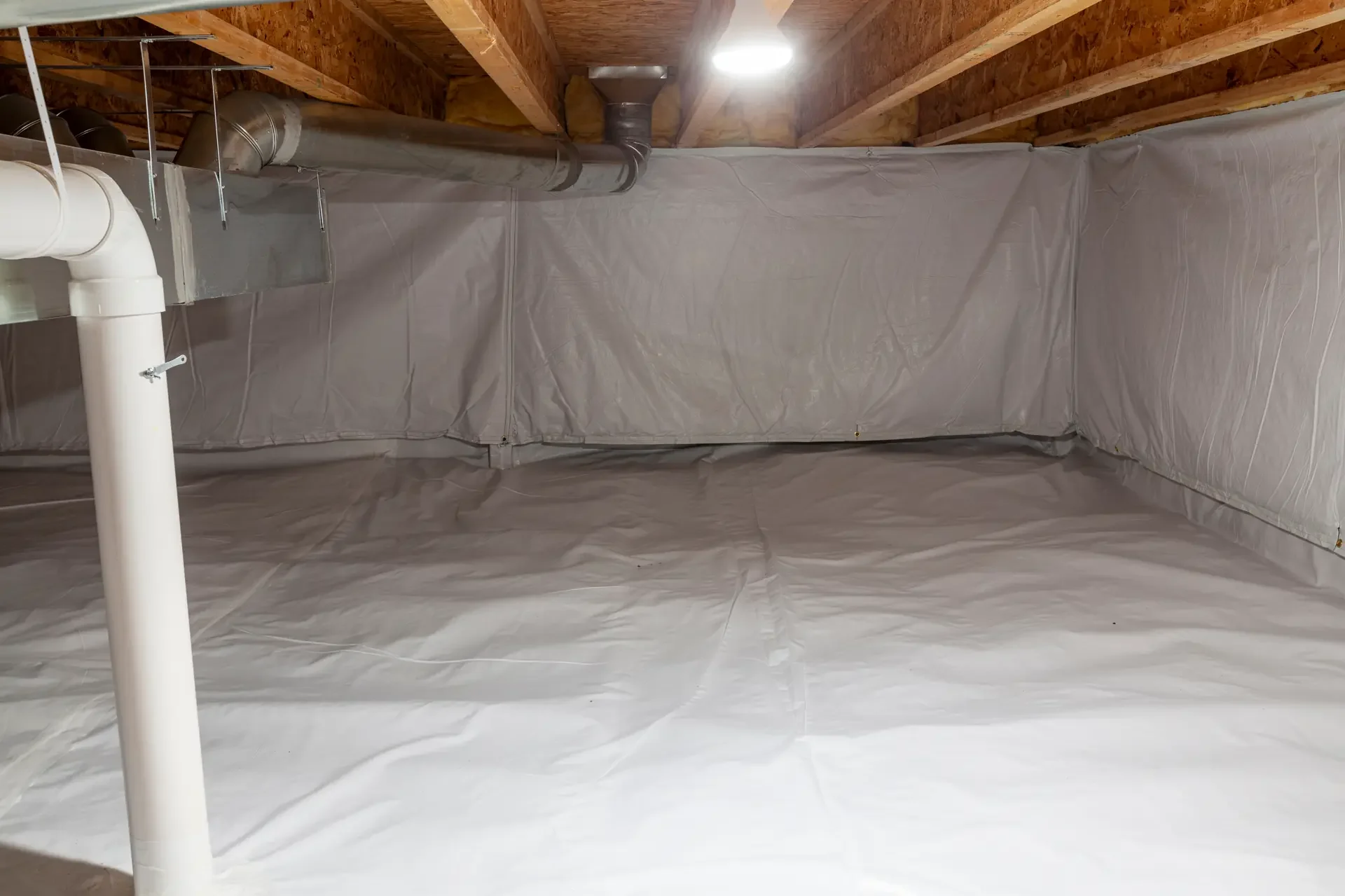
Solutions? You bet. A vapor barrier, dehumidifier, and proper crawlspace encapsulation can transform your under-home sauna into a dry, HVAC-friendly environment. But be prepared to invest—humidity control isn’t always cheap.
What Are The Main Advantages Of Placing An HVAC System In A Crawlspace?
We’ve talked a lot about the risks and pitfalls—but let’s not forget, there are some real perks to stashing your HVAC in the crawlspace.
Here’s why some homeowners and contractors still prefer this location:
- Saves interior space: No need to take up closet space or carve out an entire mechanical room inside the house.
- Easier ductwork distribution: Since the crawlspace sits beneath your floors, it provides a central hub for routing ducts throughout the home.
- Hidden aesthetics: Your HVAC system stays out of sight and out of mind. No bulky equipment tucked into corners or closet spaces.
- Improved airflow design: Especially in single-story homes, crawlspace installs can lead to better airflow balance than attic systems.
Homeowners comparing installation options may also want to review the different types of cooling systems available, since the ideal equipment and placement can vary depending on the home’s layout and comfort needs.
In summary:
- ✅ Keeps HVAC equipment out of sight
- ✅ Allows for more direct duct routing
- ✅ Frees up valuable indoor square footage
- ✅ Potentially lower installation costs (depending on layout)
As long as your crawlspace is well-maintained and conditioned, it can be a smart and convenient spot.
Are There Any Long-term Maintenance Considerations For HVAC Systems In Crawlspaces?
Absolutely—and this is where homeowners sometimes find themselves in hot (or cold) water. An HVAC system in a crawlspace may work well at first, but long-term maintenance is crucial to keep it running efficiently and safely.
Here’s what you need to consider over time:
1. Routine moisture control
- Regularly check vapor barriers, dehumidifiers, and drainage systems.
- Don’t let standing water linger—it leads to mold, rust, and wood rot.
Staying ahead of moisture really comes down to humidity control and mold prevention working together—if one slips, the other usually follows close behind.
2. Ductwork inspection
- Look for signs of pests, tears, or disconnections.
- Reseal ducts every few years or sooner if energy bills spike.
If an inspection turns up more than a minor issue, our ductwork services team can reseal, repair, or replace sections that are no longer doing their job.
3. System protection
- Elevate the unit off the ground to prevent water damage.
- Insulate refrigerant lines and exterior components from weather swings.
4. Pest control
- Schedule periodic pest inspections.
- Seal openings and vents that could invite critters.
5. Accessibility for servicing
- Ensure a clear, well-lit path to the unit.
- Make sure technicians can safely and easily access all components.
Pro tip: Budget for professional crawlspace inspections at least once a year, especially if you notice changes in air quality or system performance.
Should You Move Your HVAC Out of the Crawlspace?
Sometimes the more cost-effective fix isn’t more maintenance—it’s relocating the unit. If your crawlspace floods regularly, stays damp no matter what you do, or is difficult enough to access that routine service gets skipped, moving the system to a conditioned space (a closet, attic, or garage) can pay for itself in fewer repairs and a longer equipment lifespan.
A HVAC system relocation isn’t the right call for every home, but it’s worth pricing out against the cost of encapsulation, ongoing dehumidification, and the repairs that come with a consistently wet crawlspace. Elite Air & Heat’s technicians serve homes throughout Rock Hill, SC and the surrounding area and can walk your crawlspace to help you compare both options.
Final Thoughts: Is The Crawlspace Right For Your HVAC System?
Like any home improvement decision, placing your HVAC in the crawlspace is all about balance. If your crawlspace is dry, insulated, and well-ventilated—or better yet, fully encapsulated—it can be a convenient and efficient location.
But if it’s damp, cluttered, or unsealed, you’re asking your HVAC system to fight a daily uphill battle against mold, pests, and energy loss.
So, what’s the final verdict?
Choose a crawlspace install if:
- You’ve invested in encapsulation and moisture control
- You want to save interior living space
- Your home’s layout supports short, direct duct runs
Reconsider if:
- Your crawlspace is damp, unconditioned, or pest-prone
- You don’t want the long-term maintenance responsibility
- You’re concerned about indoor air quality risks
At the end of the day, your HVAC system deserves a home that helps it do its job—not a dungeon where it struggles to survive. Do your homework, consult a professional, and make sure your crawlspace is more than just a forgotten underworld—it could be the key to a healthier, more comfortable home.
If you’re also comparing equipment choices, reviewing the top HVAC systems for Rock Hill homes can help you understand which system types may be a better match for your home before deciding where the equipment should be installed.
Need help making that decision? A certified HVAC contractor can inspect your crawlspace, evaluate your home’s needs, and guide you toward the best installation location. Comfort starts with good planning—and maybe a dehumidifier.
Frequently Asked Questions
Is it bad to put your HVAC system in a crawlspace?
Not inherently. A crawlspace install works fine when the space is dry, encapsulated, and easy to access. Problems show up when the crawlspace is damp, unconditioned, or hard to reach for routine service.
How do I know if my crawlspace is too humid for HVAC equipment?
Signs include visible condensation on ductwork, a musty smell, standing water after rain, or a noticeable rise in your energy bills. A technician can measure crawlspace humidity directly during an inspection.
Does encapsulating my crawlspace protect my HVAC system?
Yes. A vapor barrier, sealed vents, and a dehumidifier significantly reduce the moisture that causes rust, mold, and premature wear, which is usually enough to make a crawlspace install a safe long-term option.
How much does it cost to move an HVAC system out of a crawlspace?
Cost depends on the new location, ductwork changes, and electrical or gas line work involved. A licensed HVAC contractor—like Elite Air & Heat, serving Rock Hill, SC and the surrounding area—can walk your crawlspace and give you a firm quote alongside the cost of encapsulation, so you can compare both options directly.
Keep Your Comfort System Safe Below the Surface
At Elite Air & Heat, LLC, we know that where you place your HVAC system matters just as much as which system you choose. If you’re considering a crawlspace installation—or already have one—we’re here to make sure it’s done right. Our team will inspect your crawlspace, check for moisture risks, and give you expert recommendations on how to keep your system running strong for years to come.
Whether it’s a new install, a replacement, or just routine maintenance, you can count on us to bring smart solutions, honest advice, and energy-efficient results.
Let’s make sure your crawlspace isn’t costing you comfort. Contact Elite Air & Heat, LLC today for a free evaluation and stay in control of your indoor climate—top to bottom.