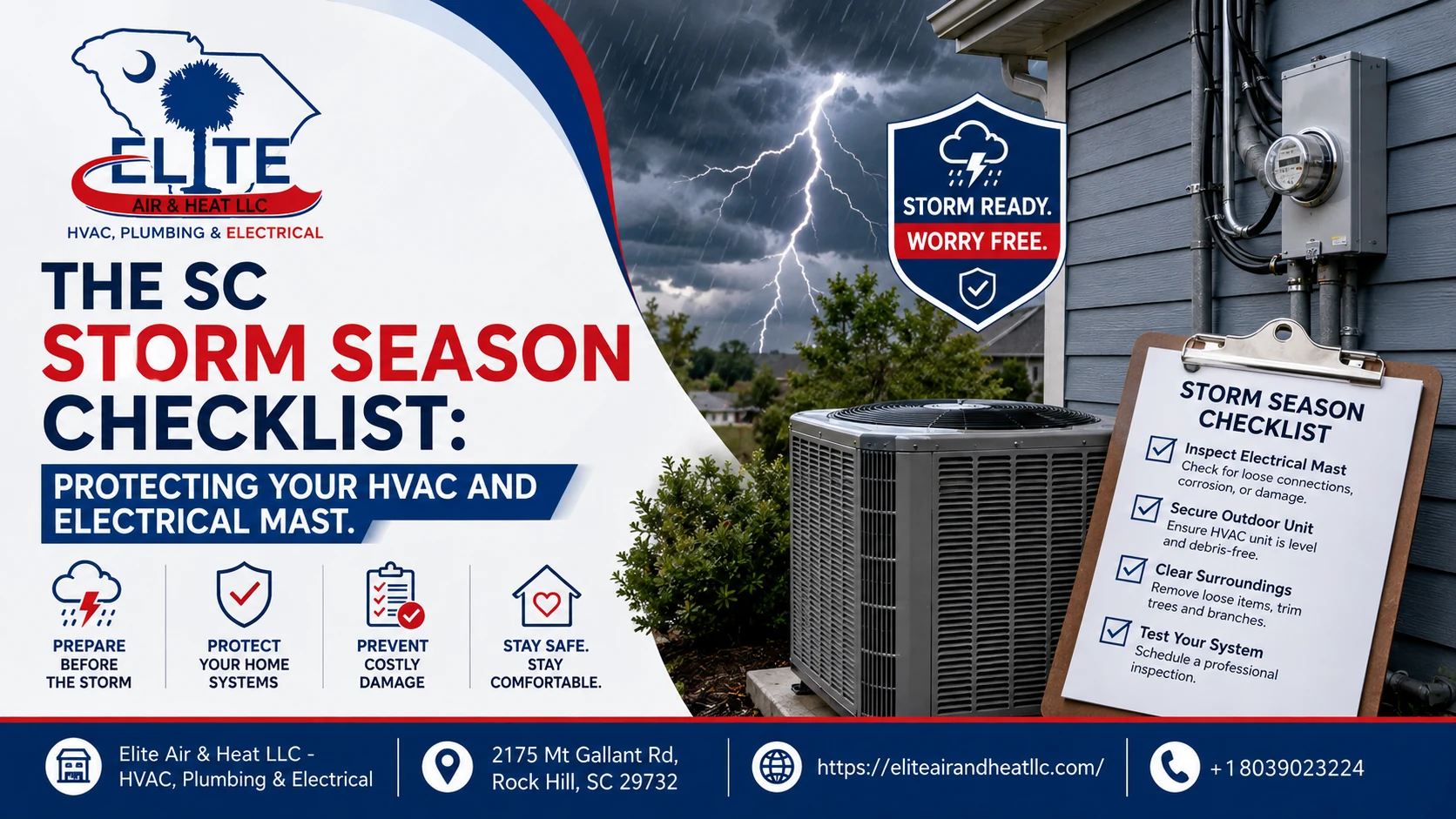

The South Carolina storm season is hard on homes.
Between lightning, heavy rain, falling limbs, power surges, and high winds, HVAC systems and electrical service equipment take more abuse than many homeowners realize.
Here’s the plain answer: most storm-related HVAC and electrical damage is preventable if the system is inspected and protected before severe weather hits.
That does not mean you need expensive upgrades everywhere.
But a few smart preventative steps can save thousands in equipment damage, emergency repairs, and insurance headaches later.
Storm Season Is Coming. Is Your Home Ready?
Protect your HVAC and electrical mast before severe SC weather hits. Schedule a professional inspection today.
HVAC Storm Protection Checklist
1. Clear debris around the outdoor unit
Before storm season starts:
- Remove leaves and branches
- Trim bushes back at least 2–3 feet
- Check for leaning trees overhead
- Make sure the condenser can drain properly
This helps reduce:
- airflow restriction,
- flood risk,
- and physical damage from debris.
A blocked condenser already struggles in the South Carolina heat. Storm debris makes it worse.
2. Check the condenser pad and mounting
Outdoor HVAC units should sit level and secure.
Over time, SC soil movement and erosion can cause:
- sinking pads,
- tilted units,
- refrigerant line stress,
- or poor drainage.
This becomes more important during heavy rain events.
A leaning condenser may eventually damage refrigerant lines or create drainage problems around the unit.
3. Install surge protection for the HVAC system
This is one of the most overlooked protections in the Carolinas.
Lightning does not need to directly hit your home to damage HVAC electronics.
Modern systems contain:
- control boards,
- variable-speed motors,
- smart thermostats,
- communicating systems,
- and sensitive electronics.
A power surge can destroy these components instantly.
A good electrician or HVAC contractor can install:
- whole-home surge protection,
- dedicated HVAC surge protection,
- or both.
The cheaper option is not always wrong, but surge protection is often far less expensive than replacing a variable-speed board or inverter system.
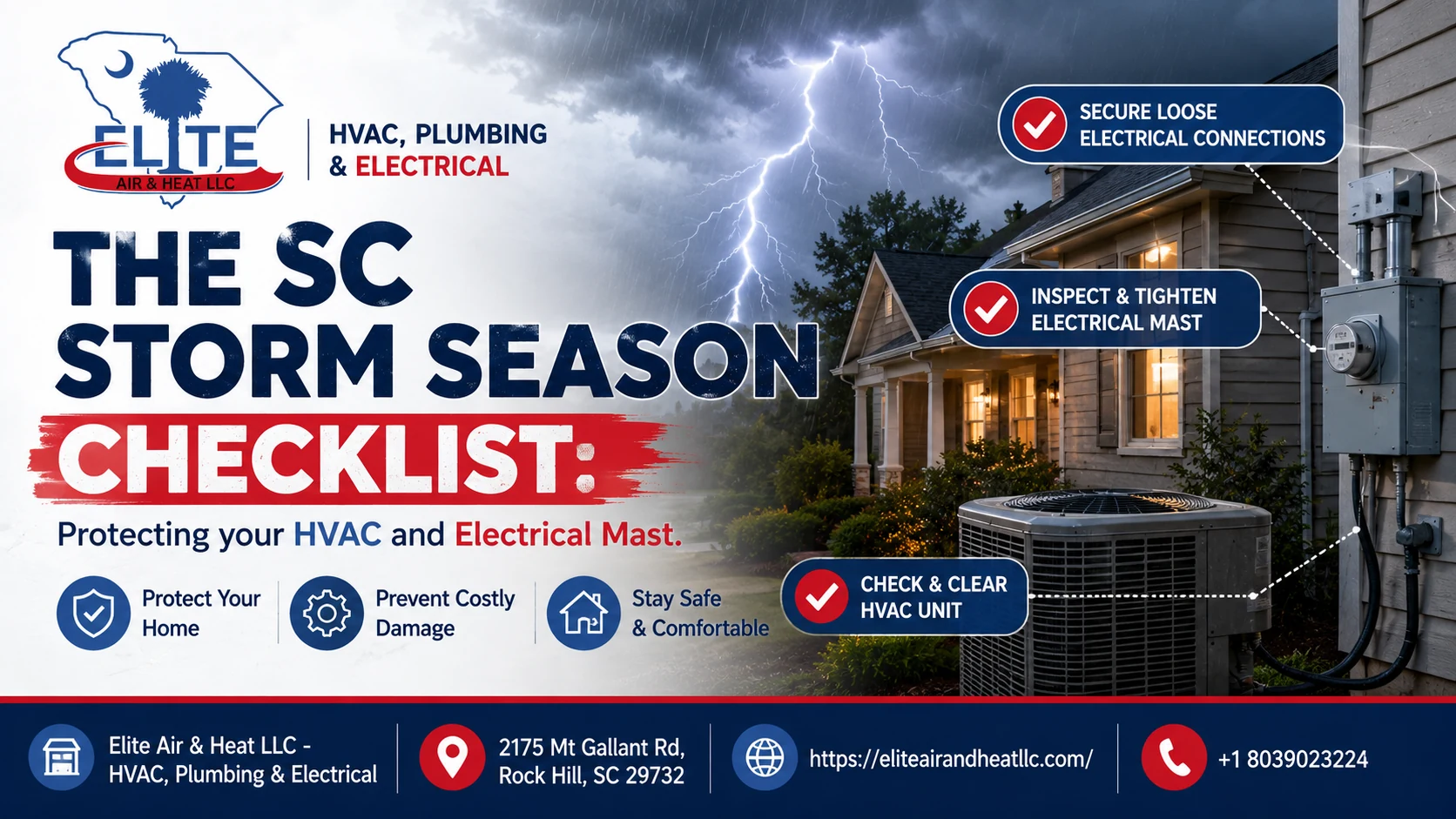
4. Inspect refrigerant lines and disconnects
A technician should check:
- refrigerant line insulation,
- electrical disconnect condition,
- conduit exposure,
- and wire protection.
Storm moisture and UV exposure can deteriorate these areas over time.
Loose electrical connections around outdoor equipment are especially risky during wet weather.
5. Know when to shut the system off
If flooding becomes possible:
- Turn the HVAC system off
- Avoid running submerged equipment
- Do not restart flood-exposed systems without inspection
Water-damaged HVAC equipment may contain:
- compromised motors,
- damaged wiring,
- contaminated insulation,
- or unsafe electrical components.
This is where homeowners sometimes get into trouble. The system may appear to run temporarily while hidden electrical damage continues worsening.

Why Your Water Heater Is Making a “Popping” Sound (And What Sediment Buildup Has to Do With It)
If your water heater sounds like it's popping, crackling, rumbling, or even making noises that resemble popcorn popping, you're not…

Electrical Mast Storm Checklist
What is the electrical mast?
The mast is the vertical pipe and wiring that connects your home to incoming utility power.
If storm damage affects the mast, you can lose power to the entire house.
In severe cases:
- wires can pull loose,
- water can enter the panel,
- or dangerous electrical hazards can develop.
1. Look for loose or leaning mast components
From the ground, safely inspect for:
- leaning conduit,
- loose attachment points,
- pulled cables,
- sagging service lines,
- or visible corrosion.
Do not touch utility wiring.
If anything looks damaged, contact the utility company or a licensed electrician.
2. Check tree clearance near service lines
Overhanging limbs are one of the biggest storm risks.
Branches rubbing utility lines during high wind can:
- damage insulation,
- pull connections loose,
- or create arcing hazards.
Tree trimming before storm season is much cheaper than emergency electrical repairs after a storm.
3. Inspect grounding and surge protection
A good electrician should evaluate:
- grounding rods,
- bonding connections,
- panel grounding,
- and whole-home surge protection.
Good grounding helps reduce damage pathways during nearby lightning events.
No system can guarantee total lightning protection.
But proper grounding and surge suppression significantly reduce risk.
4. Watch for water intrusion around the panel
After major storms, check for:
- water near the panel,
- rust,
- moisture stains,
- buzzing sounds,
- or tripping breakers.
Water intrusion around electrical equipment should never be ignored.
If the panel gets wet:
- avoid touching damaged areas,
- and have the system inspected before resetting breakers repeatedly.
5. Test backup power systems before storm season
If you have:
- a portable generator,
- standby generator,
- or battery backup,
test it before severe weather arrives.
A backup system that has not been maintained may fail exactly when needed most.
A good generator inspection should include:
- transfer switch operation,
- fuel condition,
- battery testing,
- and load testing.
What homeowners can safely do themselves
You can safely:
- clear debris,
- trim small vegetation,
- replace HVAC filters,
- test GFCIs,
- inspect visible equipment from the ground,
- and verify surge protection indicators.
You should not:
- open electrical panels,
- touch utility wiring,
- operate flood-damaged equipment,
- or spray water into electrical disconnects or HVAC components.
What a professional storm-prep inspection should include
A proper inspection should evaluate:
HVAC
- condenser condition,
- capacitor health,
- electrical connections,
- refrigerant line protection,
- drainage,
- surge protection,
- and airflow.
Electrical
- mast condition,
- grounding,
- panel overheating,
- surge protection,
- breaker condition,
- and weather exposure risks.
The goal is not to sell unnecessary upgrades.
The goal is identifying weak points before storm season turns them into emergency failures.
The bottom line
South Carolina storms are hard on HVAC and electrical systems because modern equipment contains more electronics, more sensitive controls, and more expensive components than older systems did.
If you only remember one thing, remember this:
A relatively small investment in inspection, surge protection, drainage correction, and preventative maintenance can prevent major repair costs after severe weather.
A good contractor should be able to explain:
- what is vulnerable,
- what is already protected,
- and what preventative steps actually make sense for your specific home.
Protect Your Home Before the Next Storm
Don’t wait for storm damage. Get your HVAC and electrical systems checked and ready for severe weather.