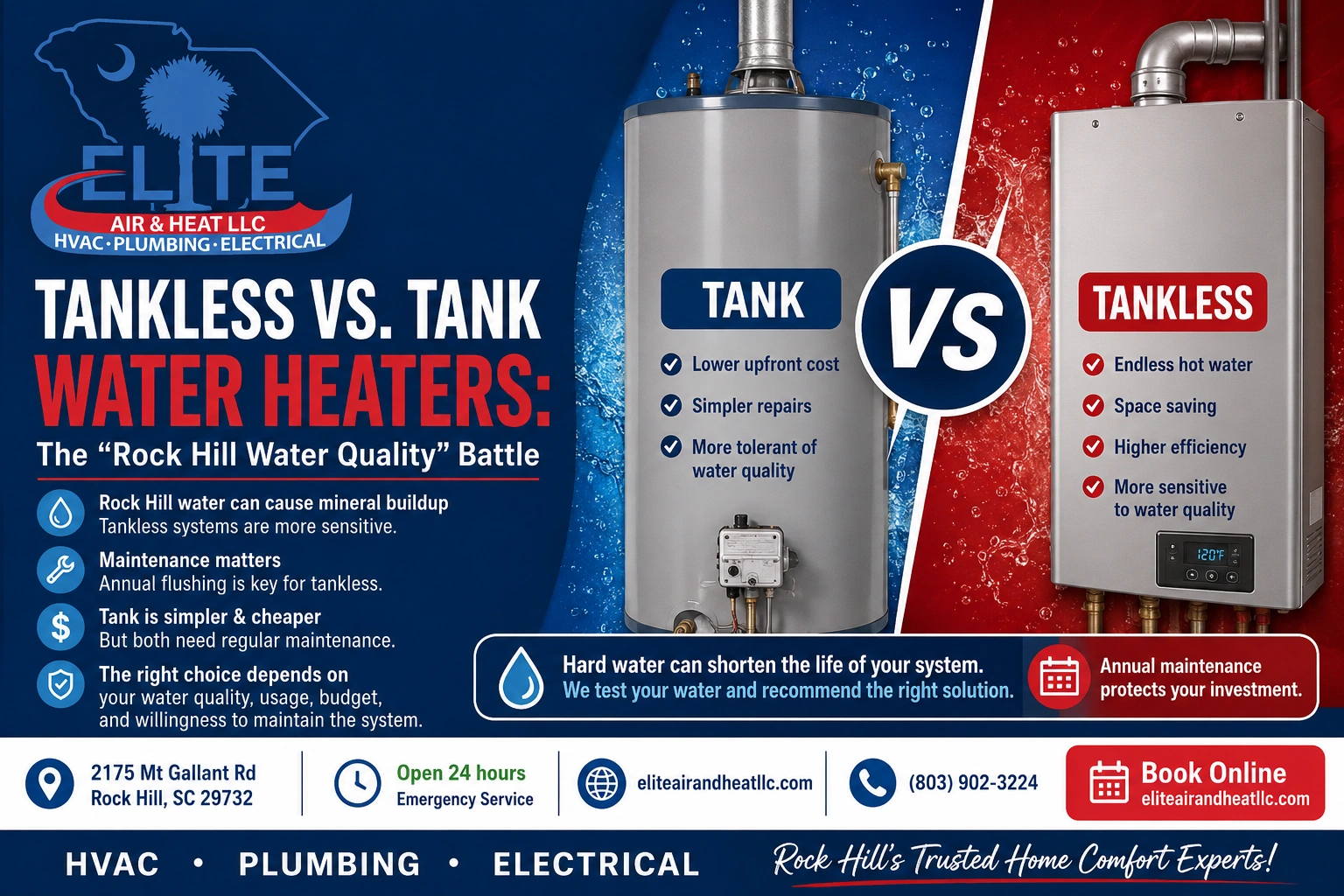

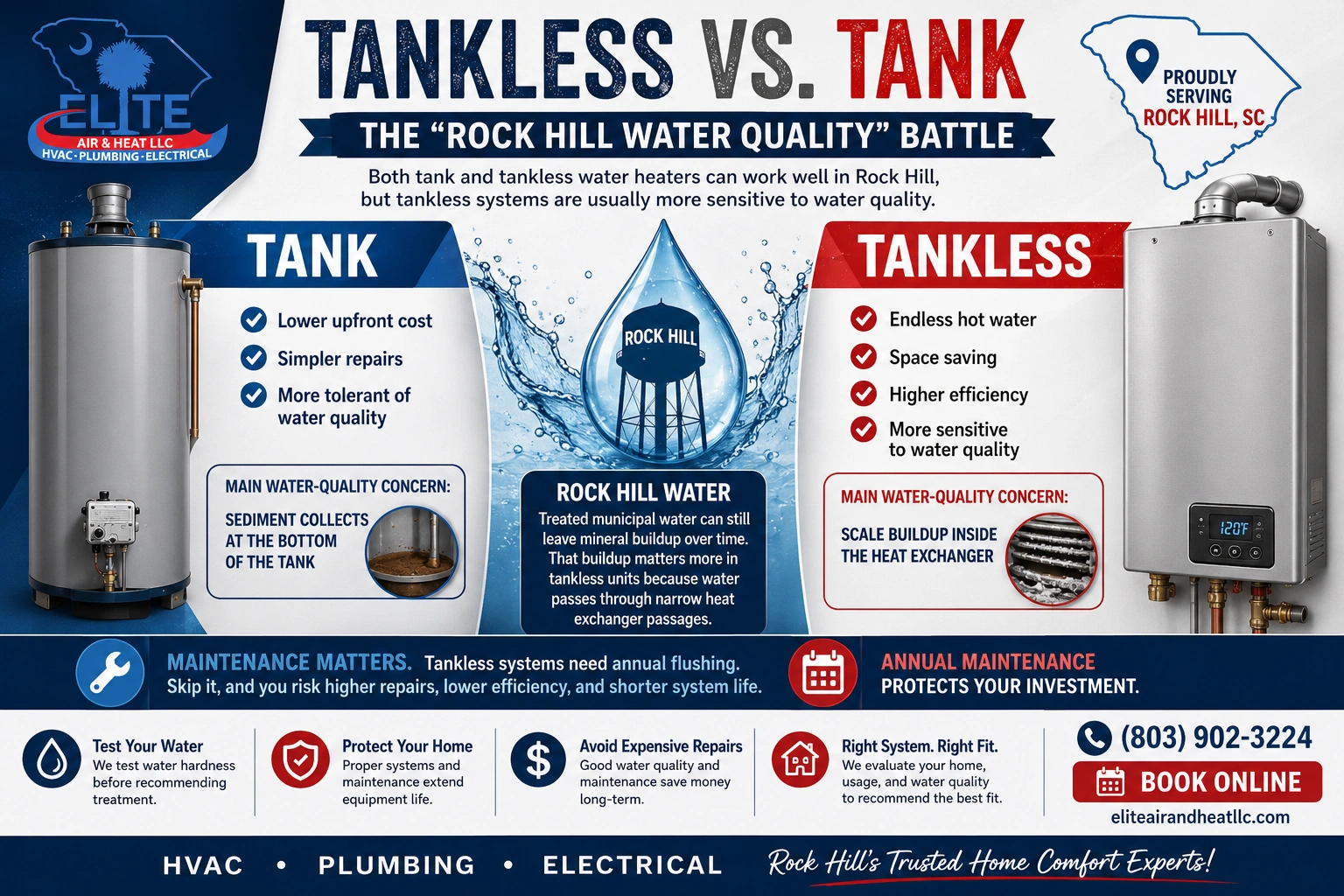
Both tank and tankless water heaters can work well in Rock Hill, but tankless systems are usually more sensitive to water quality.
That does not mean tankless is bad. It means the maintenance matters more.
Hard Water Hurting Your Water Heater?
Call now for expert water heater service in Rock Hill and find the right system for your home.
The basic difference
| Option | Best fit | Main water-quality concern |
| Tank water heater | Lower upfront cost, simpler replacement | Sediment collects at the bottom of the tank |
| Tankless water heater | Endless hot water, better space savings, higher efficiency | Scale buildup inside the heat exchanger |
Rock Hill water is treated municipal water, but like most city water, it can still leave mineral buildup over time. That buildup matters more in tankless units because water passes through narrow heat exchanger passages.
Why tankless heaters are more sensitive
A tankless water heater heats water quickly as it moves through the unit.
That is efficient, but it also means mineral scale can build up inside the heat exchanger.
When that happens, homeowners may notice:
- fluctuating water temperature
- reduced hot water flow
- error codes
- longer wait times for hot water
- noisy operation
- premature part failure
This is where homeowners sometimes get into trouble.
They install tankless for convenience, then skip the annual flushing. That can shorten the life of the unit and lead to expensive repairs.
Why tank heaters still have problems
Tank water heaters are simpler, but they are not maintenance-free.
Sediment can collect at the bottom of the tank. Over time, that can cause:
- popping or rumbling sounds
- slower recovery
- higher energy use
- rusty water
- premature tank failure
A tank heater may tolerate neglected maintenance longer than a tankless unit, but eventually the water quality still catches up.
Cost comparison in Rock Hill
| Water heater type | Typical installed cost |
| Standard tank water heater | $1,500–$3,500 |
| High-efficiency tank water heater | $2,500–$5,000 |
| Tankless water heater replacement | $3,500–$7,500+ |
| Tankless conversion from tank | $5,000–$10,000+ |
Tankless costs more when the home needs gas line upgrades, venting changes, electrical work, condensate drainage, or water treatment.
The cheaper option is not always wrong. A standard tank heater may be the better choice if you want lower upfront cost and simpler future repairs.

Why Do My Lights Flicker When the AC Turns On?
If your lights flicker when AC turns on, it often means your air conditioner is drawing a large amount of…

Which one handles Rock Hill water better?
For lower maintenance tolerance, tank usually wins.
For efficiency, space savings, and continuous hot water, tankless can win — but only if you maintain it.
Choose a tank water heater if:
- upfront cost matters most
- you want simpler repairs
- your household has normal hot water use
- you do not want strict annual maintenance
- your current tank setup is working fine
Choose tankless if:
- you want continuous hot water
- space is limited
- you plan to stay in the home long-term
- you are willing to flush it yearly
- your gas, venting, and water quality are suitable
What a good plumber should check first
Before recommending tankless or tank, a good plumber should inspect:
- water hardness
- existing gas line size
- venting options
- electrical requirements
- household hot water demand
- fixture count
- water pressure
- available drain location
- age and condition of shut-off valves
Not just:
“Tankless is better.”
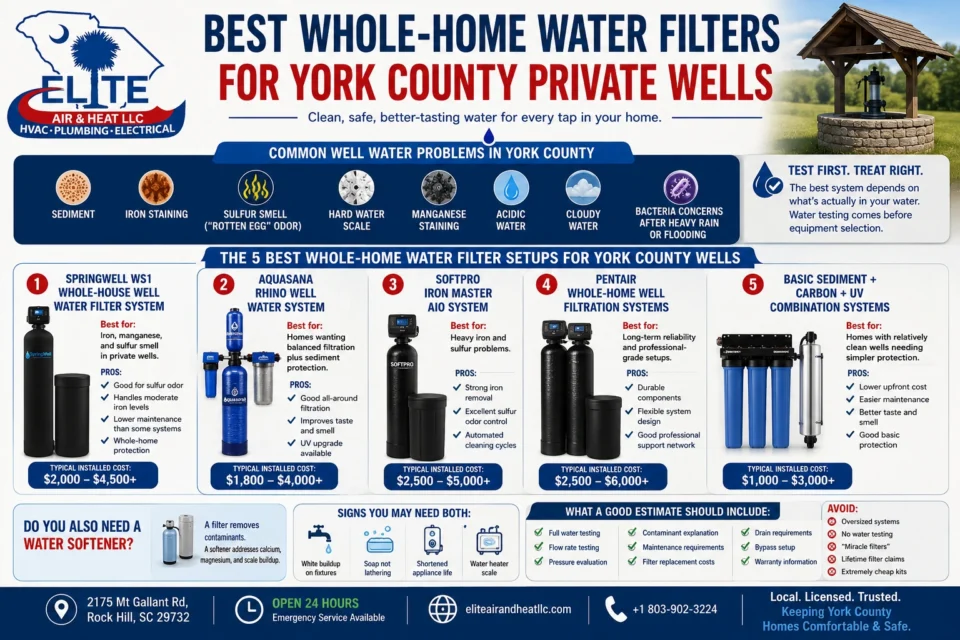
Do you need a water softener?
Not every home does.
But if testing shows hard water, a softener or scale-control system may help protect:
- tankless heat exchangers
- faucets
- shower valves
- dishwashers
- washing machines
- water heater life
A good plumber should test the water before recommending treatment.
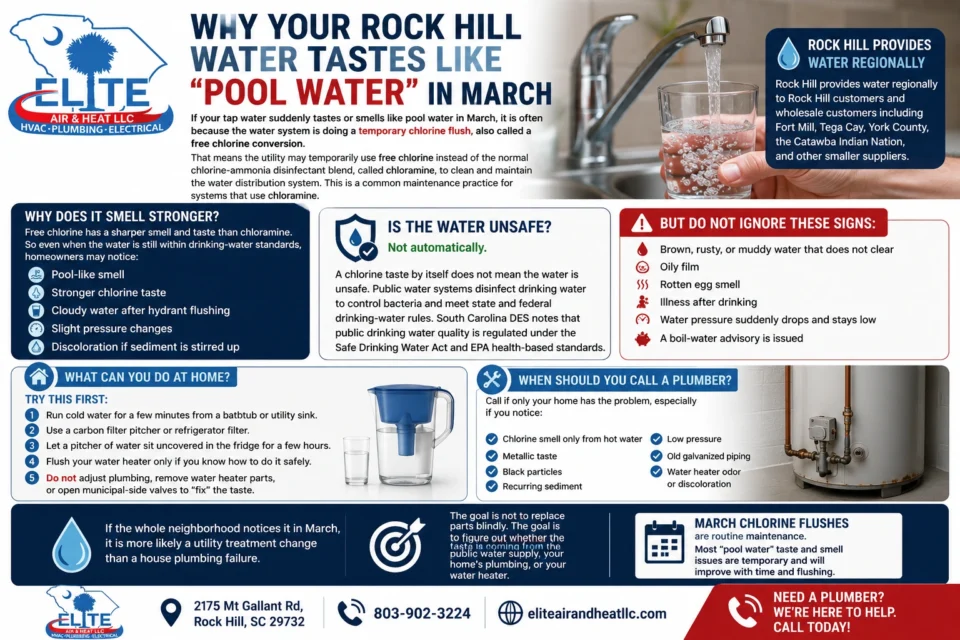
Water quality can also affect more than scale buildup. If you have ever wondered why Rock Hill water tastes like chlorine, understanding your local water characteristics can help you decide whether filtration or other water treatment makes sense for your home.
Guessing can lead to buying equipment you may not need.
The bottom line
Tankless water heaters can be a great fit in Rock Hill, but they are less forgiving when water quality and maintenance are ignored.
Tank heaters are usually simpler, cheaper, and more tolerant.
If you only remember one thing, remember this:
Tankless is not automatically better. Tank is not automatically outdated. The right choice depends on your water quality, usage, budget, and willingness to maintain the system.
Rock Hill Water Quality Meets Its Match
Schedule water heater service today and protect your home from hard water problems.