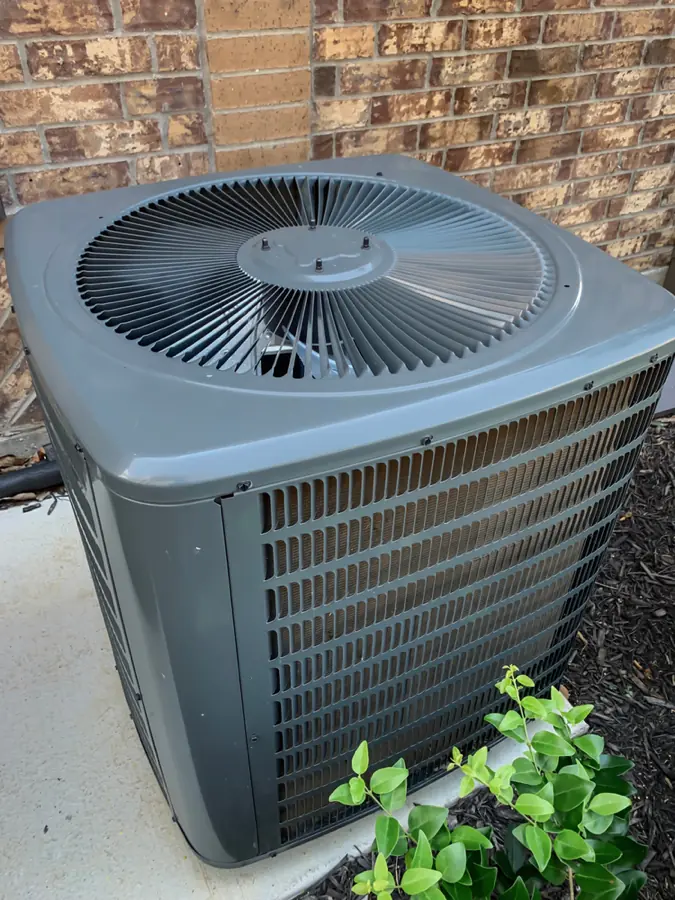
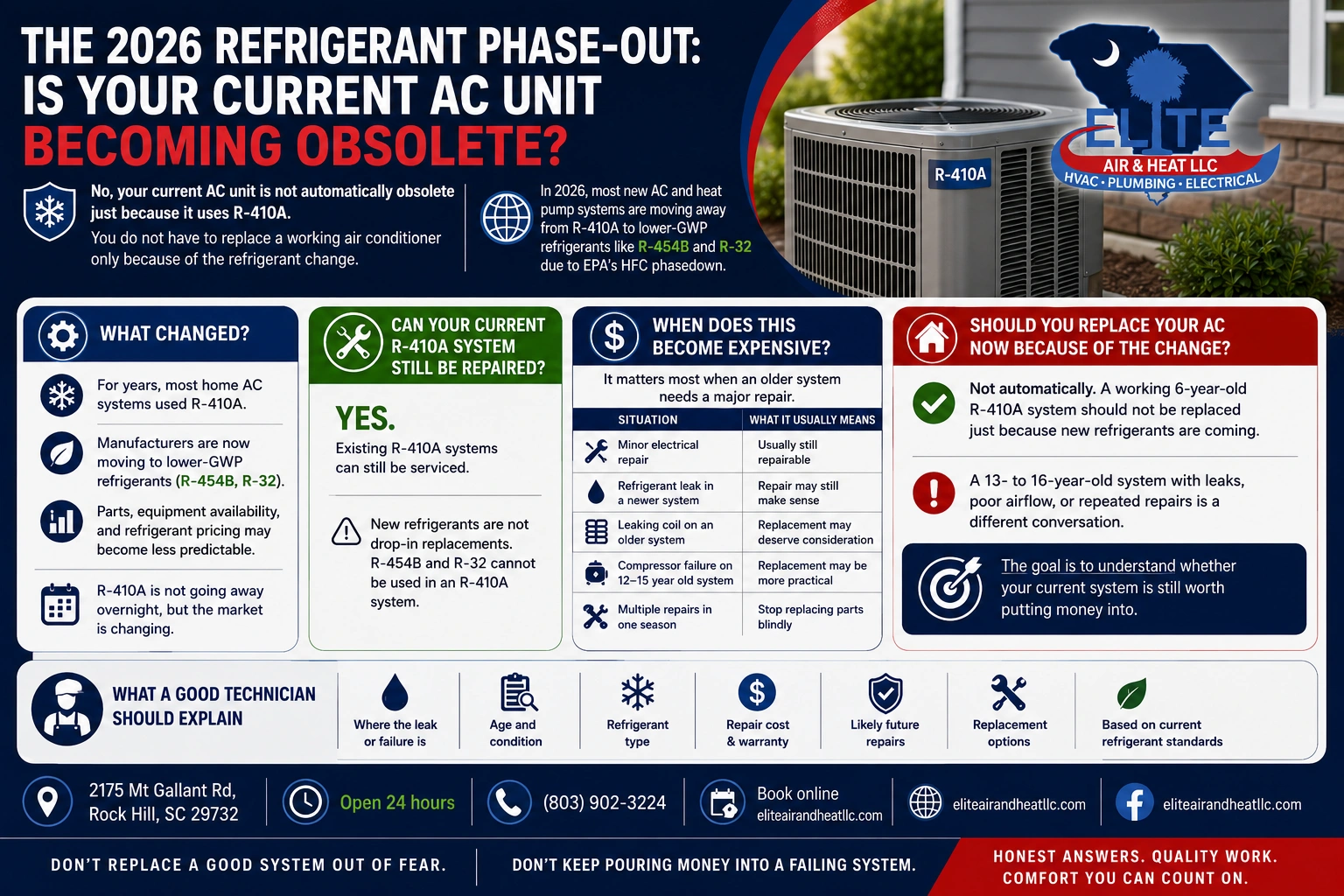

No, your current AC unit is not automatically obsolete just because it uses R-410A. You do not have to replace a working air conditioner only because of the refrigerant change.
But the rules are changing the HVAC market.
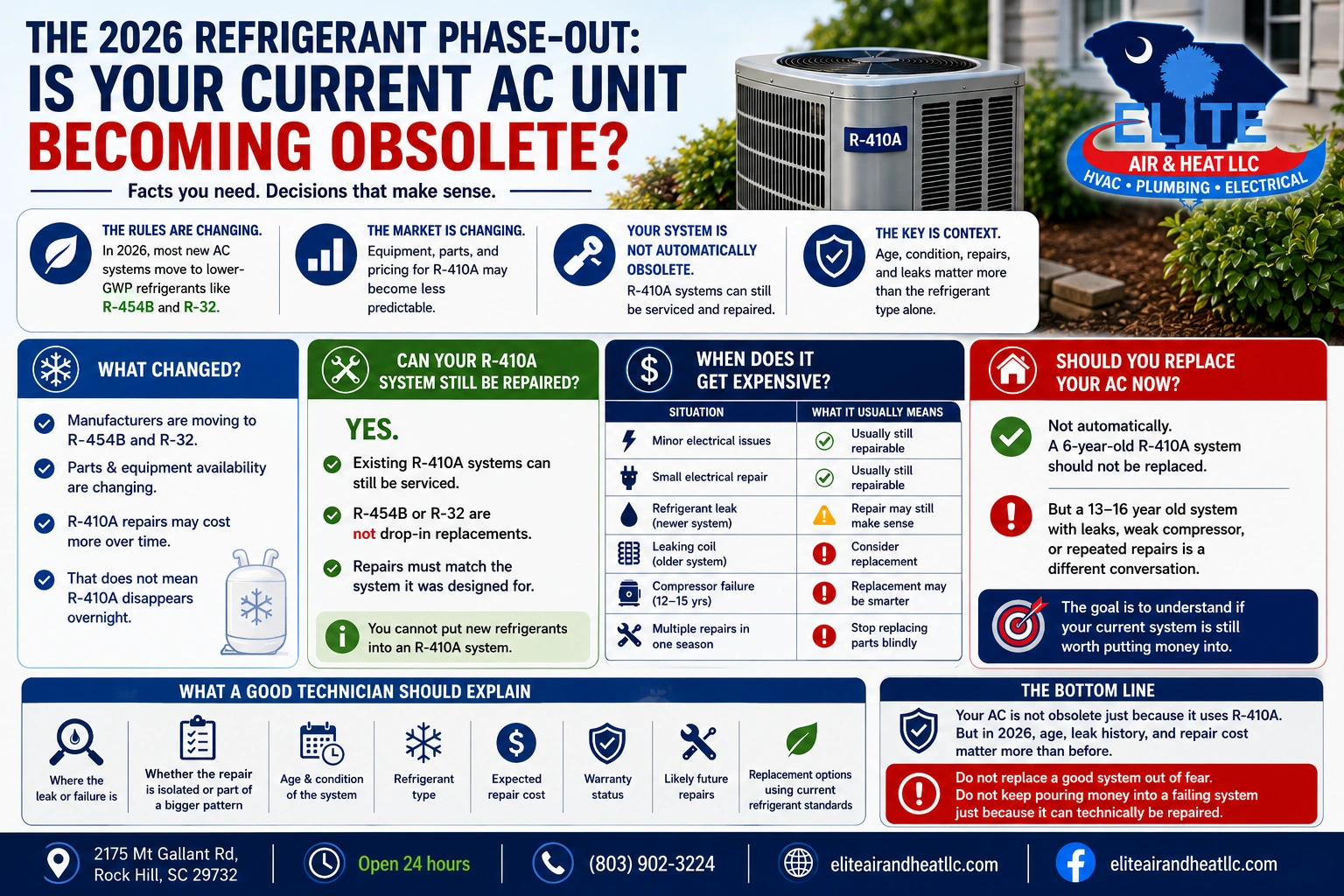
In 2026, most new residential AC and heat pump systems are moving away from R-410A and toward lower-GWP refrigerants like R-454B and R-32. EPA’s HFC phasedown under the AIM Act is reducing the use of higher global-warming-potential refrigerants over time.
Don’t Wait Until Your AC Becomes Outdated
Call now for professional AC inspection and guidance before the refrigerant changes take effect.
What changed?
For years, most newer home AC systems used R-410A.
Now manufacturers are transitioning to newer refrigerants because R-410A has a higher environmental impact. Major manufacturers have already shifted many product lines toward R-454B or R-32 equipment.
That means:
- New systems are changing.
- Parts and equipment availability are changing.
- Refrigerant pricing may become less predictable.
- Older systems may become more expensive to repair over time.
That does not mean R-410A disappears overnight.
For homeowners wondering how the industry is handling these changes, it can also help to understand the HVAC contractor transition to new refrigerants, including the new equipment, training, and service practices involved.
Can your current R-410A system still be repaired?
Yes. Existing R-410A systems can still be serviced. The newer refrigerants are not drop-in replacements, though. You cannot simply put R-454B or R-32 into an R-410A system. Lennox notes that existing R-410A systems can remain in service, but the refrigerants and equipment are not cross-compatible.
That matters because if your AC has a refrigerant leak, the repair still has to match the system it was designed for.
When does this become expensive?
This is where homeowners sometimes get into trouble.
The refrigerant phase-out matters most when an older system needs a major repair.
Examples:
| Situation | What it usually means |
| Minor capacitor or contactor failure | Refrigerant change may not matter much |
| Small electrical repair | Usually still repairable |
| Refrigerant leak in a newer system | Repair may still make sense |
| Leaking coil on an older R-410A system | Replacement may deserve serious consideration |
| Compressor failure on a 12–15 year old system | Replacement may be more practical |
| Multiple repairs in one season | Stop replacing parts blindly |
Should you replace your AC now because of the refrigerant change?
Not automatically. A working 6-year-old R-410A system should not be replaced just because new refrigerants are coming in.
But a 13- to 16-year-old system with a leaking coil, weak compressor, poor airflow, or repeated repairs is a different conversation.
The goal is not to buy a new system because of a headline.
The goal is to understand whether your current system is still worth putting money into.

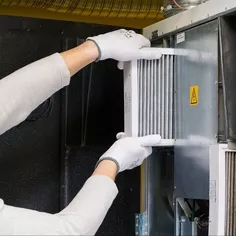
How a Clogged Filter Impacts Heating Efficiency: Solutions from a Heating Contractor
During the winter, keeping your house pleasant requires maintaining a functioning heating system. One often overlooked component is the air…
What a good technician should explain
Before recommending replacement, a good technician should be able to show you:
- where the leak or failure is
- whether the repair is isolated or part of a bigger pattern
- the age and condition of the system
- the refrigerant type
- expected repair cost
- warranty status
- likely future repairs
- replacement options using current refrigerant standards
The bottom line
Your AC is not obsolete just because it uses R-410A.
But in 2026, the refrigerant transition makes age, leak history, and repair cost more important than before.
If you only remember one thing, remember this:
Do not replace a good system out of fear. Do not keep pouring money into a failing system just because it can technically be repaired.
Is Your AC Ready for the 2026 Refrigerant Phase-Out?
Avoid costly surprises. Schedule expert AC service today and make sure your system is prepared.