
If your AC smells musty, sour, or like dirty gym socks when it starts running, you are not imagining it.
This is a real HVAC issue, and in South Carolina’s humidity, it is extremely common.
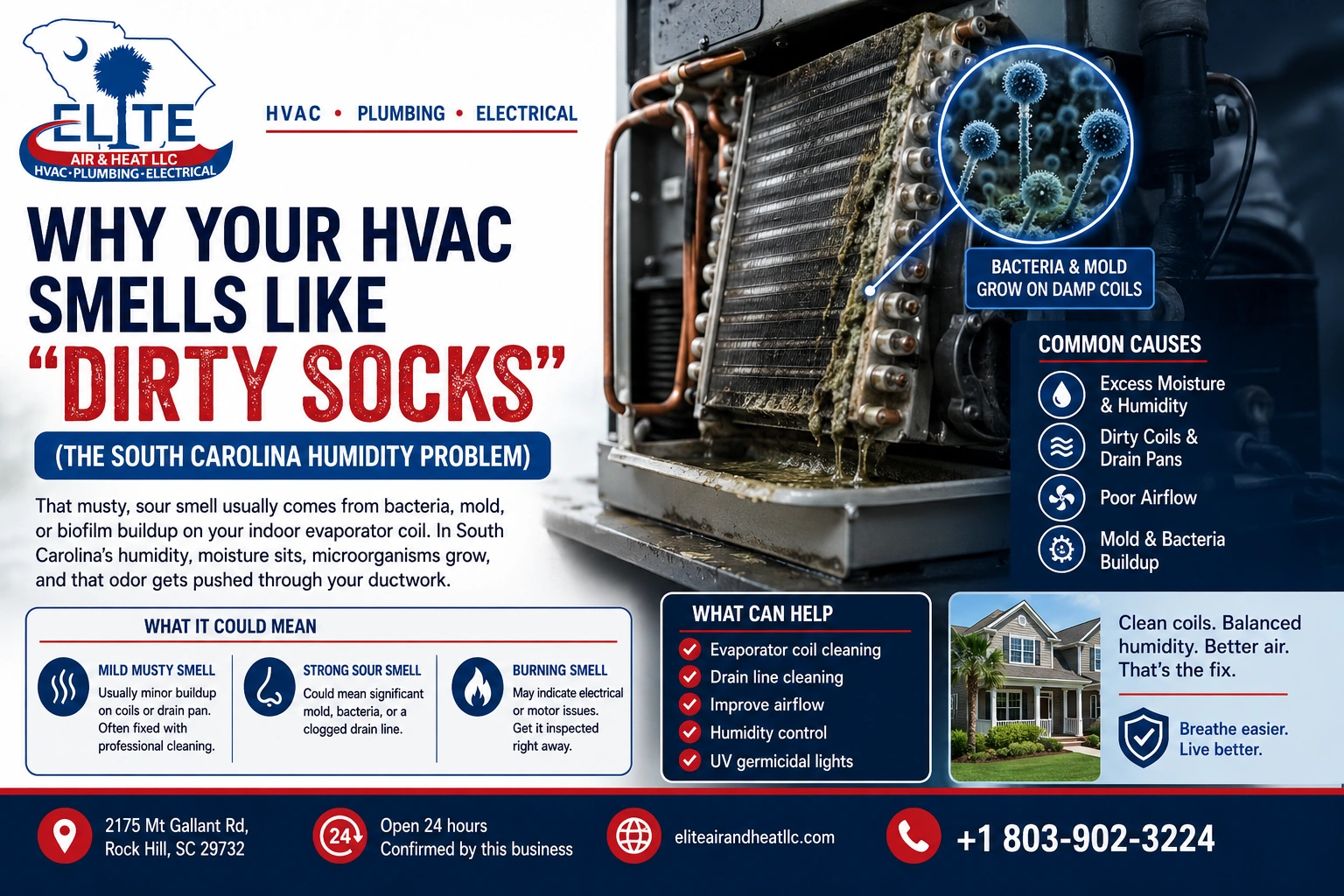
Here’s the plain answer: the smell usually comes from bacteria, mold, or biofilm buildup on the indoor evaporator coil, the cold coil inside your air handler that removes heat and humidity from the air.
When moisture sits on that coil for long periods, especially during humid SC summers, microorganisms begin growing on the damp surface. Once the system turns on, the smell gets pushed through the ductwork and into the house.
The technical name is often called Dirty Sock Syndrome.
Why this happens more in South Carolina
South Carolina HVAC systems fight humidity almost nonstop for large parts of the year.
That creates the perfect environment for:
- Moisture buildup
- Condensation
- Organic growth
- Dirty drain pans
- Wet insulation near the coil
- Reduced airflow that keeps surfaces damp longer
Heat pumps are especially known for this issue because the coil may stay damp during shoulder seasons when the system cycles frequently but does not run long enough to fully dry out.
This is where homeowners sometimes get into trouble. They spray air fresheners into vents, replace thermostats, or buy expensive filters without addressing the actual source.
What the smell usually tells you
Mild musty smell at startup
Often points to:
- Dirty evaporator coil
- Moisture buildup
- Minor biological growth
Strong sour or rotten smell
Could indicate:
- Significant mold or bacterial buildup
- Dirty condensate drain
- Standing water inside the system
Burning smell
Different issue entirely.
That may involve:
- Electrical overheating
- Motor problems
- Wiring issues
A burning smell should be treated more seriously and inspected promptly.
Does this mean your HVAC system is dangerous?
Not always.
A dirty sock smell is usually more of an air quality and moisture issue than an emergency safety issue.
But ignoring it can lead to:
- Reduced airflow
- Worse indoor air quality
- Recurring odors
- Coil corrosion
- Drain clogs
- Higher humidity indoors
And if mold growth becomes significant, sensitive individuals may notice worsening allergies, asthma irritation, or respiratory discomfort.
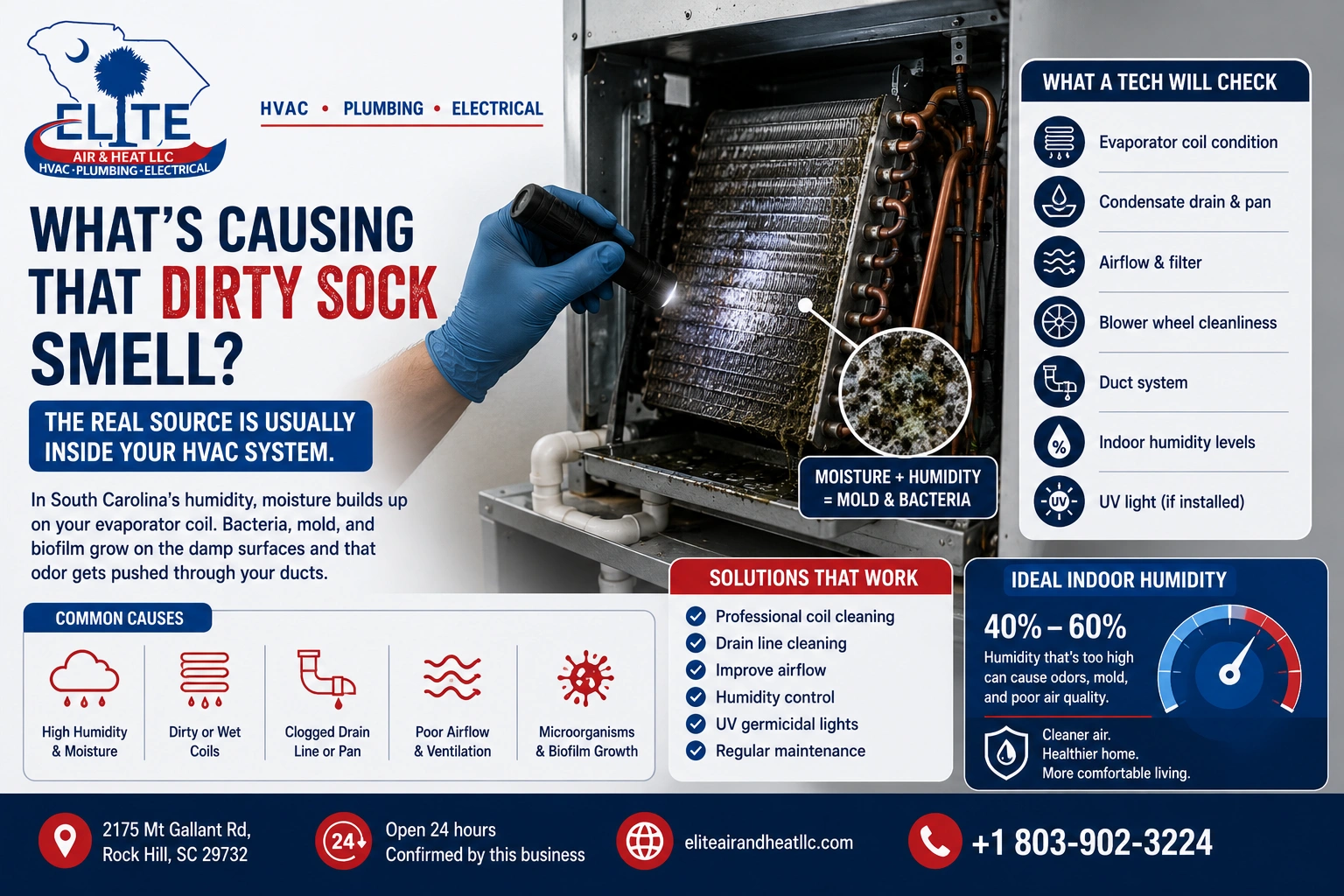
What a technician should inspect
A good HVAC technician should evaluate:
- Evaporator coil condition
- Drain pan cleanliness
- Condensate drain line
- Airflow restrictions
- Filter condition
- Blower wheel cleanliness
- Duct contamination
- Humidity levels inside the home
- UV light systems if installed
A good technician should also explain whether the issue is:
- simple cleaning,
- recurring humidity imbalance,
- airflow-related,
- or a larger maintenance problem.
What homeowners can safely check themselves
You can safely:
- Replace the air filter
- Check for clogged return vents
- Inspect around the indoor unit for standing water
- Look for visible drain line clogs
- Monitor indoor humidity levels
Ideal indoor humidity is generally around 40–60%.
If your home constantly feels damp or sticky, the HVAC system may not be removing moisture properly even if it is technically cooling.
What usually fixes the problem?
Depending on the cause, solutions may include:
- Professional evaporator coil cleaning
- Condensate drain cleaning
- Airflow correction
- Blower cleaning
- UV germicidal lights
- Duct cleaning in some cases
- Humidity control improvements
- Adjusting fan settings
That does not automatically mean you need a new HVAC system.
In many homes, the issue is maintenance-related and fixable without replacement.
When replacement becomes part of the conversation
Replacement may be worth discussing if:
- The coil is severely corroded
- The system has chronic moisture problems
- Mold contamination keeps returning
- The system is oversized and short-cycling
- Major repairs are stacking up on an older unit
Oversized systems are common contributors in humid climates because they cool the house too quickly without running long enough to properly remove humidity.
The house reaches temperature before moisture removal is complete.
The result is a cold but clammy house.
The bottom line
If you only remember one thing, remember this:
A dirty sock smell is usually a moisture and coil cleanliness problem not something homeowners should ignore, but also not automatic proof you need a full HVAC replacement.
The important thing is identifying why moisture is lingering inside the system in the first place.
A good technician should be able to explain the source of the odor, what is causing it to return, and whether the fix is cleaning, airflow correction, humidity control, or a larger system issue.