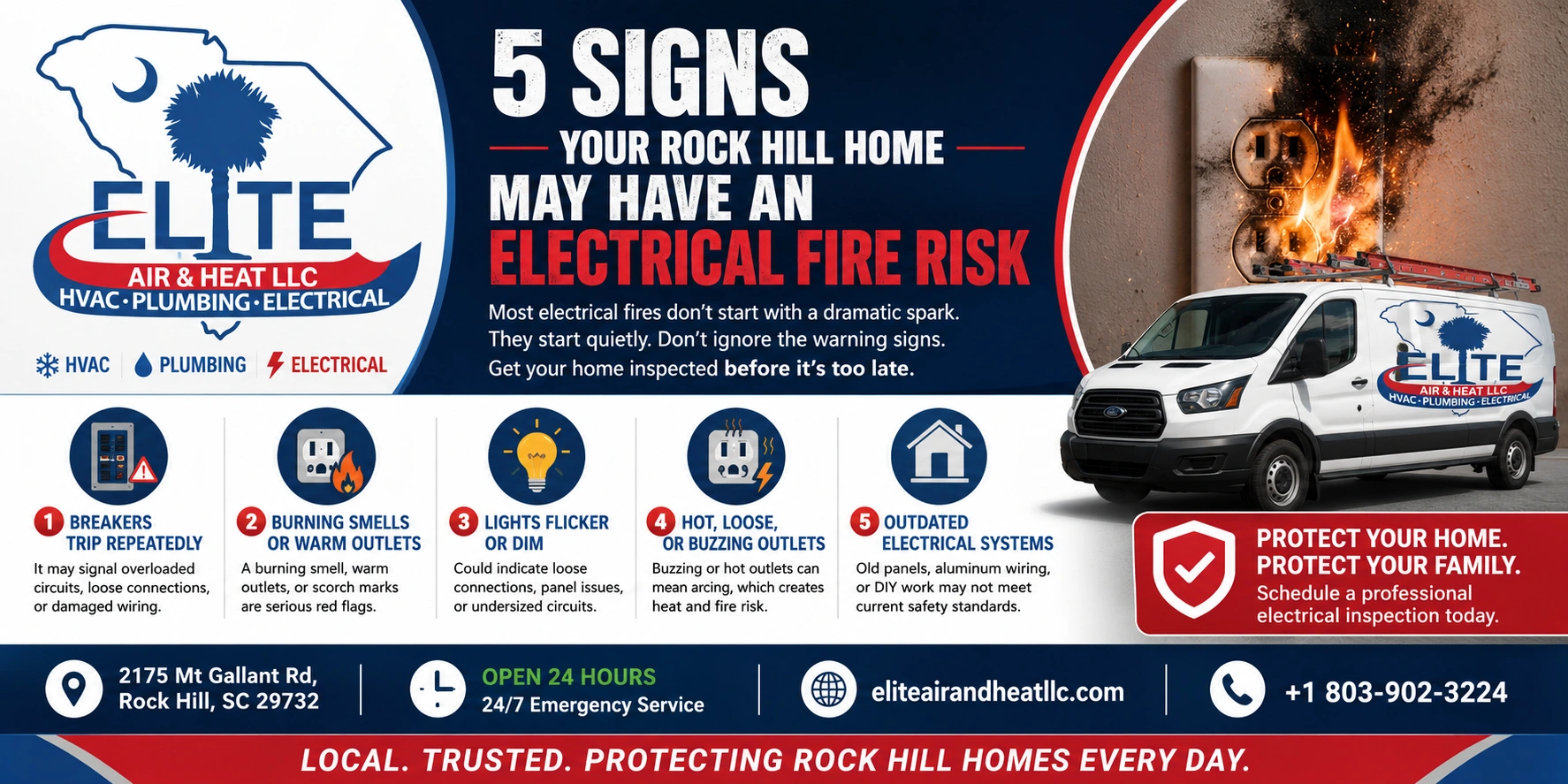

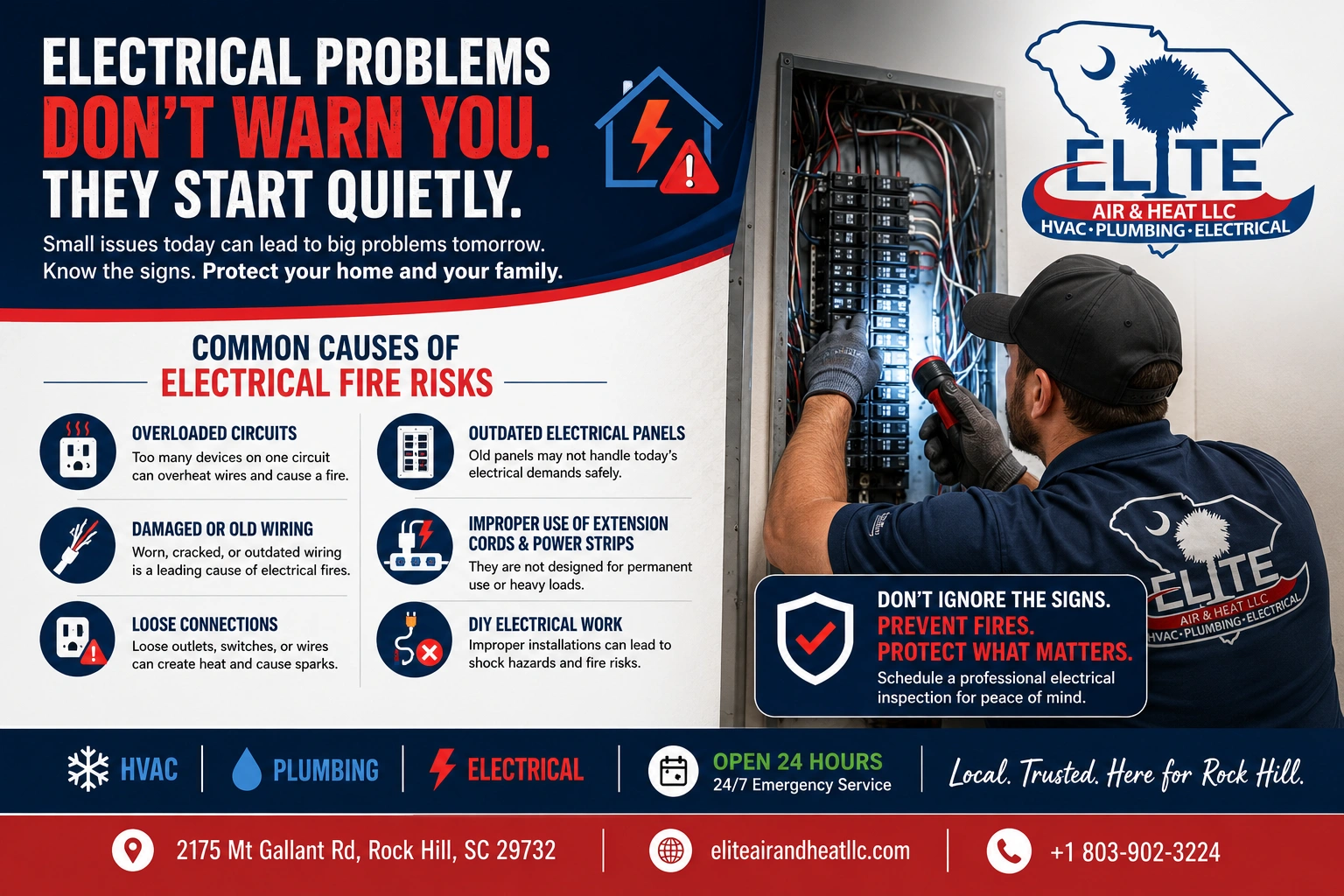
Most electrical fires do not start with a dramatic spark.
They usually start quietly: a loose connection behind a wall, an overloaded breaker, overheated wiring, or a problem that keeps getting ignored because “everything still works.”
Here’s the plain answer: if your home is showing repeated electrical warning signs, the safest move is to have the system inspected before something overheats.
That does not automatically mean you need a full rewire or expensive panel replacement.
But it does mean you should stop guessing.
Don't Ignore Electrical Warning Signs
Small electrical issues can become major fire hazards. Call now for trusted repairs and expert troubleshooting.
1. Your breakers trip repeatedly
A breaker tripping once in a while is not unusual.
A breaker tripping over and over is different.
This often means:
- An overloaded circuit
- A failing breaker
- Damaged wiring
- A loose connection
- A short circuit
- An appliance drawing unsafe power
This is where homeowners sometimes get into trouble. Resetting the breaker repeatedly without finding the cause can allow heat to build up behind walls or inside the panel.
A good electrician should be able to determine whether the issue is appliance-related, circuit-related, or panel-related before recommending major work. For homeowners considering modernization, understanding smart panel upgrade costs in Tega Cay can also help when comparing repair and upgrade options.
2. You smell something burning near outlets or the panel
If you notice:
- A burning plastic smell
- A fishy or chemical odor
- Warm outlets
- Discolored switches
- Scorch marks
do not ignore it.
Electrical fires often begin from overheated connections that slowly melt insulation or outlet components.
If the smell is strong or persistent:
- Turn off power to the affected area if safe
- Stop using the outlet or circuit
- Call an electrician immediately
Do not spray anything into outlets or attempt DIY repairs inside the panel.
3. Lights flicker or dim when appliances start
A single flickering bulb is usually minor.
But if lights dim when the HVAC system starts, the microwave runs, or appliances cycle on, the home may have:
- Loose electrical connections
- Undersized circuits
- Panel issues
- Service problems
- Aging wiring
Older homes in the Rock Hill area sometimes struggle with modern electrical demand, especially after adding:
- EV chargers
- Larger HVAC systems
- Home offices
- Space heaters
- Tankless water heaters
- Hot tubs
The problem is not always dangerous immediately, but repeated voltage fluctuations should be investigated. Homeowners preparing for severe weather may also want to consider whole-home generator costs for South Carolina storm seasons when planning electrical backup and resilience upgrades.
4. Outlets are hot, loose, or buzzing
Outlets should not:
- Buzz
- Crackle
- Wiggle excessively
- Feel hot
- Spark regularly
A loose outlet can create arcing, which is when electricity jumps through the air between connections. Arcing creates heat very quickly.
This is one of the most common hidden fire risks electricians find during inspections.
If you only remember one thing, remember this: a warm or buzzing outlet is not something to “watch and wait.”

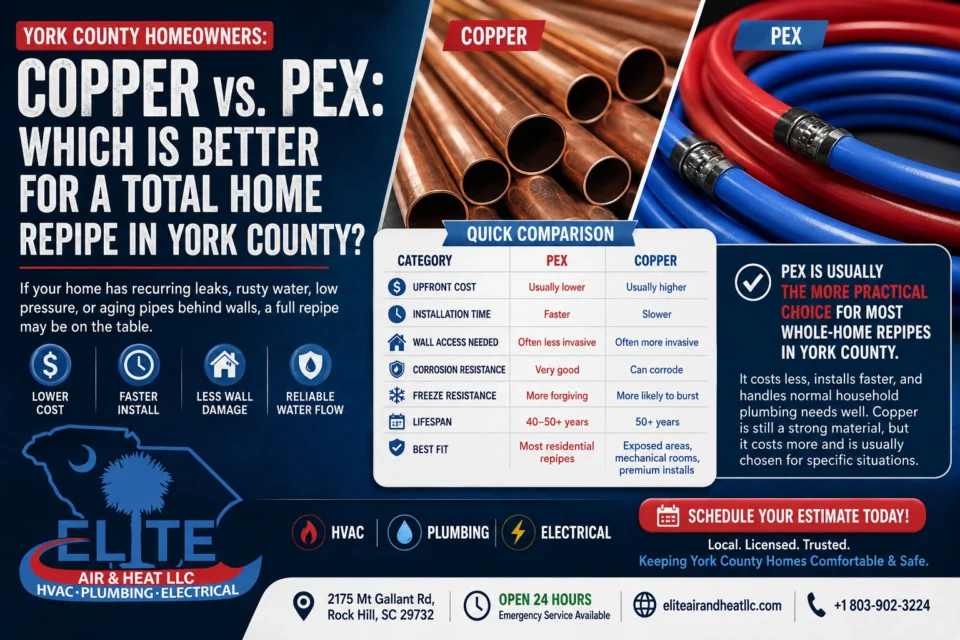
Copper vs. PEX: Which Is Better for a Total Home Repipe in York County?
If your home has recurring leaks, rusty water, low pressure, or aging pipes behind walls, a full repipe may be…
5. Your home still has outdated electrical components
Some older systems deserve closer attention, including:
- Federal Pacific panels
- Zinsco panels
- Aluminum branch wiring
- Ungrounded outlets
- Over-fused circuits
- DIY wiring additions
That does not automatically mean your home is unsafe today.
But these systems deserve evaluation because some older components are known for breaker failures, overheating risks, or poor connection reliability.
A good electrician should explain:
- what is currently unsafe,
- what is outdated but still functioning,
- and what should become a priority versus what can reasonably wait.
What homeowners can safely check themselves
You can safely:
- Test GFCI outlets
- Check for warm switch plates
- Listen for buzzing sounds
- Watch for flickering patterns
- Note recurring breaker trips
- Unplug overloaded power strips
You should not:
- Open the main electrical panel
- Replace breakers without proper knowledge
- Ignore burning smells
- Continue resetting tripping breakers repeatedly
What a proper electrical inspection should include
A real electrical safety inspection should evaluate:
- Breaker condition
- Panel overheating
- Grounding and bonding
- Wire sizing
- Arc fault and GFCI protection
- Loose connections
- Overloaded circuits
- Evidence of past overheating
- Unsafe DIY modifications
The goal is not to scare homeowners into upgrades.
The goal is to identify actual risks before they become expensive damage, power loss, or a fire emergency.
If you are seeing multiple warning signs at the same time, the next step is a professional inspection rather than continuing to reset breakers or replace random parts blindly.
Protect Your Home Before It's Too Late
If you've noticed warning signs, schedule an electrical inspection today. Fast, reliable service from Elite Air & Heat LLC is just a call away.