
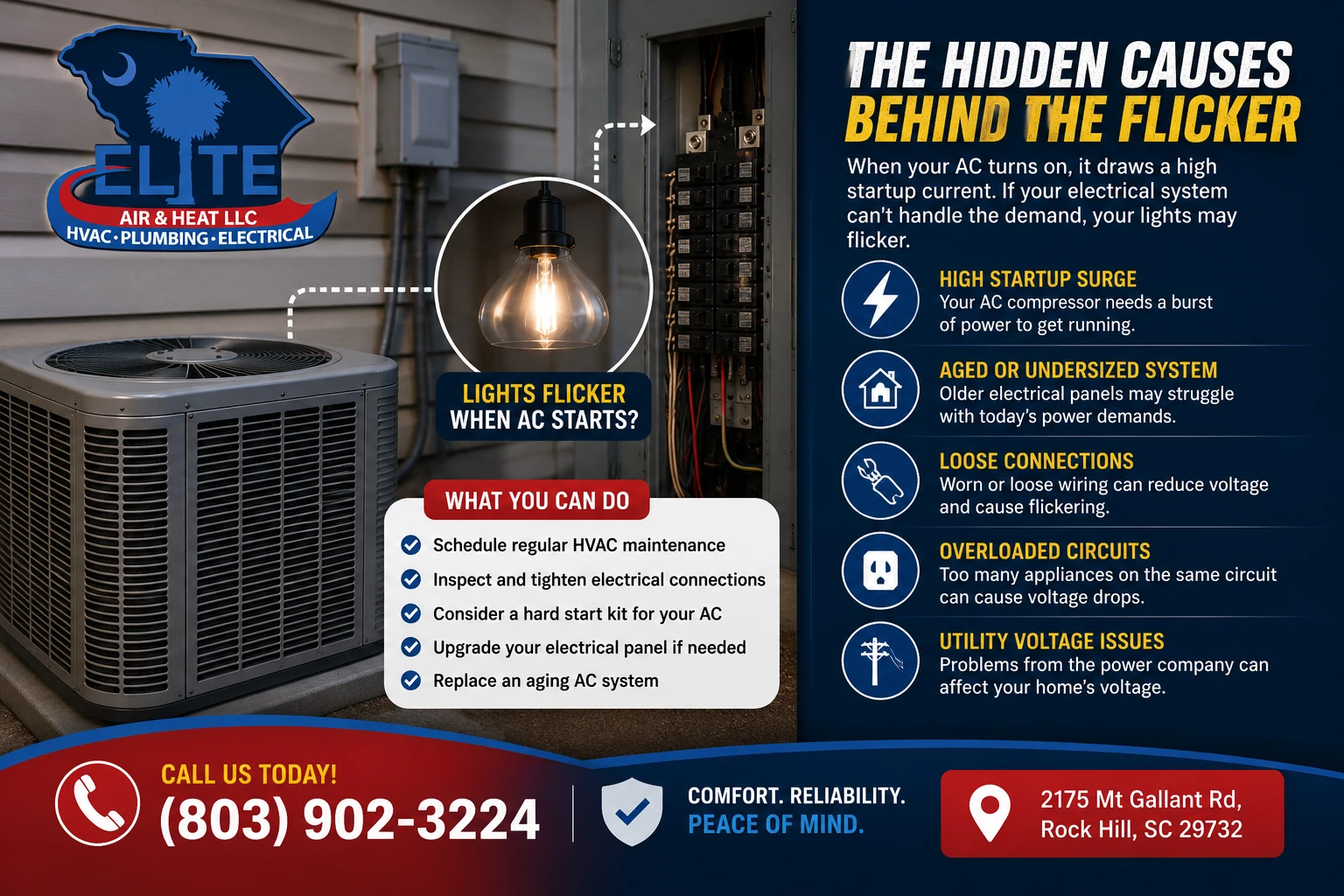
If your lights flicker when AC turns on, it often means your air conditioner is drawing a large amount of electricity during startup. A brief, slight flicker can be normal, but repeated, severe, or worsening flickering may point to an electrical issue that should not be ignored.
Many homeowners notice this problem during the hottest months when the air conditioner works harder than usual. While the flicker may seem like a small annoyance, it can signal anything from a system working as designed to an overloaded circuit, loose wiring, or an aging AC unit. Understanding the difference can help you protect your home’s electrical system and avoid more expensive repairs later.
Lights Flicker When the AC Kicks On?
Don’t ignore the warning signs. Call us for professional electrical troubleshooting and dependable repairs.
Why do lights flicker when the AC turns on?
The most common reason lights flicker when AC turns on is the high amount of electricity the compressor needs during startup. This is called the startup surge or inrush current. For a split second, the air conditioner demands significantly more power than it does during normal operation.
As the compressor reaches full speed, the electrical demand quickly drops back to normal, allowing the lights to stabilize.
A slight flicker that lasts less than a second is generally expected, especially if:
- Your air conditioner is large.
- Your home has an older electrical system.
- Multiple appliances are operating simultaneously.
- The electrical service is under heavy demand.
However, noticeable dimming every time the system starts is worth investigating.
Is it normal for lights to flicker when the air conditioner starts?
Sometimes, yes.
Modern air conditioners naturally create a temporary electrical load during startup. If the flicker is brief and happens only when the compressor begins running, it may simply reflect the normal operation of the system.
The difference lies in the severity.
Usually normal
A brief flicker that:
- Lasts less than one second
- Happens only during startup
- Does not become worse over time
- Does not affect other appliances
Possibly abnormal
A flicker that:
- Lasts several seconds
- Happens throughout the cooling cycle
- Causes lights to dim dramatically
- Occurs in multiple rooms
- Has recently become more noticeable
If the flickering becomes stronger or more frequent, it deserves professional attention before it develops into a larger electrical problem.
What causes lights to flicker when an AC turns on?
Several issues can cause or worsen this problem. Some are relatively minor, while others require immediate inspection.
An aging air conditioner
Older air conditioners often require more startup power because components wear down over time.
The compressor has to work harder, increasing the electrical demand each time it starts.
Signs include:
- Longer cooling cycles
- Higher energy bills
- Reduced cooling performance
- Frequent repairs
A failing compressor
The compressor is the heart of your cooling system.
As it begins to fail, it may require excessive current to start, making the lights dim much more than normal.
Other warning signs include:
- Loud humming
- Hard starting
- Breaker trips
- Warm air from vents
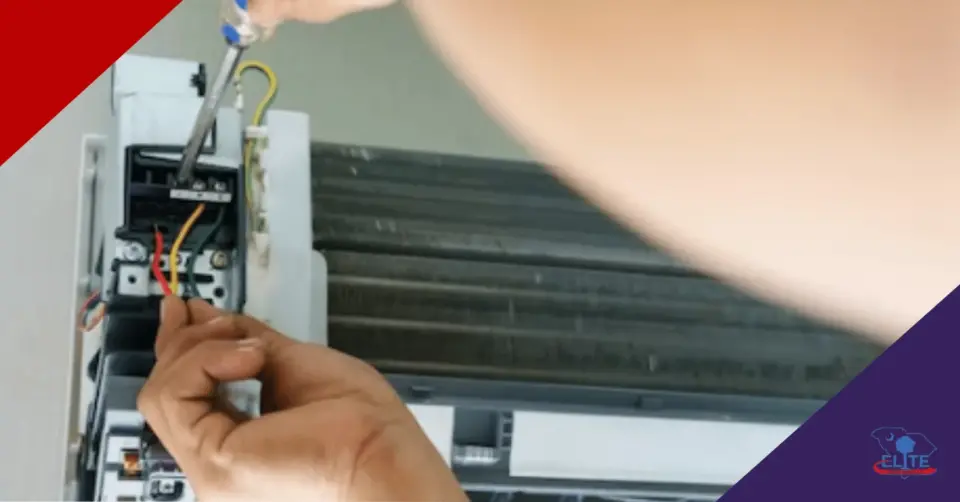
Loose electrical connections
Loose wiring creates electrical resistance, reducing the amount of voltage available throughout your home.
This can lead to:
- Flickering lights
- Warm outlets
- Buzzing sounds
- Burning odors
Loose electrical connections should always be inspected promptly because they can become fire hazards. If the problem happens after hours or creates an immediate safety concern, understanding the cost of a 24/7 emergency electrician in York County can help you decide when an emergency call-out is necessary.
Undersized electrical service
Older homes sometimes have electrical panels that were designed decades ago before modern air conditioning systems and today’s electrical demands.
If your electrical service is too small, the AC startup can temporarily pull voltage away from lighting circuits.
Common clues include:
- Lights dimming throughout the home
- Breakers tripping
- Difficulty running multiple appliances at once

How a Clogged Filter Impacts Heating Efficiency: Solutions from a Heating Contractor
During the winter, keeping your house pleasant requires maintaining a functioning heating system. One often overlooked component is the air…
Overloaded circuits
In some homes, lighting and HVAC equipment may share electrical circuits or place excessive demand on the same electrical panel.
Running additional appliances such as:
- Microwaves
- Electric dryers
- Space heaters
- Vacuum cleaners
at the same time can increase the voltage drop and make flickering worse.
Voltage problems from the utility
Occasionally, the issue originates outside your home.
Power supplied by the utility company may fluctuate due to:
- High neighborhood demand
- Damaged transformers
- Loose service connections
- Storm damage
If neighbors are experiencing similar issues, the power company may need to inspect the electrical supply.
When should you worry about flickering lights?
Not every flicker is dangerous, but some situations should never be ignored.
Contact a professional if:
The flickering gets worse
Electrical problems rarely fix themselves.
If the lights dim more than they used to or begin flickering more frequently, further diagnosis is recommended.
Breakers trip regularly
Circuit breakers protect your home from dangerous electrical overloads.
Repeated breaker trips often indicate an electrical issue rather than a faulty breaker itself.
The AC struggles to start
If the air conditioner hesitates, hums loudly, or repeatedly attempts to start, the compressor or electrical components may be failing.
You notice burning smells
Any burning odor near:
- The electrical panel
- Air conditioner
- Thermostat
- Electrical outlets
requires immediate attention.
Turn off the system and contact a professional.
Lights flicker without the AC running
If lights flicker randomly throughout the day, the issue may involve your home’s electrical wiring rather than the HVAC system.
How can you stop lights from flickering?
The best solution depends on the underlying cause.
Schedule HVAC maintenance
Routine maintenance helps identify components that are beginning to wear before they create larger electrical demands.
Maintenance often includes:
- Cleaning condenser coils
- Inspecting capacitors
- Testing compressor performance
- Checking electrical connections
- Measuring startup amperage
Replace failing electrical components
Sometimes a worn capacitor, contactor, or compressor can increase startup current.
Replacing these parts early often improves both reliability and efficiency.
Install a hard start kit if appropriate
Some air conditioning systems benefit from a hard start kit.
This device helps the compressor start more efficiently, reducing startup stress and lowering the electrical surge.
Not every system requires one, so professional evaluation is recommended before installation.
Upgrade the electrical panel
If your home’s electrical service is outdated, upgrading the panel may eliminate voltage drops while improving overall safety.
This is especially beneficial for homes with:
- Older electrical systems
- Large HVAC equipment
- Electric vehicle chargers
- Modern appliances
Replace an aging AC system
If your system is approaching the end of its service life, replacing it may solve both cooling and electrical performance issues.
Newer systems often feature:
- Lower startup current
- Better energy efficiency
- Variable-speed technology
- Quieter operation
- Improved comfort
Should you call an HVAC technician or an electrician?
It depends on where the problem originates.
Start with an HVAC technician if:
- The flicker happens only when the air conditioner starts.
- Cooling performance has declined.
- The AC is making unusual noises.
- The system is older.
Call an electrician if:
- Lights flicker throughout the house.
- Multiple appliances cause flickering.
- Breakers frequently trip.
- You notice warm outlets or buzzing switches.
- Burning smells are present.
In some situations, both professionals may work together to determine whether the issue lies within the HVAC equipment or the home’s electrical system.
Early diagnosis often prevents unnecessary repairs and reduces the chance of unexpected breakdowns during peak summer temperatures.
Keep Your Home Comfortable Without Electrical Surprises
When lights flicker when AC turns on, it may simply reflect the normal startup of your cooling system, or it could be an early warning of an electrical or HVAC problem. Paying attention to how often the flickering occurs, how severe it is, and whether other symptoms appear can help you determine when it’s time for a professional inspection.
At Elite Air & Heat LLC, we help homeowners identify cooling issues before they turn into expensive repairs. Whether your air conditioner needs maintenance, electrical components inspected, or you’re considering replacing an aging system, our experienced team provides honest recommendations and dependable service. If you’ve noticed your lights flickering every time your AC starts, let us help you find the cause and restore your home’s comfort and peace of mind.
AC Making Your Lights Flicker?
Get the electrical issue checked before it gets worse. Call us for trusted inspection and repair.