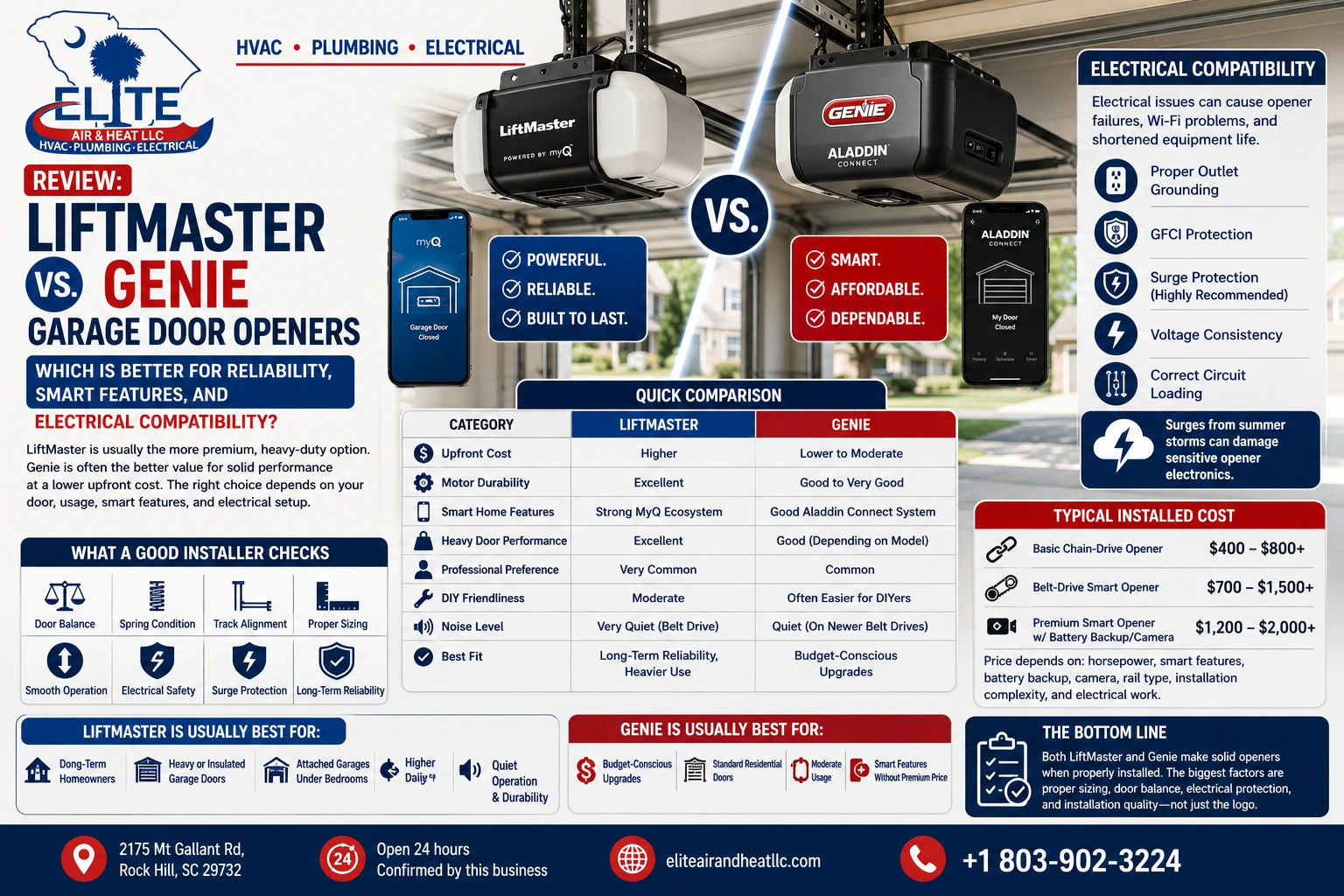

Which Is Better for Reliability, Smart Features, and Electrical Compatibility?
If your garage door opener is getting noisy, unreliable, or struggling to lift the door consistently, you are probably seeing the same two names come up over and over: LiftMaster and Genie.
Here’s the plain answer:
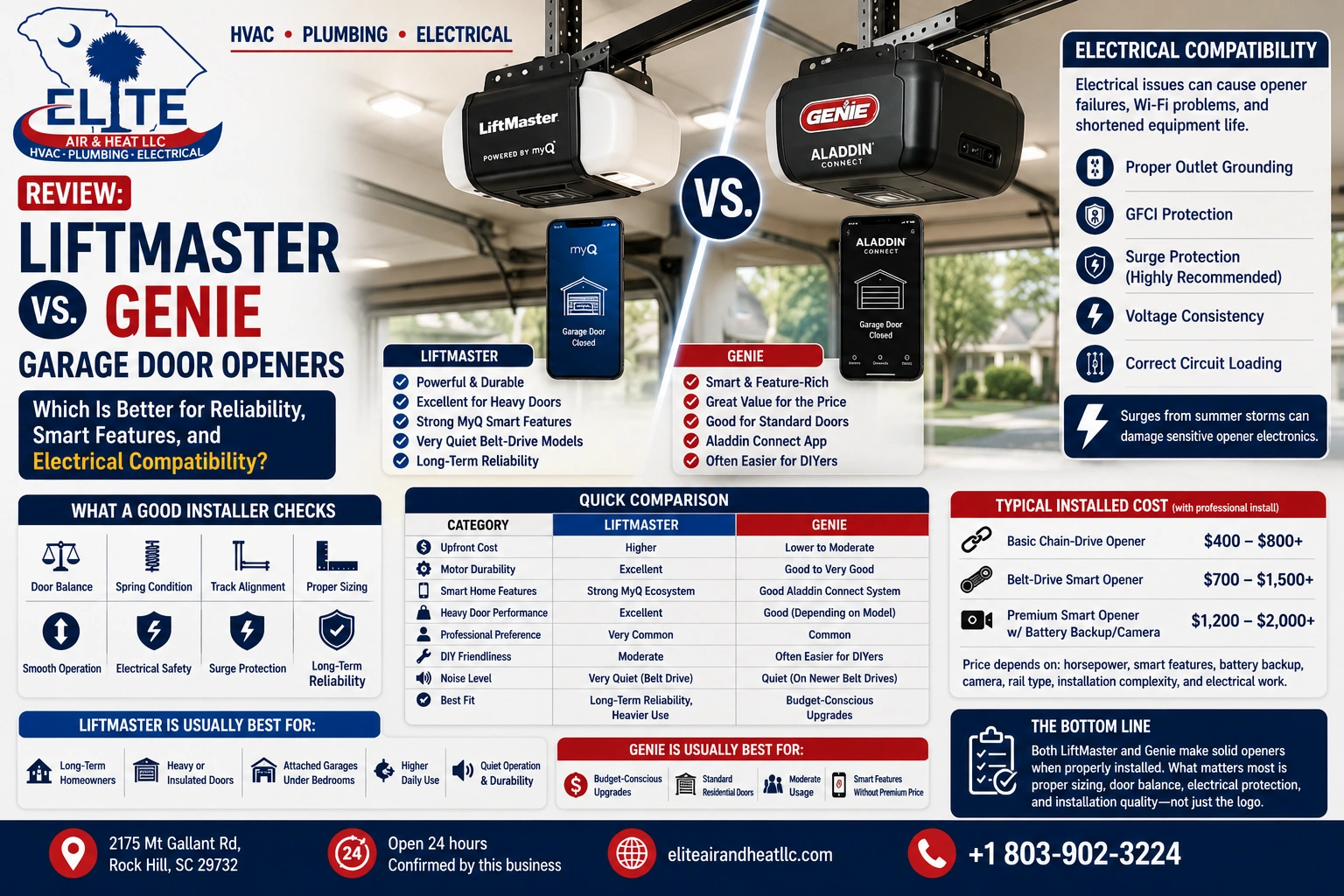
LiftMaster is usually considered the more premium and heavy-duty option, while Genie is often the better value for homeowners who want solid performance at a lower upfront cost.
Neither brand is automatically “better” for every house.
The right choice depends on:
- the weight of the garage door,
- how often the opener runs,
- smart home needs,
- electrical setup,
- and whether durability or price matters more to you.
Find the Best Garage Door Opener Today
Get professional recommendations based on your garage door, budget, and smart home needs. Call now for fast service.
Quick comparison
| Category | LiftMaster | Genie |
| Upfront cost | Higher | Lower to moderate |
| Motor durability | Excellent | Good to very good |
| Smart home features | Strong MyQ ecosystem | Good Aladdin Connect system |
| Heavy door performance | Excellent | Good depending on model |
| Professional installer preference | Very common | Common |
| DIY friendliness | Moderate | Often easier for DIYers |
| Noise level | Very quiet on belt-drive models | Quiet on newer belt drives |
| Best fit | Long-term reliability, heavier use | Budget-conscious upgrades |
Why LiftMaster is so common
Lift Master is widely used by professional garage door companies because the equipment tends to be durable and well-supported.
Their higher-end belt-drive systems are known for:
- quiet operation,
- strong lifting power,
- smart integration,
- and long-term reliability.
LiftMaster often makes the most sense when:
- the garage is below living space,
- the door is oversized or insulated,
- the opener runs frequently,
- or the homeowner wants a more premium setup.
The downside is cost.
A professionally installed LiftMaster system may cost noticeably more than a comparable Genie setup.
Where Genie stands out
Genie has improved significantly over the years.
For many homeowners, Genie hits the “good value” category:
- quieter than older chain drives,
- reliable for standard residential use,
- and often less expensive upfront.
Genie can make a lot of sense when:
- the garage door is standard weight,
- usage is moderate,
- and the homeowner wants modern features without paying premium pricing.
That does not mean Genie is “cheap.”
It means the value proposition is different.
The electrical side most homeowners miss
This is where homeowners sometimes get into trouble.
Garage door opener problems are not always opener problems.
Electrical issues often contribute to:
- opener failures,
- intermittent operation,
- Wi-Fi problems,
- board damage,
- or shortened equipment life.
A good installer should evaluate:
- outlet grounding,
- GFCI protection,
- surge protection,
- voltage consistency,
- and circuit loading.
Homeowners who want a broader approach to protecting major home systems may also find value in understanding what to look for in HVAC service contracts and how to choose one, since preventive service and electrical reliability both play a role in avoiding unexpected equipment failures.
Why surge protection matters more now
Modern garage openers are basically small computers.
Both LiftMaster and Genie systems now include:
- Wi-Fi boards,
- smart apps,
- sensors,
- LED lighting,
- and electronic control boards.
Those electronics are more sensitive to:
- power surges,
- lightning,
- voltage fluctuations,
- and poor grounding.
In the Carolinas, summer storms are a real issue.
A nearby lightning strike may not directly hit the house but can still damage opener boards or smart components.
A whole-home surge protector or dedicated surge protection for the opener circuit can help reduce that risk.

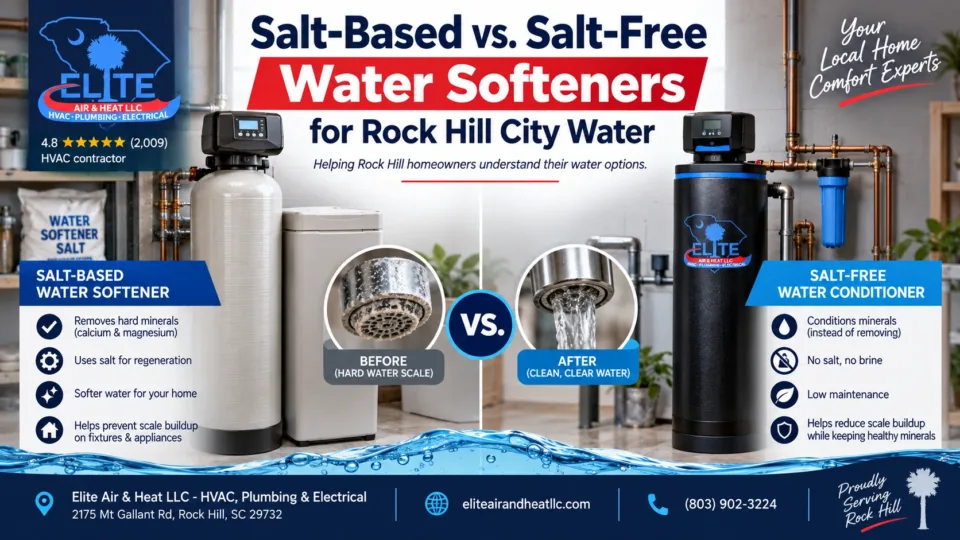
Salt-Based vs. Salt-Free Water Softeners for Rock Hill City Water
If you are on Rock Hill city water, the first question is not “Which softener should I buy?” The first…
What installation quality affects
Even a good opener can perform badly if:
- the door is unbalanced,
- springs are worn,
- tracks are misaligned,
- or the opener is undersized.
A good garage door system should:
- lift smoothly by hand,
- stay balanced halfway open,
- and avoid forcing the motor to do all the work.
If the opener strains, jerks, or reverses frequently, the problem may actually be the door hardware itself.
Typical installed cost
| Type | Typical installed range |
| Basic chain-drive opener | $400–$800+ |
| Belt-drive smart opener | $700–$1,500+ |
| Premium smart opener with battery backup/camera | $1,200–$2,000+ |
The price changes based on:
- horsepower,
- smart features,
- battery backup,
- camera integration,
- rail type,
- installation complexity,
- and whether electrical work is needed.
The same long-term thinking applies to other home equipment. For example, HVAC maintenance plans focused on cost-efficiency and durability show how regular preventive care can reduce wear, improve reliability, and help major systems last longer.
Which one is usually best?
LiftMaster is usually best for:
- Long-term homeowners
- Heavy or insulated garage doors
- Attached garages under bedrooms
- Higher daily usage
- Homeowners prioritizing quiet operation and durability
Genie is usually best for:
- Budget-conscious upgrades
- Standard residential doors
- Moderate usage
- Homeowners wanting smart features without premium pricing
The bottom line
Both Lift Master and Genie make solid garage door openers when properly installed.
For many homeowners, the bigger issue is not the logo on the opener.
It is:
- proper sizing,
- door balance,
- safe spring condition,
- electrical protection,
- and installation quality.
If you only remember one thing, remember this:
A premium opener connected to a poorly balanced garage door or unstable electrical circuit will still have problems.
A good installer should be able to explain:
- whether the opener matches the door weight,
- whether the electrical setup is safe,
- and whether the system is designed for long-term reliability rather than just the cheapest install possible.
LiftMaster or Genie? Get Expert Advice.
Not sure which opener fits your home? Call today for honest recommendations and professional garage door opener installation.