

If your outdoor AC unit seems louder than your neighbor’s conversation, you’re not imagining it. Noise is one of the most overlooked factors when replacing an air conditioner, especially in neighborhoods where homes are only a few feet apart. A quieter system can make your backyard more enjoyable, reduce complaints from neighbors, and even improve your own sleep if the condenser sits near a bedroom window.
Here’s the plain answer:
If keeping noise to a minimum is one of your top priorities, look for an air conditioner with a sound rating below 60 decibels (dB). Premium variable-speed systems can operate in the 50-55 dB range, while many standard single-stage units run between 70-75 dB during operation.
For comparison:
| Sound | Approximate Noise Level |
| Rustling leaves | 30 dB |
| Quiet conversation | 50-55 dB |
| Quiet premium AC | 50-58 dB |
| Typical central AC | 68-75 dB |
| Lawn mower | 85-90 dB |
A difference of just 10 decibels may not sound like much on paper, but it’s perceived by most people as roughly twice as loud.
What Makes an AC Unit Quiet?
Many homeowners assume a quieter unit simply has a better fan. In reality, several design features work together to reduce noise.
The quietest systems typically include:
- Variable-speed compressors
- Variable-speed condenser fans
- Compressor sound blankets
- Insulated compressor compartments
- Large, slower-turning fan blades
- Vibration isolation mounts
- Better cabinet insulation
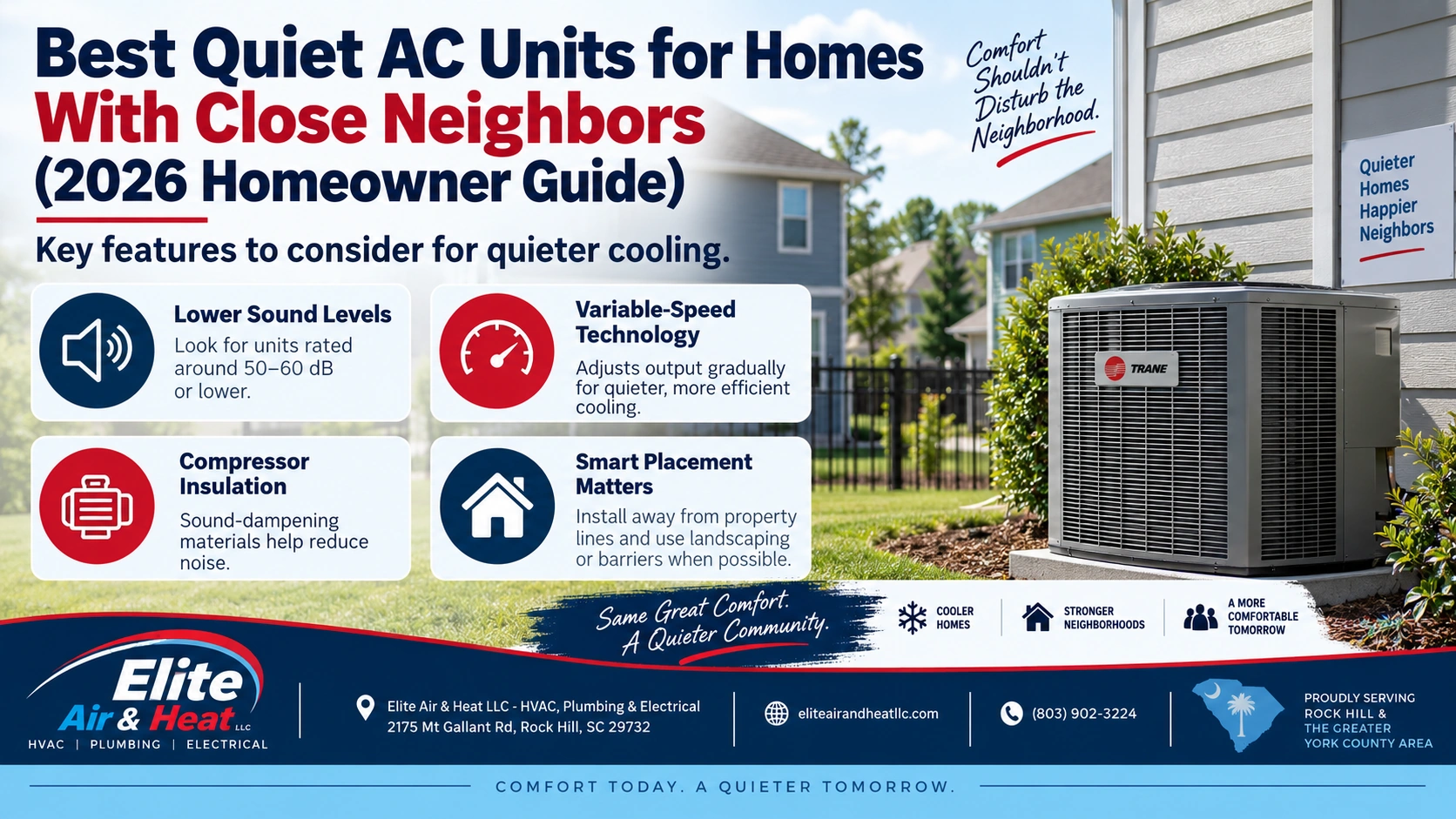
Variable-speed technology is the biggest factor.
Instead of turning on at full power every time your thermostat calls for cooling, the system adjusts its output to match your home’s actual cooling needs. That means the outdoor unit spends much of the day running at lower speeds, producing significantly less noise.
Best Quiet AC Brands
1. Carrier Infinity Series
Typical Sound Level: 51-56 dB
Carrier has long been one of the leaders in quiet residential air conditioning.
Pros
- Extremely quiet operation
- Excellent humidity control
- High efficiency
- Proven reliability
- Variable-speed compressor
Cons
- Premium price
- Repairs can cost more due to advanced electronics
Best for:
- Homes with close neighbors
- Bedrooms near the outdoor unit
- Homeowners planning to stay in the home for many years
2. Lennox SL28XCV
Typical Sound Level: Around 56 dB
Lennox’s flagship air conditioner is one of the quietest systems currently available.
Pros include:
- Excellent efficiency
- Nearly silent low-speed operation
- Outstanding comfort
Tradeoffs include:
- Higher installation costs
- Requires experienced installers
- Premium replacement parts
3. Trane XV20i
Typical Sound Level: 54-57 dB
Trane combines durability with impressive sound reduction.
Advantages:
- Very quiet
- Excellent build quality
- Variable-speed performance
- Strong humidity control
Possible drawbacks:
- Higher purchase price
- Best performance requires matched indoor equipment
4. American Standard Platinum Series
American Standard shares much of its engineering with Trane.
Typical sound:
55-57 dB
A good fit for homeowners wanting premium comfort with dependable long-term performance.
5. Daikin FIT
One of the most popular compact systems on today’s market.
Typical sound:
55-58 dB
Why homeowners like it:
- Smaller footprint
- Modern inverter technology
- Quiet operation
- Works well where space is limited
6. Bosch IDS Heat Pump
While technically a heat pump, many homeowners shopping for central AC should consider it.
Typical sound:
56-59 dB
Benefits:
- Quiet inverter compressor
- Excellent efficiency
- Heating and cooling in one system
- Smooth, consistent operation
Variable-Speed vs Single-Stage: Which Is Quieter?
| Feature | Variable-Speed | Single-Stage |
| Typical Noise | ★★★★★ | ★★☆☆☆ |
| Comfort | Excellent | Good |
| Humidity Control | Excellent | Average |
| Energy Efficiency | Higher | Lower |
| Initial Cost | Higher | Lower |
This is where homeowners sometimes get into trouble.
Some buyers focus only on the SEER rating or upfront price and overlook the type of compressor. A quieter variable-speed system often provides a much bigger day-to-day comfort improvement than a small increase in efficiency alone.
Does Installation Affect Noise?
Absolutely.
Even the quietest air conditioner can seem loud if it’s installed poorly.
A good technician should inspect:
- The equipment pad for stability
- Clearance around the unit
- Refrigerant line support
- Vibration isolation
- Fan balance
- Airflow restrictions
- Distance from windows and patios
Loose mounting, uneven pads, or refrigerant lines touching the house can create vibrations that make a system sound much louder than it actually is.
Should You Add a Sound Barrier?
Sometimes.
A decorative fence or landscaping can help reduce perceived noise, but it needs to be planned carefully.
Good options include:
- Privacy fencing with proper airflow clearance
- Evergreen shrubs planted at a safe distance
- Acoustic fence panels designed for HVAC equipment
Avoid enclosing the condenser too tightly. Restricting airflow can reduce efficiency, increase operating temperatures, and shorten the system’s lifespan.
Is a Quiet AC Worth the Extra Cost?
For many homeowners, yes.
Premium quiet systems often cost more upfront, but they also provide:
- Better humidity control
- More even temperatures
- Improved energy efficiency
- Fewer noticeable starts and stops
- Quieter outdoor living spaces
If your condenser is near a bedroom, patio, deck, or property line, the extra investment can make a noticeable difference every day.
The cheaper option is not always wrong, but it should make sense. If noise is one of your biggest frustrations with your current system, choosing a quieter model may provide more value than simply replacing it with another standard single-stage unit.
Can You Make Your Existing AC Quieter?
Sometimes.
Before replacing your system, a technician may be able to reduce noise by:
- Tightening loose panels
- Replacing worn fan motors
- Installing compressor sound blankets (where appropriate)
- Correcting vibration issues
- Leveling the equipment pad
- Cleaning dirty condenser coils
- Replacing failing fan blades
That does not automatically mean you need a replacement. A good technician should be able to identify whether the noise is normal for your system or the result of a specific mechanical problem.
If You Only Remember One Thing…
The quietest air conditioners aren’t just built with better insulation, they’re usually equipped with variable-speed technology that allows them to run gently most of the time instead of blasting on and off at full power.
If your home is close to neighboring houses, or your outdoor unit sits near a patio or bedroom, look beyond efficiency ratings and compare manufacturer sound ratings (dB) before making a decision. A good installation is just as important as choosing the right equipment, and the goal isn’t to buy the most expensive system, it’s to find one that delivers the comfort and quiet performance your home actually needs.