
Emergency HVAC service helps homeowners get urgent heating or cooling problems diagnosed and repaired, often with same-day or after-hours assistance. How quickly a technician arrives depends on the severity of the problem, location, weather conditions, and availability. While some emergencies receive immediate dispatch, others may require several hours before a technician can reach the property.
At Elite Air & Heat LLC, we provide 24/7 emergency HVAC service in Rock Hill, SC, and surrounding communities. We want homeowners to understand what happens after they call, how emergency appointments work, and what affects the time needed to restore comfort.
What Qualifies as an HVAC Emergency?
Not every heating or cooling problem requires an emergency service call. However, certain situations need immediate attention because they can affect your safety, indoor temperatures, or HVAC equipment.
An HVAC emergency generally occurs when a system failure creates unsafe conditions, leaves your home without essential heating or cooling during severe weather, or threatens additional property damage.
Common Situations That Require Emergency HVAC Service
- Complete AC failure during extreme heat: Indoor temperatures can rise quickly, particularly in homes with limited ventilation.
- No heating during freezing weather: A failed heating system can expose occupants to dangerously cold conditions and increase the risk of frozen plumbing.
- Burning smells or electrical problems: Strong burning odors, smoke, or visible sparks may indicate dangerous electrical issues.
- Water leaking near electrical equipment: A malfunctioning condensate system can create property damage and potential electrical hazards.
- Sudden HVAC shutdown: A system that repeatedly trips breakers or refuses to restart may need urgent electrical or mechanical inspection.
A complete cooling failure may be especially urgent when infants, older adults, or people with medical vulnerabilities live in the home.
Important: A suspected gas leak, carbon monoxide alarm, smoke, or fire is a life-safety emergency, not simply an HVAC repair request. Leave the building immediately. Call 911 or your gas utility from a safe outdoor location, as appropriate, and do not reenter until authorities confirm it is safe.
How Fast Does Emergency HVAC Service Actually Arrive?
One of the first questions homeowners ask is, “How soon can someone get here?”
The answer depends on several circumstances.
Emergency HVAC companies may provide around-the-clock assistance, but 24/7 availability doesn’t necessarily mean a technician can arrive within minutes.
For example, a technician responding to an urgent call may already be completing another emergency repair. During extreme temperatures, several households may experience HVAC failures around the same time.
Does Emergency HVAC Service Mean Same-Day Repair?
Not always.
It’s important to understand the difference between three parts of emergency service:
- Response time: How quickly the company answers your request and begins arranging service.
- Arrival time: How long it takes a technician to reach your home.
- Repair time: How long diagnosis, parts replacement, and system testing take after arrival.
A company may respond immediately but have a later appointment available.
Similarly, a technician may arrive the same day but discover that a specialized replacement part must be ordered.
At Elite Air & Heat LLC, we offer 24/7 emergency HVAC assistance and work to arrange same-day service whenever possible. Our team communicates scheduling availability so you can make informed decisions instead of relying on an unrealistic arrival promise.
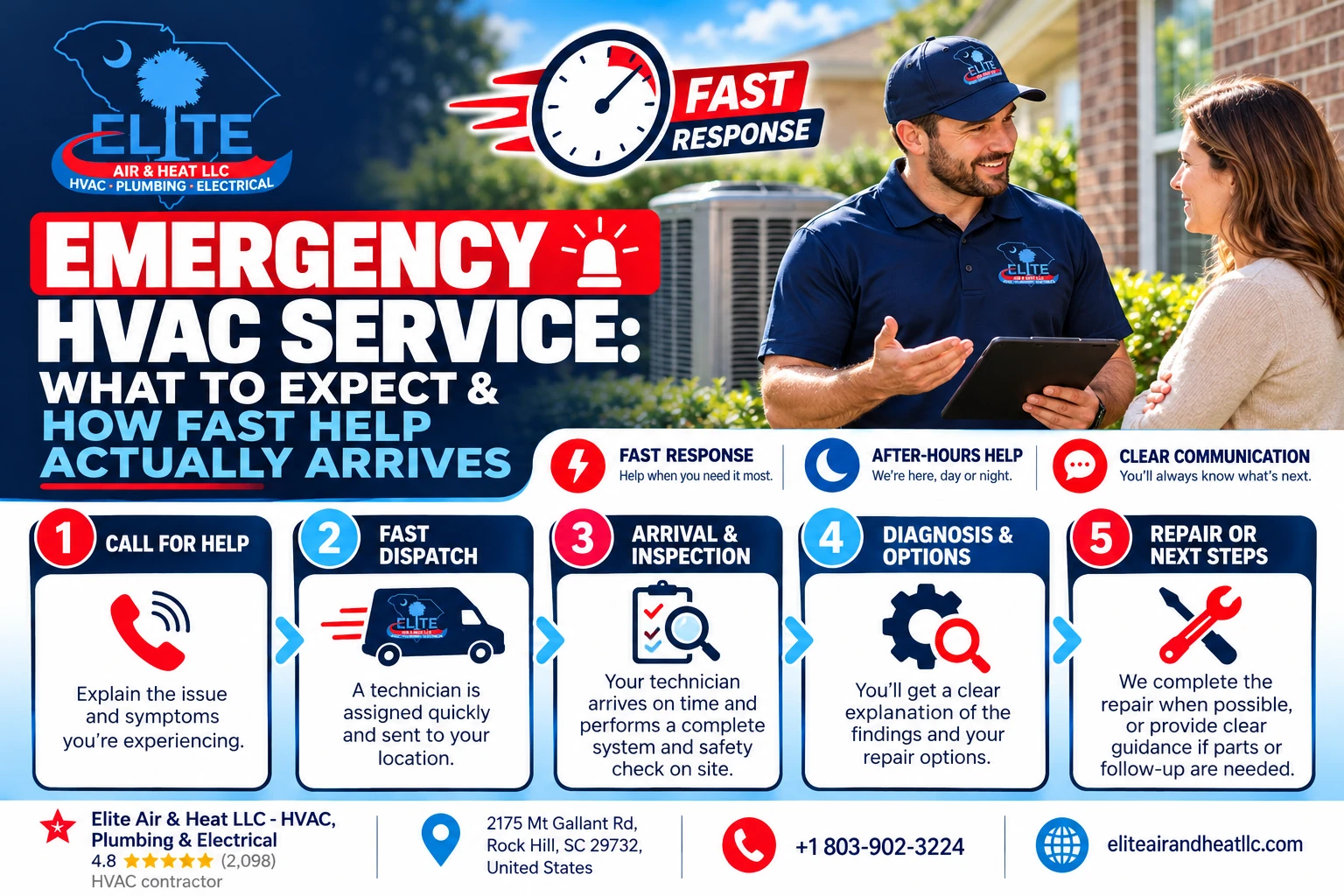
What Happens After You Call for Emergency HVAC Service?
Understanding the emergency service process can make an unexpected breakdown easier to manage.
Here’s what homeowners can generally expect when contacting our team.
Step 1: We Gather Information About Your HVAC Problem
The first step is understanding what’s happening.
When you contact Elite Air & Heat LLC, we may ask several questions to help identify the urgency of your situation.
These questions can include:
- Is your system completely off or still running?
- Are you experiencing a heating or cooling failure?
- What temperature is your home currently reaching?
- Have you noticed unusual noises, smells, or leaks?
- Is your thermostat displaying an error message?
- Are there occupants who may be particularly vulnerable to extreme temperatures?
We may also ask about your HVAC system’s age, equipment type, and recent repairs.
Providing accurate information helps us assess the situation and prepare for the service visit.
Step 2: We Evaluate the Urgency of Your Request
Emergency calls aren’t always handled in the order received.
For example, a home without air conditioning during dangerously high temperatures may require greater urgency than a system producing slightly uneven cooling.
Likewise, a home without heating during freezing weather may need faster assistance than one with a minor thermostat issue.
The goal is to identify situations where waiting could create additional risks.
Our team works to assess the problem and explain the available service options.
If your situation involves an immediate fire, gas, or carbon monoxide hazard, emergency responders must address that danger before HVAC repairs begin.
Step 3: We Arrange Technician Dispatch
Once we’ve assessed your request, we work to arrange a technician based on availability, location, and urgency.
Dispatch timing can change throughout the day.
A technician completing a nearby appointment may be able to respond sooner than someone finishing a complicated repair across the service area.
Weather, traffic, and existing appointments can also affect scheduling.
When you call, ask for the current estimated arrival window and whether you’ll receive an update if that window changes.
An estimated arrival window is more useful than a guaranteed time a company cannot realistically promise.
Step 4: Our Technician Inspects Your HVAC System
When a technician arrives, the first priority is identifying the cause of the failure.
An emergency HVAC inspection may include:
- Checking thermostat operation and settings
- Inspecting accessible electrical connections and components
- Evaluating airflow and blower operation
- Testing capacitors, contactors, and motors
- Checking refrigerant system performance
- Examining furnace ignition and safety controls
- Looking for signs of overheating or water damage
The exact inspection depends on the equipment and symptoms.
For example, an air conditioner that runs but doesn’t cool requires a different diagnostic approach than a furnace that shuts down during ignition.
At Elite Air & Heat LLC, we focus on identifying the cause rather than replacing components without determining why the problem occurred.
Step 5: We Explain the Recommended Repair
After diagnosing the issue, our technician explains what needs attention.
Some emergencies involve relatively straightforward repairs, such as replacing a failed capacitor or correcting a control problem.
Others involve more complicated issues, including compressor damage, blower motor failure, or a refrigerant leak.
Before proceeding, we explain the recommended work and applicable pricing.
This helps you understand whether the problem can be resolved during the visit or requires additional repairs.
Step 6: We Complete Repairs and Test the System
When the required parts and equipment are available, many emergency HVAC repairs can be completed during the initial visit.
After repairing the problem, our technician checks system operation to verify that the equipment is functioning properly.
Depending on the repair, testing may involve checking airflow, electrical performance, temperature changes, or heating and cooling cycles.
A system that starts running again isn’t necessarily operating correctly.
We want to confirm that the original malfunction has been addressed before considering the repair complete.
What Factors Can Delay Emergency HVAC Technician Arrival?
Even when a company offers 24/7 service, several factors influence how quickly help arrives.
Extreme Weather and Seasonal Demand
Hot summer afternoons and cold winter nights often produce increased demand for HVAC repairs.
In Rock Hill, South Carolina, prolonged heat and humidity can place heavy demands on air conditioning systems.
A sudden cold spell may also expose existing heating problems when homeowners begin relying more heavily on their furnaces or heat pumps.
When multiple systems fail during the same weather event, emergency appointment availability can become limited.
Your Distance From the Technician
Travel time matters.
Homeowners closer to an available technician may receive service sooner than customers farther away.
However, distance isn’t the only consideration. Technician availability and the seriousness of other active calls can affect dispatch order.
The Number of Active Emergency Calls
Some repairs take longer than expected.
A technician may discover additional damage, need to complete safety testing, or encounter a system that requires more extensive diagnostics.
That can affect subsequent appointments.
Road Conditions and Severe Storms
Heavy rain, flooding, fallen trees, or unsafe road conditions can delay travel.
South Carolina thunderstorms can also cause widespread electrical disturbances that affect multiple HVAC systems.
Technician safety remains essential during severe weather.
Can Emergency HVAC Repairs Be Completed the Same Day?
Many common HVAC problems are repairable during a single appointment, but same-day completion isn’t guaranteed.
The likelihood depends on the diagnosis and whether the necessary replacement parts are available.
Repairs That May Be Completed During One Visit
Examples include:
- Replacing certain capacitors or contactors
- Correcting thermostat issues
- Repairing accessible wiring or control connections
- Clearing some condensate drain blockages
- Replacing commonly stocked electrical components
- Addressing minor airflow restrictions
More complicated repairs may require additional labor, specialty equipment, or manufacturer-specific parts.
What Happens When Parts Aren’t Available?
If the necessary component isn’t available, the technician may need to schedule a return visit.
Depending on the failure, there may be an appropriate temporary solution. However, not every HVAC problem allows safe temporary operation.
We won’t recommend bypassing essential safety controls to keep damaged equipment running.
If your system cannot be repaired immediately, ask what steps you should take until service can be completed.
How Much Does Emergency HVAC Service Cost?
Emergency HVAC repair pricing varies based on the problem, time of service, and work required.
Some companies charge additional fees for evening, weekend, or holiday appointments.
The final cost may also depend on diagnostic charges, replacement parts, labor, and system accessibility.
Questions to Ask Before Scheduling
Before approving emergency service, consider asking:
- Is there an after-hours or emergency service charge?
- Is the diagnostic fee separate from repair costs?
- Will I receive repair pricing before work begins?
- Are the required parts likely to be available?
- What happens if the repair cannot be completed today?
At Elite Air & Heat LLC, we believe you should understand the recommended service and pricing before making a decision.
An emergency shouldn’t prevent you from asking reasonable questions about repair costs.
What Should You Do While Waiting for Emergency HVAC Service?
Once an emergency appointment has been arranged, there are several ways to prepare your home.
Your first priority should always be safety.
Turn Off Equipment Showing Dangerous Symptoms
If your system produces smoke, strong burning odors, severe grinding noises, or repeatedly trips a breaker, stop operating it.
Don’t repeatedly reset breakers or attempt electrical repairs.
If you suspect a gas leak or carbon monoxide exposure, evacuate immediately rather than troubleshooting the system.
Keep Indoor Temperatures Manageable
During hot weather, close blinds and curtains on sun-exposed windows to reduce heat entering your home.
Avoid unnecessary use of ovens and other heat-producing appliances.
If indoor temperatures become unsafe, relocate to an air-conditioned location rather than continuing to wait inside.
During cold weather, close unnecessary exterior openings and use suitable blankets and clothing to stay warm.
Never use an outdoor grill, gas oven, or generator to heat your home.
Prepare Information for the Technician
When it’s safe, gather your thermostat settings, equipment model information, and any relevant maintenance records.
Make sure the technician can access the indoor and outdoor HVAC equipment.
Keeping pets in a separate room can also make the service visit easier.
Should You Request Emergency HVAC Service or Wait for a Regular Appointment?
Emergency service isn’t always necessary.
A slightly noisy system that continues operating normally may be suitable for a scheduled inspection.
Similarly, minor temperature differences between rooms or gradually declining efficiency may not require after-hours attention.
However, you should consider emergency service when:
- Your heating or cooling system stops working during severe temperatures.
- Indoor conditions could become unsafe before a normal appointment.
- The equipment shows signs of significant electrical or mechanical failure.
- Continued operation could cause additional damage.
For less urgent problems, scheduling regular AC repair or heating service may provide a more practical option.
The important distinction is whether delaying service creates a meaningful safety risk or substantially worsens the situation.
How Can You Reduce the Risk of Future HVAC Emergencies?
Not every breakdown is preventable, but regular maintenance can help identify problems before they cause complete system failures.
At Elite Air & Heat LLC, we recommend scheduling seasonal HVAC inspections rather than waiting until equipment stops operating.
Preventive service may include:
- Inspecting electrical connections and controls
- Cleaning accessible coils and checking airflow
- Evaluating refrigerant system performance
- Checking motors and moving components
- Inspecting condensate drainage
- Testing heating and cooling operation
Changing air filters regularly and paying attention to unusual sounds can also help.
Our HVAC maintenance services are designed to help homeowners keep their equipment operating reliably throughout changing seasons.
Frequently Asked Questions About Emergency HVAC Service
Does 24/7 HVAC service mean a technician arrives immediately?
No. It means emergency assistance is available around the clock. Actual arrival times depend on technician availability, location, active calls, and weather. Ask the company for its current estimated arrival window.
Can emergency HVAC service fix my air conditioner overnight?
Some overnight repairs can be completed during the initial appointment if a technician is available and the required parts are on hand. More complicated failures may require a return visit.
Is no air conditioning always considered an emergency?
Not necessarily. The urgency depends on indoor temperatures, outdoor weather, and occupant vulnerability. A complete AC failure during extreme heat should receive prompt attention, particularly when medically vulnerable people are present.
Should I turn off my HVAC system before the technician arrives?
Turn it off if you notice smoke, burning smells, severe mechanical noises, or repeated electrical trips. For ordinary performance problems, ask the service team whether the system should remain off until inspection.
Is emergency HVAC repair more expensive than regular service?
It can be. After-hours, weekend, and holiday appointments may involve additional charges. Ask about service fees, diagnostic pricing, and repair estimates before approving work.
What if my HVAC system is too old to repair?
A technician can evaluate the equipment’s condition, repair costs, and remaining expected service life. An older system doesn’t automatically require replacement, but major repairs may make a new installation more economical.
Get 24/7 Emergency HVAC Service From Elite Air & Heat LLC in Rock Hill, SC
When your heating or cooling system stops working unexpectedly, you need clear answers and a reliable plan for restoring comfort. At Elite Air & Heat LLC, we understand how disruptive an HVAC breakdown can be, particularly during South Carolina’s hottest summer days and cold winter nights.
Our team provides 24/7 emergency HVAC service in Rock Hill, SC, and surrounding communities. Whether your air conditioner stops cooling, your furnace won’t start, or your heat pump experiences an unexpected failure, we’re here to help you understand the problem and available repair options.
We work to arrange prompt service, diagnose equipment problems, and explain recommended repairs before proceeding. When same-day repairs are possible, our goal is to restore safe, reliable heating or cooling with as little disruption as possible.
You don’t have to guess how an emergency HVAC appointment works or whether your system needs immediate attention.
Call Elite Air & Heat LLC at (803) 366-4663 for emergency HVAC assistance. Tell us what’s happening with your system, and we’ll help you determine the next step and available scheduling options.