
If your home has recurring leaks, rusty water, low pressure, or aging pipes behind walls, a full repipe may be on the table.
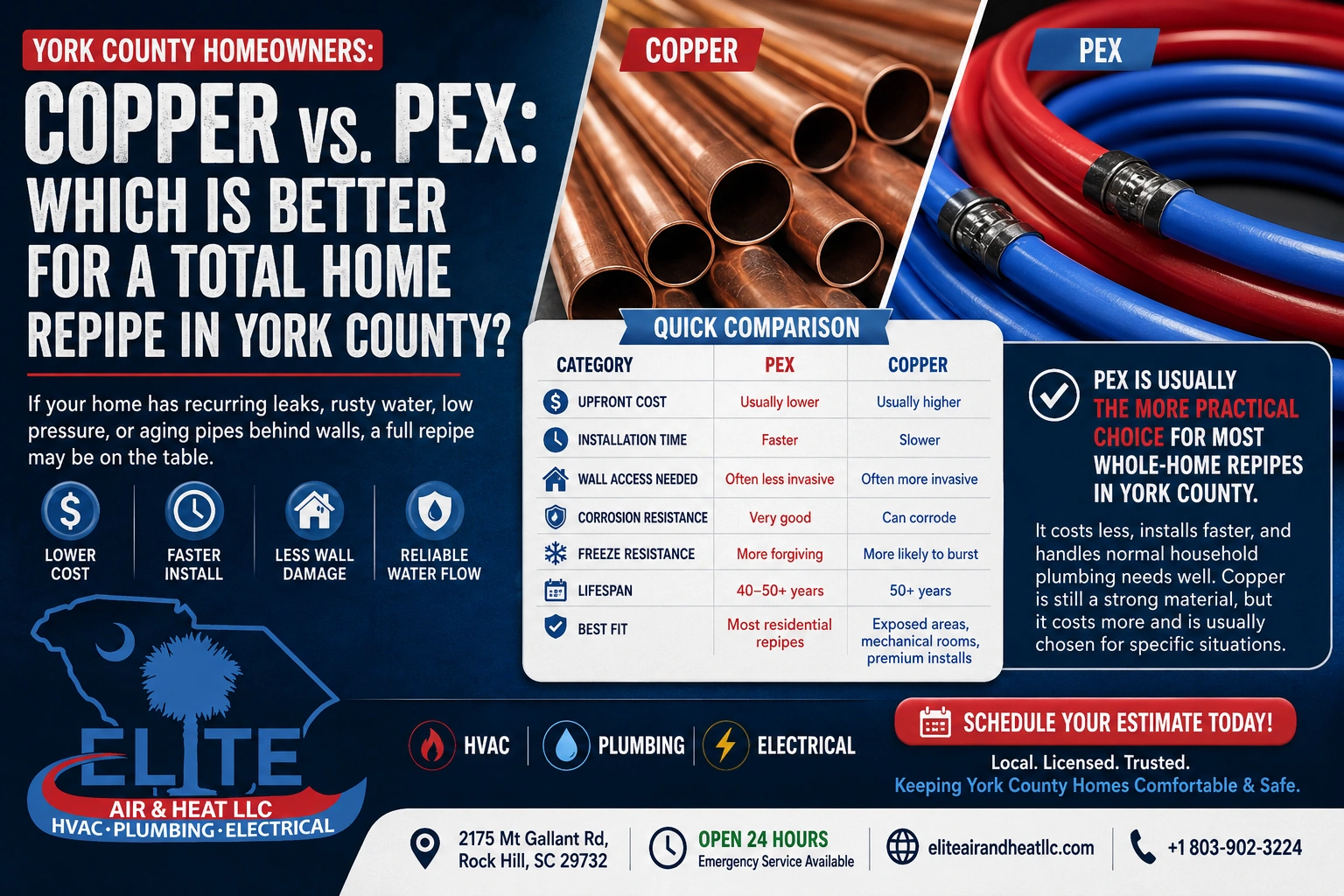
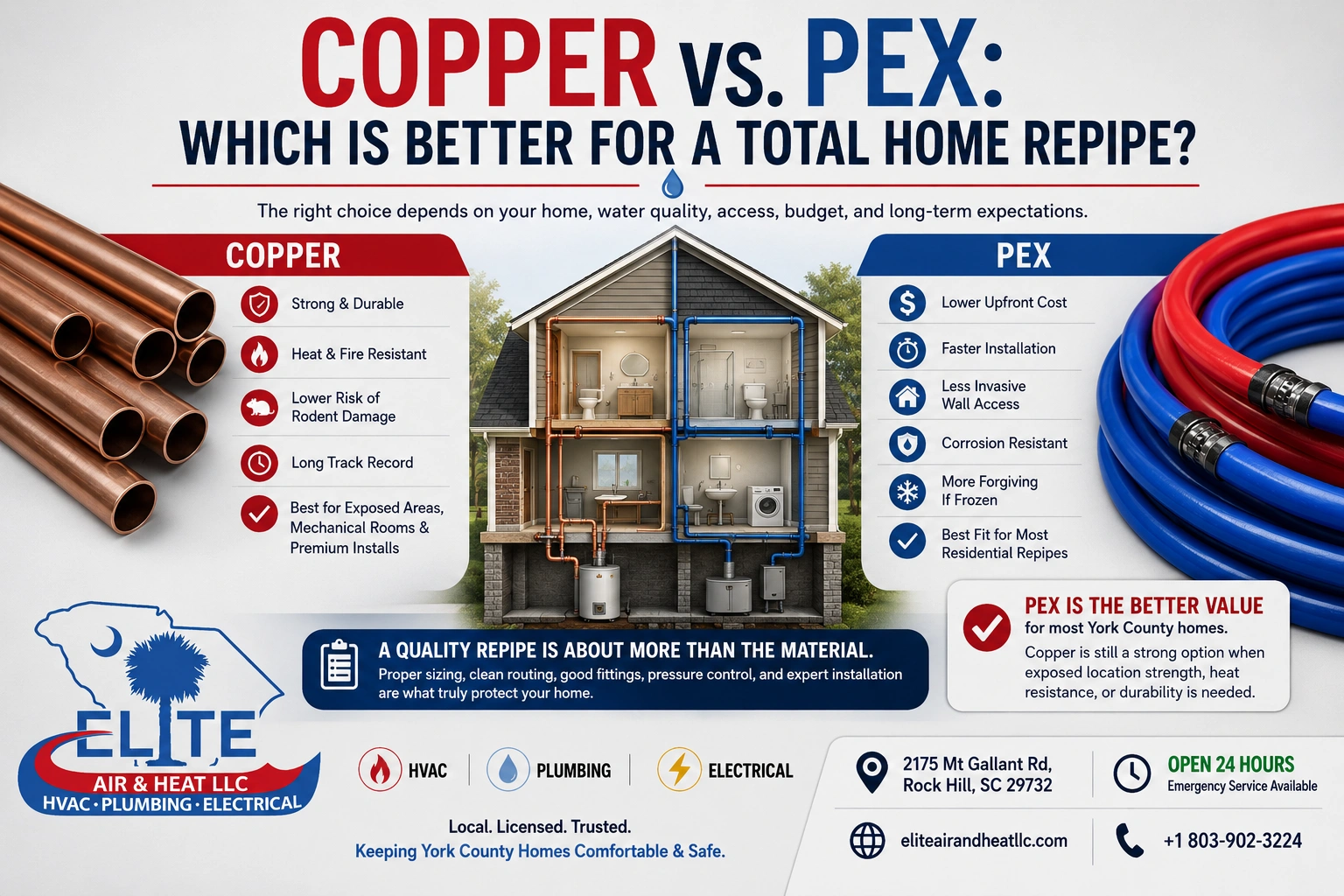
Here’s the plain answer: PEX is usually the more practical choice for most whole-home repipes in York County because it costs less, installs faster, and handles normal household plumbing needs well. Copper is still a strong material, but it costs more and is usually chosen for specific situations.
That does not mean PEX is always better.
It means the right choice depends on your home, water quality, access, budget, and long-term expectations.
Need a Total Home Repipe?
Get expert guidance on copper vs. PEX and transparent pricing. Call today to schedule your plumbing inspection.
Quick comparison
| Category | PEX | Copper |
| Upfront cost | Usually lower | Usually higher |
| Installation time | Faster | Slower |
| Wall access needed | Often less invasive | Often more invasive |
| Corrosion resistance | Very good | Can corrode depending on water conditions |
| Freeze resistance | More forgiving | More likely to burst if frozen |
| Lifespan | Commonly 40–50+ years | Commonly 50+ years |
| Rodent damage risk | Possible | Lower |
| Heat/fire exposure | More vulnerable | More resistant |
| Best fit | Most residential repipes | Exposed areas, mechanical rooms, premium installs |
Why PEX is common for whole-home repipes
PEX is flexible plastic piping designed for water supply lines.
For many homeowners, the biggest advantages are cost and access. Because PEX bends and can be routed through tighter areas, plumbers can often reduce the amount of wall and ceiling opening needed.
That matters in a finished home.
PEX also does not corrode the way metal pipe can. If your current issue involves pinhole leaks, acidic water, or aging metal piping, that can be a major benefit.
PEX usually makes sense when:
- You want a lower total project cost
- The home is finished and access is limited
- You want fewer fittings behind walls
- You have recurring leaks in old piping
- You want a practical, code-accepted repipe option
Why some homeowners still choose copper
Copper has been used for a long time because it is strong, rigid, heat-resistant, and familiar to plumbers.
It may be a better fit in certain exposed locations, near water heaters, in mechanical rooms, or where extra durability against heat, sunlight, or pests matters.
Copper may make sense when:
- Budget is less of a concern
- The piping will be exposed
- The home has specific code or design requirements
- You prefer metal piping
- Rodent damage is a known concern
- The installer recommends copper for short transition sections
The cheaper option is not always wrong, but it should make sense. In many repipes, plumbers use mostly PEX with copper or other approved materials in specific areas where they are a better fit.
The way plumbing materials and installation standards have evolved is partly connected to lessons learned from plumbing disasters that changed building codes, which is one reason modern repiping work must follow current requirements rather than simply copying an older system.
What does a total repipe usually cost?
For many York County homes, a whole-home repipe may fall somewhere around:
- PEX repipe: $4,000–$12,000+
- Copper repipe: $8,000–$20,000+
The price changes based on:
- Home size
- Number of bathrooms
- Crawlspace or slab access
- Wall and ceiling access
- Pipe material
- Permit requirements
- Drywall repair
- Water heater connections
- Shut-off valve replacement
- Fixture supply line updates
A one-story home with crawlspace access is usually easier than a two-story home on a slab with finished ceilings.

Corrected: Why Rock Hill City Water “Scale” Can Shorten Water Heater Life
If your water heater failed around year seven, it is fair to ask whether the water had something to do…

What can make the job more expensive?
This is where homeowners sometimes get surprised.
A repipe estimate may increase if the home has:
- Poor access behind walls
- Old shut-off valves that need replacement
- Galvanized piping tied into newer plumbing
- Slab plumbing that must be rerouted
- Pressure problems
- Water quality issues
- Damaged drywall or tile areas
- Code corrections needed during the work
A good plumber should explain whether the estimate includes drywall access and repair, permits, new shut-off valves, fixture connections, and cleanup.
Which lasts longer?
Both materials can last a long time when installed correctly.
Copper has a long track record, but it can fail early when water chemistry is aggressive or when installation quality is poor.
PEX avoids corrosion, but it must be protected from UV light, excessive heat, poor fittings, and physical damage.
In plain terms: installation quality matters as much as material choice.
Bad copper work can leak.
Bad PEX work can leak.
Thinking about the secret life of your home’s pipes can also help put this into perspective: much of your plumbing works silently behind walls every day, dealing with pressure, temperature changes, water chemistry, and years of repeated use before a visible problem appears.
What should a plumber inspect before recommending one?
Before approving a repipe, a good plumber should look at:
- Existing pipe material
- Leak history
- Water pressure
- Water quality
- Crawlspace or attic access
- Slab versus crawlspace routing
- Fixture count
- Water heater connections
- Shut-off valve condition
- Whether the old lines should be abandoned or removed
- Permit and inspection requirements
The goal is not just replacing pipe. The goal is solving the reason the old system is failing.
When not to DIY
A whole-home repipe is not a weekend DIY project.
You are dealing with:
- Main water shutoff
- Pressure regulation
- Hot and cold distribution
- Hidden wall penetrations
- Water heater connections
- Code requirements
- Leak risk behind finished surfaces
Small fixture supply repairs may be manageable for experienced homeowners. A total repipe should be handled by a licensed plumber.
The bottom line
For most York County homes, PEX is the better value for a total repipe because it is less expensive, easier to route, and reliable when installed correctly.
Copper is still a strong option, but it usually costs more and is best used where its durability, heat resistance, or exposed-location strength actually matters.
If you only remember one thing, remember this: the best repipe is not just about PEX versus copper. It is about correct sizing, clean routing, good fittings, proper support, water pressure control, and a plumber who can explain why the material fits your home.
Copper or PEX? Get the Right Answer.
Choose the best piping solution for your York County home. Call now for expert repiping advice and reliable service.