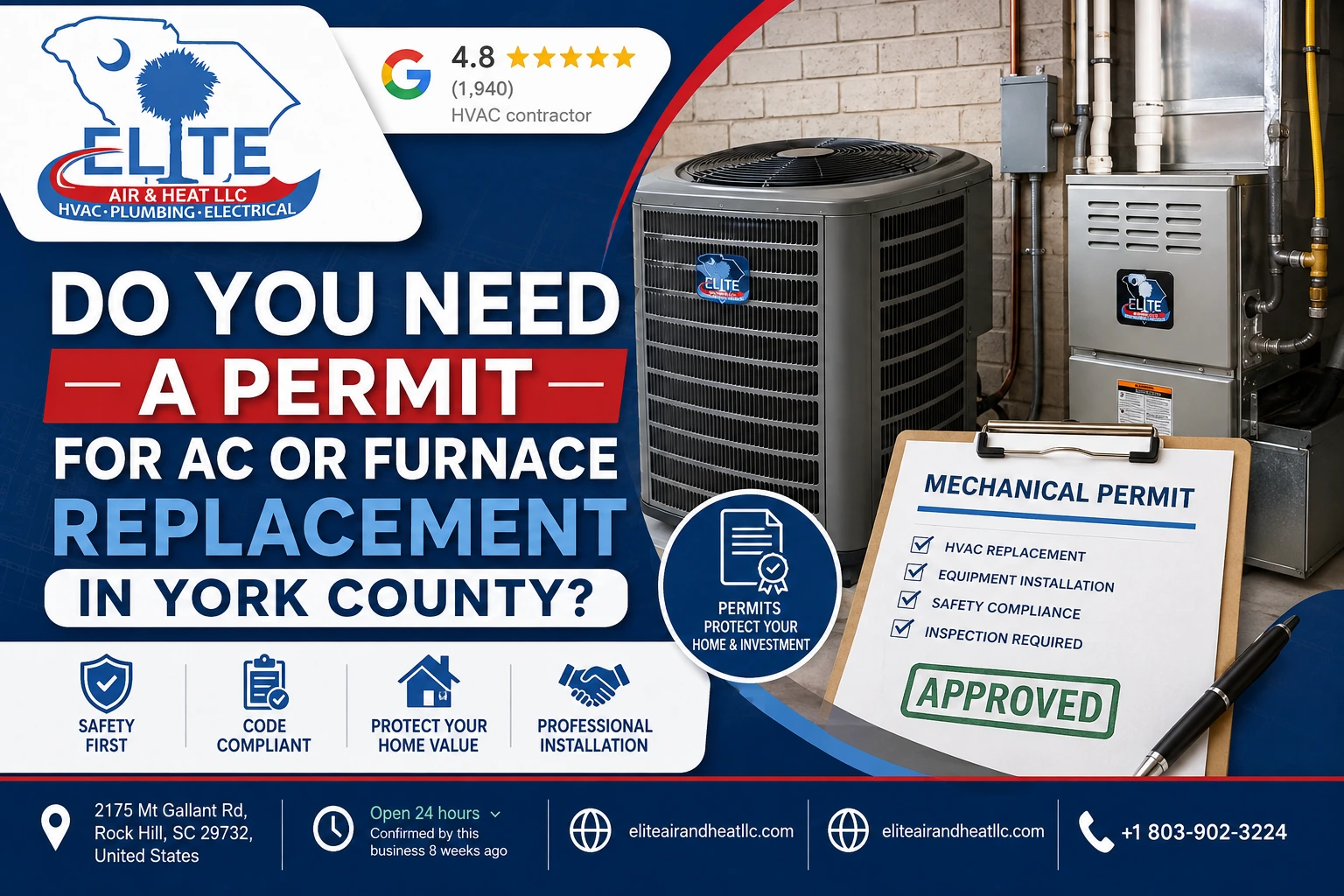

Replacing an air conditioner or furnace can seem like a straightforward home improvement project, but there is an important step homeowners sometimes overlook: permitting.
If you’re searching for information about an AC replacement permit York County homeowners may need, HVAC replacement work may require a mechanical permit when York County is the permitting authority for the property. However, requirements can vary based on the scope of the work and the jurisdiction responsible for your address.
At Elite Air & Heat, LLC, we believe homeowners should understand what is involved before an HVAC replacement begins. Permits are more than paperwork. They provide a process for verifying that applicable installation and safety requirements have been addressed.
Below, we explain what York County homeowners should know about AC, furnace, and heat pump replacement permits, including jurisdiction, inspections, contractor responsibilities, and how to prepare for a replacement.
Need an HVAC Replacement Permit?
Avoid permit confusion and replacement delays. Contact our team for reliable guidance and professional HVAC service.
Is an AC Replacement Permit Required in York County?
HVAC work falls within York County’s permitting system for properties under the county’s permitting jurisdiction. That means homeowners should not assume an air conditioner replacement is automatically exempt simply because an existing system is being replaced.
The exact requirements can depend on the scope of the project.
An AC replacement may involve more than installing a new outdoor unit. Depending on the system and installation, the project could include:
- Indoor air handler replacement
- Refrigerant piping
- Electrical connections
- Disconnects
- Thermostat wiring
- Condensate drainage
- Duct modifications
- Equipment supports
Because HVAC systems interact with several parts of a home, permit requirements should be confirmed before replacement work begins.
For homeowners researching AC replacement permit York County requirements, the first step is determining whether York County or another local municipality has permitting authority over the property.
Are Permit Requirements the Same Everywhere in York County?
No. This is an important distinction for homeowners.
Living geographically within York County does not necessarily mean York County itself is the permitting authority for your property. Some homes are located within incorporated municipalities that may handle their own permitting and inspections.
Depending on your address, the appropriate permitting authority may be different.
If you live in or around Rock Hill, Fort Mill, Tega Cay, Clover, York, or another municipality in the area, the jurisdiction responsible for your property should be confirmed before a permit application is submitted.
A qualified HVAC contractor should be able to determine which permitting authority applies to the project and explain the next steps.
Does a Furnace Replacement Require a Permit?
Furnace replacement can involve additional considerations, particularly when natural gas or another fuel source is involved. Since replacing a furnace can be a significant furnace replacement investment, understanding both installation and permitting requirements can help homeowners make a more informed decision.
Depending on the installation, furnace replacement may include work involving:
- Gas supply lines
- Shutoff valves
- Venting
- Combustion air
- Electrical connections
- Condensate drainage for high-efficiency furnaces
- Flue systems
- Carbon monoxide safety considerations
Proper installation of gas-fired equipment is important because the work can involve fuel connections, combustion, venting, and carbon monoxide safety.
Because the exact permit requirements depend on the project and jurisdiction, homeowners should confirm what is required before furnace replacement begins.
Do Heat Pump Replacements Need Permits?
Heat pumps are part of a home’s HVAC system and may also fall under mechanical permitting requirements.
A heat pump replacement can involve:
- Outdoor equipment
- Indoor air handlers
- Refrigerant piping
- Electrical circuits
- Auxiliary electric heat
- Condensate drainage
- Thermostat controls
- Duct connections
Like conventional air-conditioning systems and furnaces, heat pump replacements should be evaluated based on the work being performed and the permitting authority responsible for the property.
Why Are HVAC Permits Important?
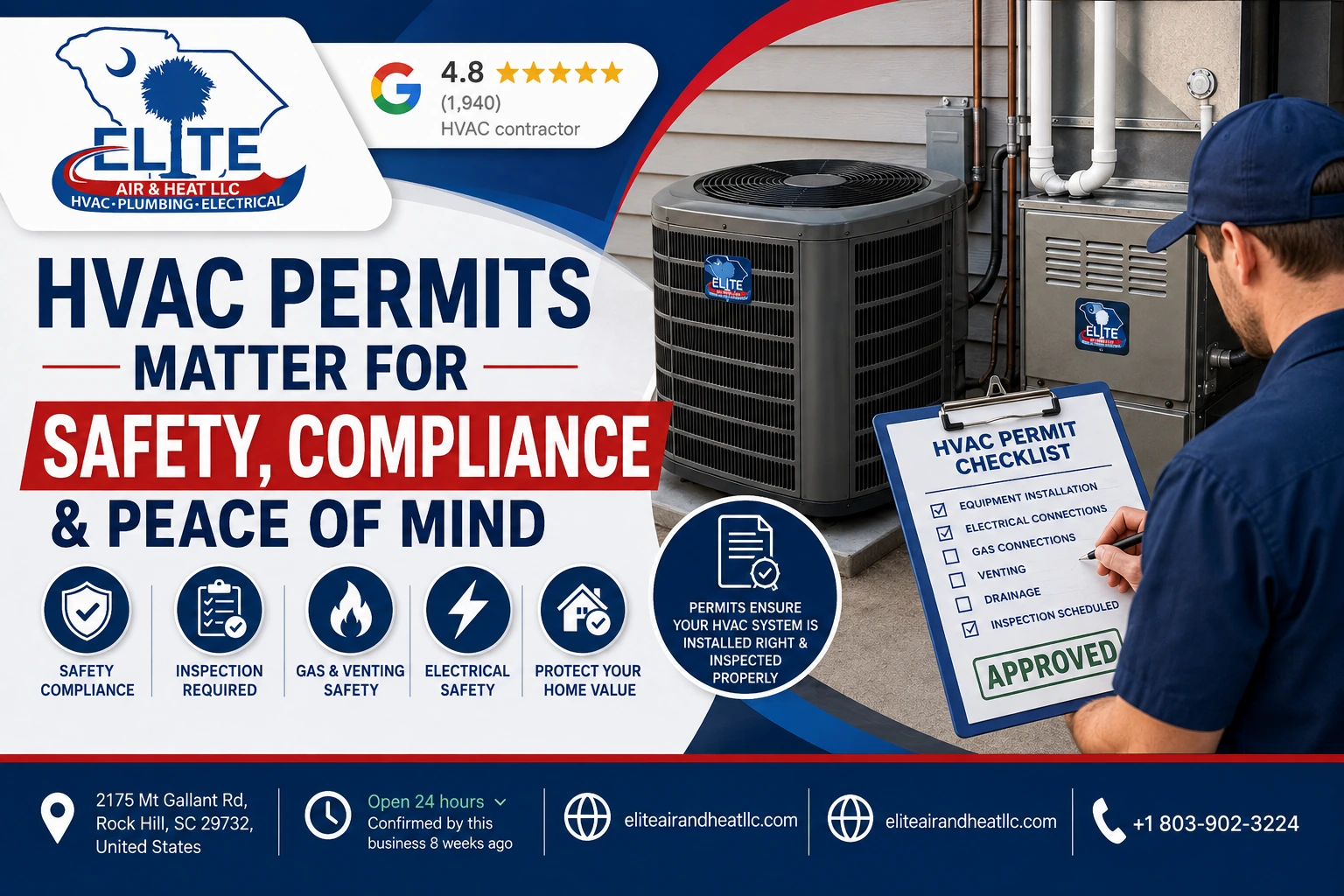
Permitting provides a process for verifying that HVAC work complies with applicable mechanical, electrical, fuel-gas, building, and safety requirements.
Replacing HVAC equipment can involve much more than removing an old unit and connecting a new one. The installation may affect electrical service, refrigerant lines, drainage, ductwork, gas piping, venting, equipment placement, and other parts of the home.
Permits and required inspections provide an additional layer of oversight for this work.
Several areas may be relevant during an HVAC replacement.
Electrical Safety
Air conditioners, heat pumps, air handlers, and furnaces require electrical connections.
Depending on the equipment, the installation may involve breakers, wiring, disconnects, and other electrical components that need to be appropriate for the new system.
Refrigerant System Installation
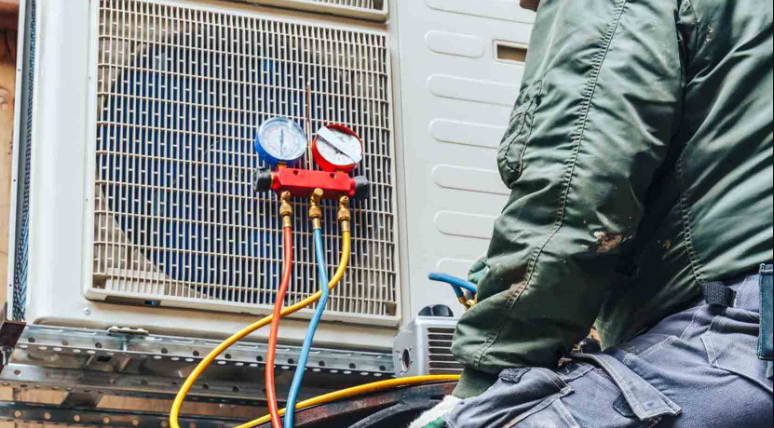
Air conditioners and heat pumps rely on refrigerant systems to transfer heat.
Proper installation and system setup are important for cooling performance, efficiency, and equipment operation.
Condensate Drainage
Air conditioners and certain furnaces produce condensation during normal operation.
The drainage system needs to direct that moisture away from the equipment and surrounding areas appropriately.
Gas Connections and Venting
Gas furnaces require additional attention to fuel connections, combustion, and venting.
Proper installation helps ensure that the equipment operates as intended and that combustion gases are safely directed outside the home.
Equipment Placement and Clearances
HVAC equipment needs appropriate placement and access for operation, airflow, servicing, and future maintenance.
These are some of the reasons an HVAC replacement should be treated as a complete installation rather than simply an equipment swap.
Does an AC or Furnace Replacement Need an Inspection?
Permitted HVAC work may require an inspection depending on the project and the authority having jurisdiction.
The type of inspection can vary based on the equipment being replaced and the work performed. A straightforward AC replacement may not follow the same inspection process as a project involving new ductwork, electrical changes, or gas piping.
For replacement projects, an inspector may review applicable parts of the completed installation, such as:
- Equipment placement
- Electrical connections
- Disconnects
- Condensate drainage
- Gas connections
- Venting
- Equipment clearances
- Duct connections
- Other applicable installation requirements
Your contractor should be able to explain whether an inspection is required and how it will be scheduled.
Who Gets the HVAC Replacement Permit?
For many professionally installed HVAC systems, the contractor performing the replacement handles the permitting process.
Before work begins, homeowners should ask:
- Does this project require a permit?
- Which jurisdiction is responsible for the property?
- Who will obtain the permit?
- Is permitting included in the project price?
- Will an inspection be required?
- Who will schedule the inspection?
- Will I receive documentation after the work is completed?
A qualified HVAC contractor should be comfortable explaining how permitting applies to the specific replacement project.
How Much Does an HVAC Permit Cost in York County?
Permit fees can depend on the type and value of the work being performed.
Because fee schedules and local requirements can change, homeowners should confirm the current permit cost with the appropriate permitting authority before the project begins.
Your HVAC contractor may also be able to explain whether permit-related costs are included in the replacement estimate. Homeowners planning a new system may also want to consider the overall HVAC replacement cost when budgeting for equipment, installation, permits, and other project expenses.
The permit itself is only one part of the overall replacement process. The more important consideration is determining whether a permit is required and making sure the project follows the appropriate local process.

What Freezing Nights Reveal About Your Furnace That Mild Weather Never Will
Your furnace can seem perfectly fine for weeks, even months, until the temperature really drops. Then suddenly, things change. Freezing…
What Happens If an HVAC Replacement Is Completed Without a Required Permit?
If a permit is required for an HVAC replacement and the work is completed without one, it can create complications later.
Potential issues may include:
- Additional permitting requirements
- Reinspection costs
- Required corrections
- Difficulty documenting completed work
- Questions during future renovations
- Questions during a home sale
An installation completed without a required permit does not automatically mean the HVAC system was installed incorrectly. However, it may make it more difficult to demonstrate that the work went through the applicable local permitting and inspection process.
The simplest approach is to determine the requirements before installation begins.
Could an Unpermitted HVAC Replacement Affect Selling Your Home?
Potentially.
During a real estate transaction, questions can arise about major improvements or equipment replacements completed on the property.
HVAC systems are significant mechanical components of a home, and having appropriate project documentation can make it easier to show when equipment was replaced and how the work was handled.
An unpermitted replacement does not automatically prevent a home from being sold, but missing documentation can create questions that may need to be addressed during the transaction.
Keeping permit records, invoices, equipment information, and other replacement documentation together can help homeowners maintain a clearer history of work completed on the property.
What If You Are Repairing the AC Instead of Replacing It?
Repairing an existing air conditioner is different from replacing major equipment.
Routine HVAC repairs can include work such as:
- Replacing a capacitor
- Replacing a contactor
- Repairing thermostat wiring
- Clearing a clogged condensate drain
- Replacing certain electrical components
- Servicing refrigerant components
Permit requirements depend on the nature and scope of the work.
Replacing complete equipment, modifying gas piping, adding electrical circuits, or substantially changing mechanical systems is different from routine maintenance or minor repairs.
When there is uncertainty, the permitting authority responsible for the property can determine whether the planned work requires a permit.
Why Contractor Qualifications Matter During HVAC Replacement
Permitting is only one part of a properly completed HVAC replacement.
Installation quality affects how the new system operates after it is installed. Replacing HVAC equipment involves more than removing the old unit and connecting a new one.
Depending on the system, a professional replacement may need to address:
- Correct equipment sizing
- Airflow
- Duct condition
- Refrigerant setup
- Electrical requirements
- Condensate drainage
- Gas connections
- Venting
- Thermostat configuration
- Manufacturer installation requirements
- System testing and commissioning
A permit or inspection should not be viewed as a substitute for qualified installation work. Instead, permitting is one part of the overall process.
Does a Permit Guarantee a Perfect HVAC Installation?
No.
A permit and inspection can help verify compliance with applicable requirements, but they do not guarantee every aspect of system performance or installation quality.
Proper HVAC replacement also depends on equipment selection, sizing, workmanship, airflow, system setup, testing, and commissioning.
Homeowners should consider both contractor qualifications and permit compliance when planning an AC, heat pump, or furnace replacement.
How to Prepare for an AC or Furnace Replacement
Before replacing your HVAC system, there are several things worth discussing with your contractor.
1. Confirm the Proper System Size
A replacement system should be matched to the home’s heating and cooling needs rather than automatically copying the size of the old equipment.
Changes to insulation, windows, additions, ductwork, or other parts of the property may have changed the home’s heating and cooling requirements.
2. Ask About Permits
Find out whether the replacement requires a permit and which local authority has jurisdiction over the property.
If you are specifically researching AC replacement permit York County requirements, make sure the contractor confirms whether York County or a municipality is responsible for permits at your address.
Do this before work begins rather than after installation.
3. Review the Ductwork
New equipment may not perform as intended if the existing duct system has significant leakage, restrictions, damage, or airflow problems.
The condition of the ductwork should be considered as part of the overall replacement.
4. Discuss Electrical Requirements
Different equipment may have different electrical requirements.
Ask whether the existing electrical components are appropriate for the replacement system or whether modifications will be needed.
5. Discuss Gas and Venting Requirements
If you are replacing a gas furnace, ask how the existing fuel connections and venting will be evaluated as part of the installation.
6. Understand the Inspection Process
If an inspection is required, ask who will schedule it, when it is expected to occur, and whether the homeowner needs to be present.
7. Keep Your Documentation
Keep permit records, equipment information, warranties, invoices, and maintenance records with your household documents.
These records can be useful for future service, renovations, equipment replacement, or a real estate transaction.
Frequently Asked Questions About AC Replacement Permits in York County
Do I need an AC replacement permit in York County?
If you are researching AC replacement permit York County requirements, HVAC replacement work may require a permit when York County is the permitting authority for the property. The exact requirements depend on the scope of the project and the jurisdiction responsible for your address, so they should be confirmed before work begins.
Does a furnace replacement require a permit?
Furnace replacement may involve mechanical, electrical, gas, and venting work. Because requirements depend on the installation and local jurisdiction, homeowners should confirm the applicable permit requirements before replacing a furnace.
Who normally gets the HVAC permit?
For professionally installed systems, the HVAC contractor commonly handles the permit application and coordinates required inspections. Homeowners should confirm this with the contractor before the project begins.
Will my new HVAC system need an inspection?
Permitted HVAC work may require an inspection depending on the scope of the replacement and the local permitting authority. Your contractor should explain which inspections apply and who is responsible for scheduling them.
Do I need a permit to replace a heat pump?
A heat pump replacement may require a mechanical permit because the work can involve refrigerant piping, electrical components, indoor and outdoor equipment, drainage, and duct connections. Requirements should be confirmed for the specific property and project.
Are permit requirements the same throughout York County?
Not necessarily. Some properties within York County may be located in municipalities with their own permitting processes. The authority responsible for your address should be confirmed before the HVAC replacement begins.
Planning an AC or Furnace Replacement in York County?
Permitting is one part of planning a properly completed HVAC replacement. If you’re trying to determine AC replacement permit York County requirements for your home, start by confirming which authority has jurisdiction over the property, whether a permit is required, and how any required inspections will be handled.
Elite Air & Heat, LLC helps homeowners in the Rock Hill area understand the steps involved in replacing air conditioners, heat pumps, and furnaces. If you’re considering a new HVAC system, our team can discuss your home’s heating and cooling needs and what to expect during the replacement process.
Contact Elite Air & Heat, LLC to discuss your AC, heat pump, or furnace replacement and the steps involved in completing the project properly.
Replacing Your AC or Furnace?
Get professional help with permit requirements in York County. Call today to keep your HVAC replacement compliant and hassle-free.