
When the power goes out during a South Carolina storm, most homeowners start looking at two options:
- A whole-home generator
- A home battery backup system
Both provide backup power.
Both can keep important systems running.
But they solve outages in very different ways.
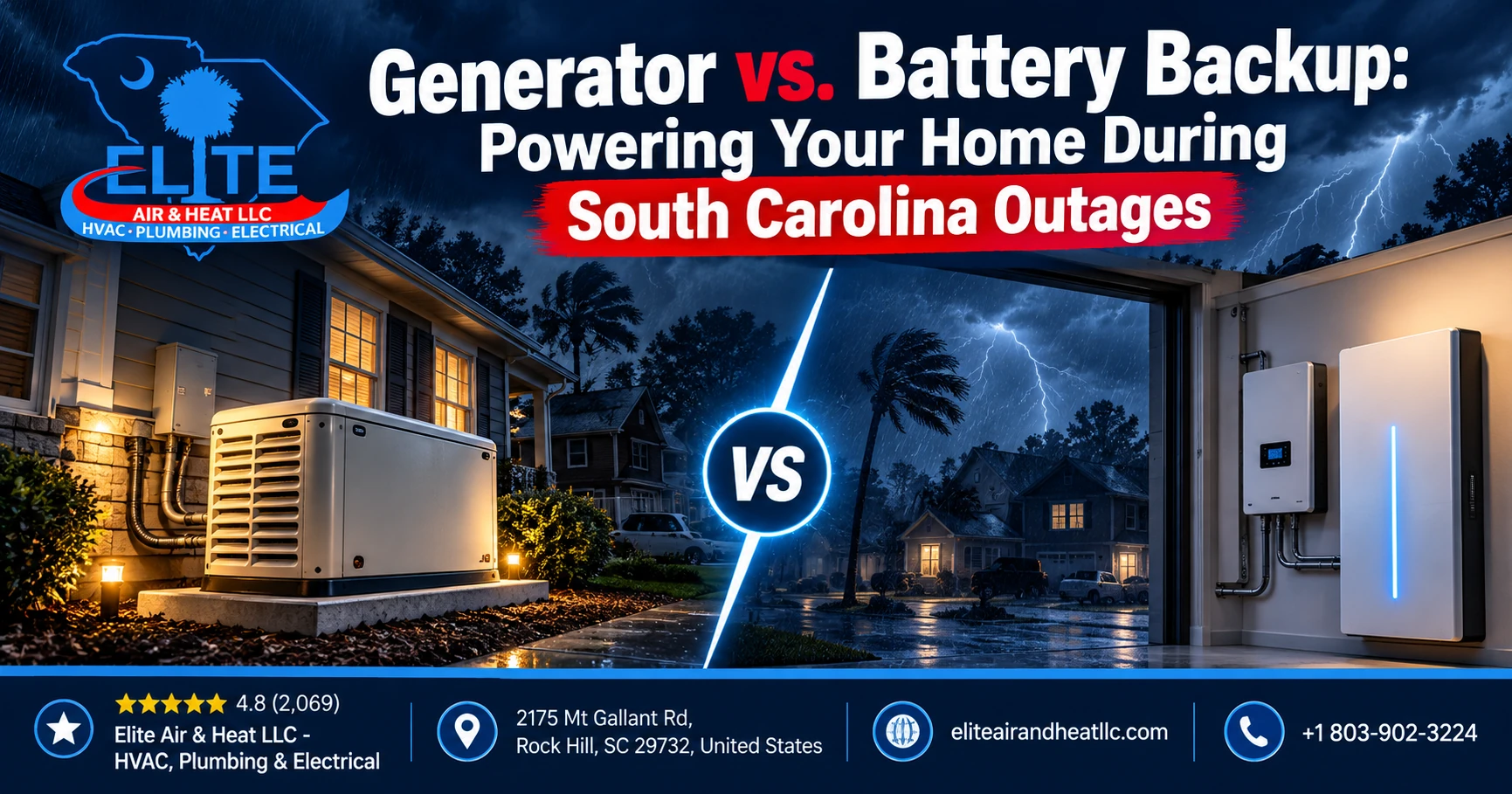
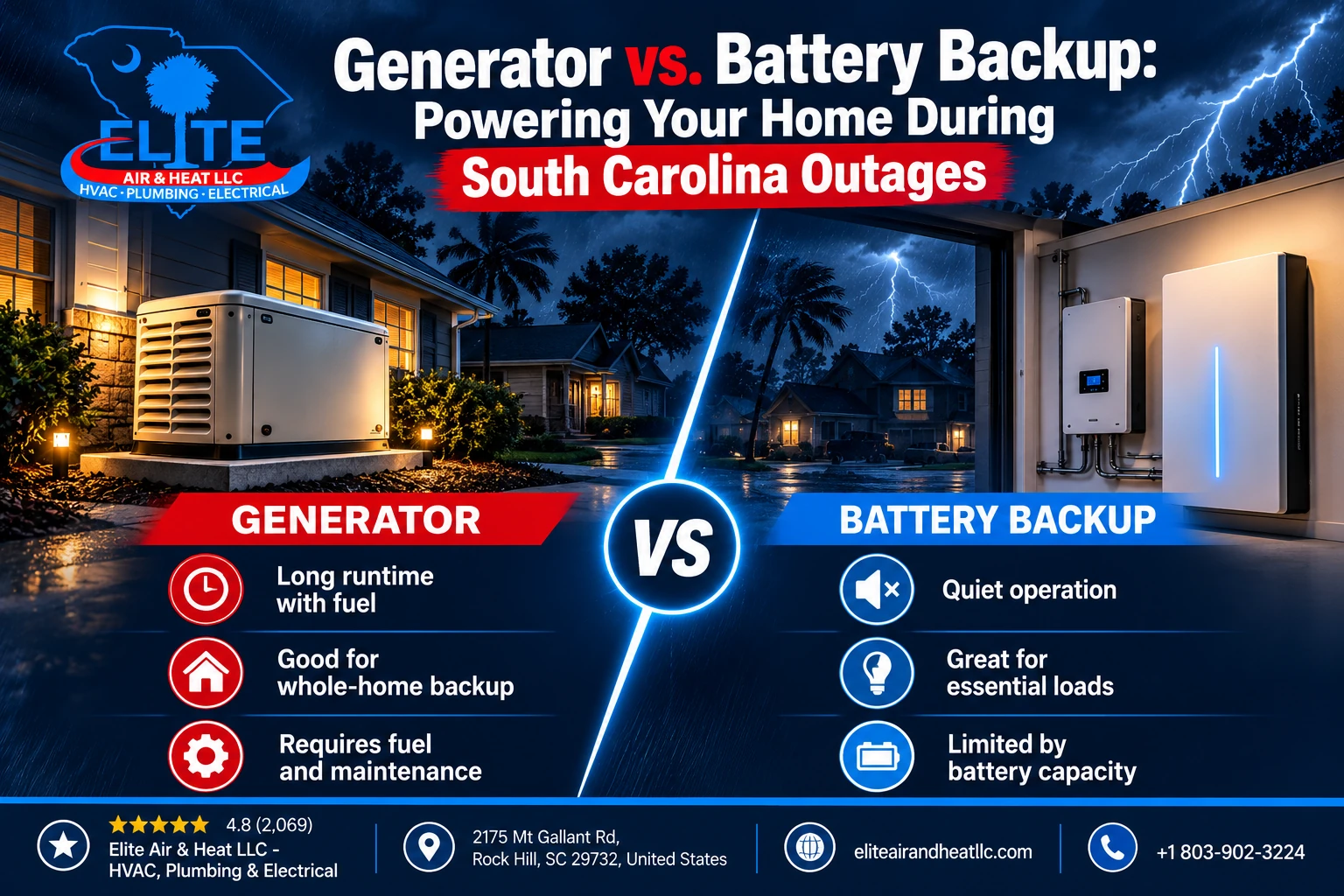
Here’s the plain answer: a generator is usually the better choice for long outages and whole-home backup. A battery backup is often better for short outages, quiet operation, and homeowners who want limited backup power without fuel.
The right answer depends on what you’re trying to power and how long you need it to run.
How a Whole-Home Generator Works
A standby generator automatically starts when utility power fails.
Most systems run on:
- Natural gas
- Propane
Once power is restored, the generator shuts itself off.
For many homeowners, the biggest advantage is simple:
As long as fuel is available, the generator can continue operating.
What a Generator Can Typically Power?
Depending on size, a generator can run:
- Central air conditioning
- Heating systems
- Refrigerators
- Freezers
- Water heaters
- Well pumps
- Lighting
- Internet equipment
- Medical equipment
- Most household circuits
This is why generators remain popular in hurricane-prone regions.
How Battery Backup Works
A battery system stores electricity and supplies power when the grid goes down.
Unlike a generator:
- No fuel is burned
- No engine starts
- No exhaust is produced
- Operation is nearly silent
Battery systems are commonly paired with:
- Solar panels
- Grid charging
- Time-of-use electric rate plans
The challenge is capacity.
Eventually the stored energy runs out and must be recharged.
The Biggest Difference: Runtime
This is where homeowners sometimes get into trouble.
They assume a battery backup works like a generator.
It doesn’t.
Generator Runtime
A properly sized generator connected to natural gas can often run continuously for days during an extended outage.
Battery Runtime
Battery runtime depends on:
- Battery size
- Household load
- What equipment is operating
A battery may provide:
- Several hours
- Overnight backup
- A day or more of limited use
But central AC, electric water heaters, electric ranges, and other large loads can drain batteries quickly.
Cost Comparison
| System | Typical Installed Cost |
| Portable generator setup | $1,000–$4,000+ |
| Standby generator | $8,000–$18,500+ |
| Whole-home battery backup | $10,000–$30,000+ |
| Solar plus battery system | $20,000–$50,000+ |
Actual pricing varies based on:
- Home size
- Electrical work
- Fuel connections
- Battery capacity
- Transfer equipment
- Solar integration
The cheaper option is not always wrong, but it should make sense.
Noise Comparison
Generator
Generators produce engine noise.
Modern standby systems are quieter than older units, but you’ll still hear them operating.
Battery Backup
Battery systems are nearly silent.
For some homeowners, this is a major advantage.
Maintenance Comparison
Generator
Requires:
- Periodic servicing
- Oil changes
- Battery replacement
- Load testing
- Fuel system inspections
Battery Backup
Requires significantly less routine maintenance.
However, batteries eventually degrade and may require replacement years down the road.
Which Handles South Carolina Storm Outages Better?
If your primary concern is:
Extended Multi-Day Outages
Generator wins.
Hurricanes, tropical storms, and severe weather can create outages lasting several days.
A generator is generally better suited for these situations.
Short Interruptions
Battery backup shines.
Brief outages, grid fluctuations, and overnight disruptions are often handled seamlessly.
Running Central AC
Generators generally perform better.
Air conditioning is one of the largest electrical loads in most homes.
Quiet Operation
Battery backup wins.
Whole-Home Protection
Generators typically offer the most practical solution.
What a Good Contractor Should Ask
Before recommending either system, they should ask:
- How long are outages typically lasting?
- Do you have natural gas?
- Do you have solar?
- What appliances must stay on?
- Do you need central AC?
- Do you use a well pump?
- Are there medical equipment concerns?
- What is your budget?
A good contractor should be able to show you what loads need backup instead of guessing based on square footage alone.
When a Hybrid System Makes Sense
Some homeowners install:
- Solar panels
- Battery storage
- Standby generator
This provides:
- Quiet battery backup for short outages
- Generator support during long outages
- Reduced generator runtime
It’s also the most expensive approach.
The Bottom Line
If you only remember one thing, remember this:
Battery systems store power. Generators create power.
For most South Carolina homeowners concerned about storm-related outages lasting several days, a standby generator remains the most practical whole-home solution.
For homeowners focused on quiet operation, short outages, and limited critical-load backup, battery storage may be a better fit.
The goal is not to buy the most expensive backup system. The goal is to understand what you need powered, how long you need it powered, and what solution actually matches the way your home uses electricity.