


Historic homes have a character that’s hard to replicate original hardwood floors, detailed trim, tall ceilings, and craftsmanship that has lasted for generations. But behind those walls, the electrical system may tell a very different story.
If your home was built decades ago and still has much of its original wiring or electrical equipment, it doesn’t automatically mean your home is unsafe. Many older homes continue to serve families well. The key is knowing where age becomes a concern and which upgrades provide the biggest improvements in safety, reliability, and everyday convenience.
Here’s the plain answer:
For most historic homes, the best electrical upgrades focus on safety first. Before adding smart home features or extra outlets, it’s worth making sure your home’s electrical system can safely support today’s appliances and electronics.
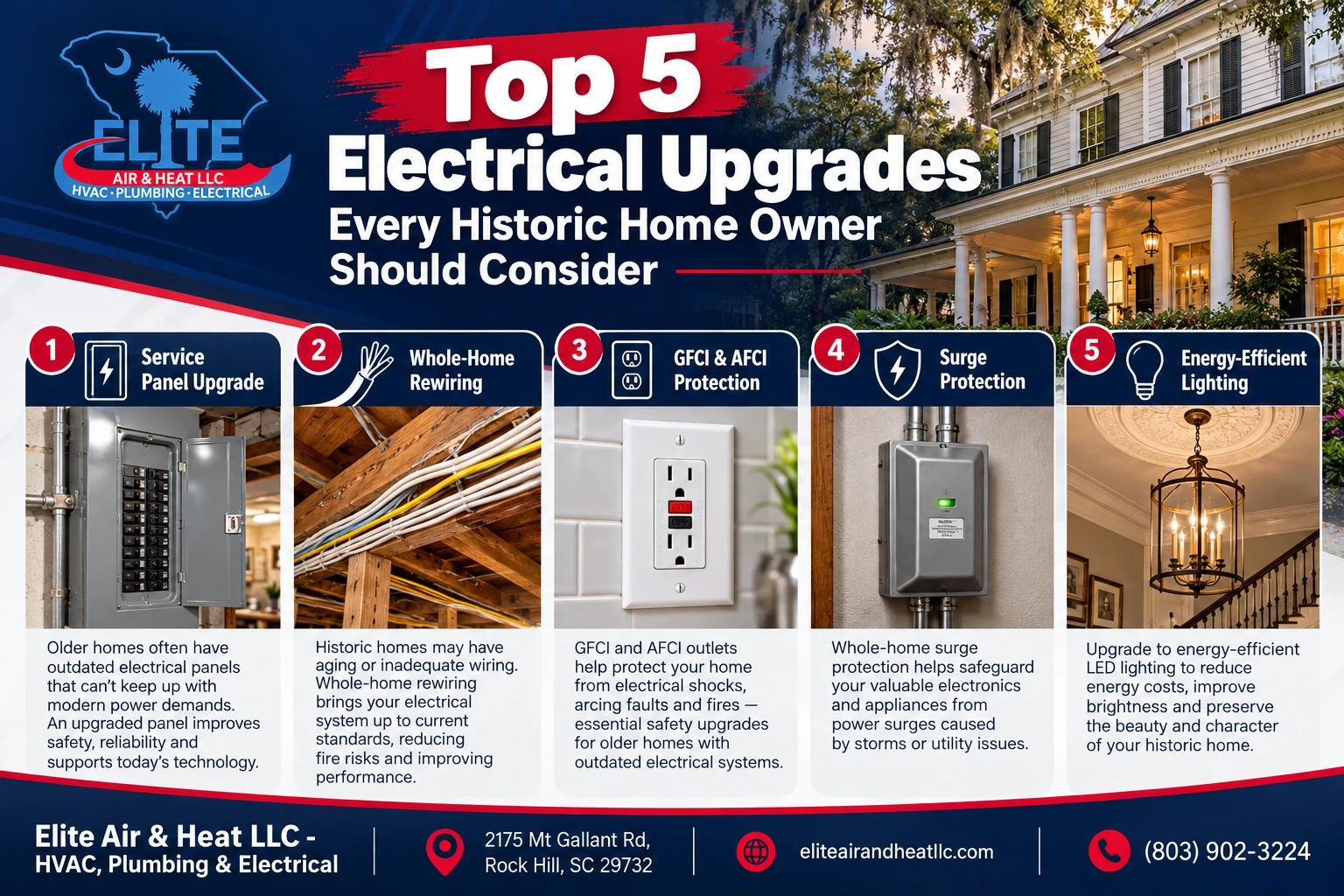
1. Replace an Outdated Electrical Panel
If your electrical panel is more than 30 to 40 years old, it may struggle to keep up with modern electrical demands.
Warning signs include:
- Breakers that trip frequently
- Flickering lights
- Limited space for new circuits
- Signs of overheating or corrosion
- Fuses instead of circuit breakers
This does not automatically mean you need a complete rewire. In many cases, replacing the panel significantly improves safety while allowing for future upgrades like EV chargers, heat pumps, or backup generators.
A good electrician should evaluate both the panel and the home’s overall electrical load before recommending a replacement.
2. Add GFCI and AFCI Protection
Many older homes were built before modern electrical safety devices became standard.
Two of the most important upgrades are:
GFCI Protection
Ground Fault Circuit Interrupter (GFCI) outlets help prevent electric shock by shutting off power when they detect an electrical imbalance.
They’re typically recommended in areas such as:
- Kitchens
- Bathrooms
- Laundry rooms
- Garages
- Crawl spaces
- Outdoor outlets
AFCI Protection
Arc Fault Circuit Interrupters (AFCIs) help detect dangerous electrical arcing, a common cause of residential electrical fires.
Many panel upgrades now include AFCI protection for living areas and bedrooms where required by current electrical codes.
3. Replace Worn or Unsafe Wiring
Not every historic home needs a complete rewire, but some older wiring systems deserve closer attention.
Depending on the age of the home, an electrician may inspect for:
- Knob-and-tube wiring
- Cloth-insulated wiring
- Aluminum branch wiring (common in some homes from the late 1960s and early 1970s)
- Damaged insulation
- Improper past repairs
- Overloaded circuits
This is where homeowners sometimes get into trouble.
Some people assume all older wiring is dangerous, while others assume it’s perfectly fine because “it’s worked for years.” The reality depends on the wiring’s condition, how it has been modified over time, and whether it can safely handle today’s electrical loads.
4. Install Whole-Home Surge Protection
Modern homes contain thousands of dollars’ worth of sensitive electronics.
Items like:
- HVAC equipment
- Refrigerators
- Smart appliances
- Televisions
- Computers
- Home office equipment
- Internet networking devices
can all be damaged by power surges.
A whole-home surge protector is installed at the electrical panel and helps reduce the impact of large electrical surges before they reach your appliances.
While no surge protector can stop every possible surge, it’s one of the most cost-effective ways to add an extra layer of protection for your home’s electrical system.
5. Add More Outlets and Dedicated Circuits
Historic homes were built when families owned far fewer electrical devices.
Today it’s common to see:
- Phone chargers
- Computers
- Coffee makers
- Air fryers
- Microwaves
- Space heaters
- Home entertainment systems
If extension cords and power strips have become permanent fixtures, your home may simply need additional outlets or dedicated circuits.
Dedicated circuits are especially important for larger appliances like:
- HVAC systems
- Electric ranges
- Water heaters
- EV chargers
- Workshop equipment
The goal isn’t to eliminate every power strip. It’s to avoid overloading circuits that weren’t designed for today’s electrical demands.
Should You Rewire the Entire House?
That depends.
A complete rewire is usually recommended only when inspection shows widespread safety concerns or when the existing wiring can no longer support the home’s electrical needs.
A good electrician should inspect:
- The electrical panel
- Branch wiring
- Grounding system
- Outlet condition
- Circuit loading
- Previous electrical modifications
- Signs of overheating or damage
That inspection often reveals whether targeted upgrades will solve the problem or if a more extensive project makes sense.
What Do These Upgrades Cost?
Costs vary depending on the home’s size, accessibility, and the condition of the existing electrical system, but homeowners can generally expect:
| Upgrade | Typical Cost Range* |
| Electrical panel replacement | $2,000–$5,000+ |
| Whole-home surge protector | $300–$800 |
| GFCI outlet installation | $150–$350 per outlet |
| Dedicated circuit installation | $300–$1,200+ |
| Whole-home rewiring | $8,000–$25,000+ |
*These are general residential estimates. Historic homes often require additional labor because older construction can make accessing wiring more difficult.
The cheaper option is not always wrong, but it should make sense. A lower quote may exclude drywall repairs, permit fees, code-required upgrades, or other work that’s necessary to complete the project safely.
What Can Homeowners Safely Check?
You don’t need to remove panel covers or inspect wiring inside your walls.
However, you can safely look for:
- Two-prong outlets throughout the home
- Frequently tripping breakers
- Warm outlets or switches
- Flickering lights
- Buzzing sounds
- Burn marks around outlets
- Heavy reliance on extension cords
If you notice any of these issues, it’s worth scheduling an electrical inspection rather than guessing at the cause.
If You Only Remember One Thing…
The best electrical upgrades for a historic home aren’t always the most visible. A safer panel, modern circuit protection, updated wiring where needed, surge protection, and properly sized circuits can make your home safer, more reliable, and better prepared for today’s electrical demands, while preserving the character that made you fall in love with it in the first place.
A good electrician should be able to explain what your home actually needs, what can wait, and why. The goal is not to replace everything because it’s old. The goal is to understand which upgrades will provide the greatest improvement in safety and performance for your specific home.