
If you have priced a new AC or heat pump lately, the number may feel higher than expected.
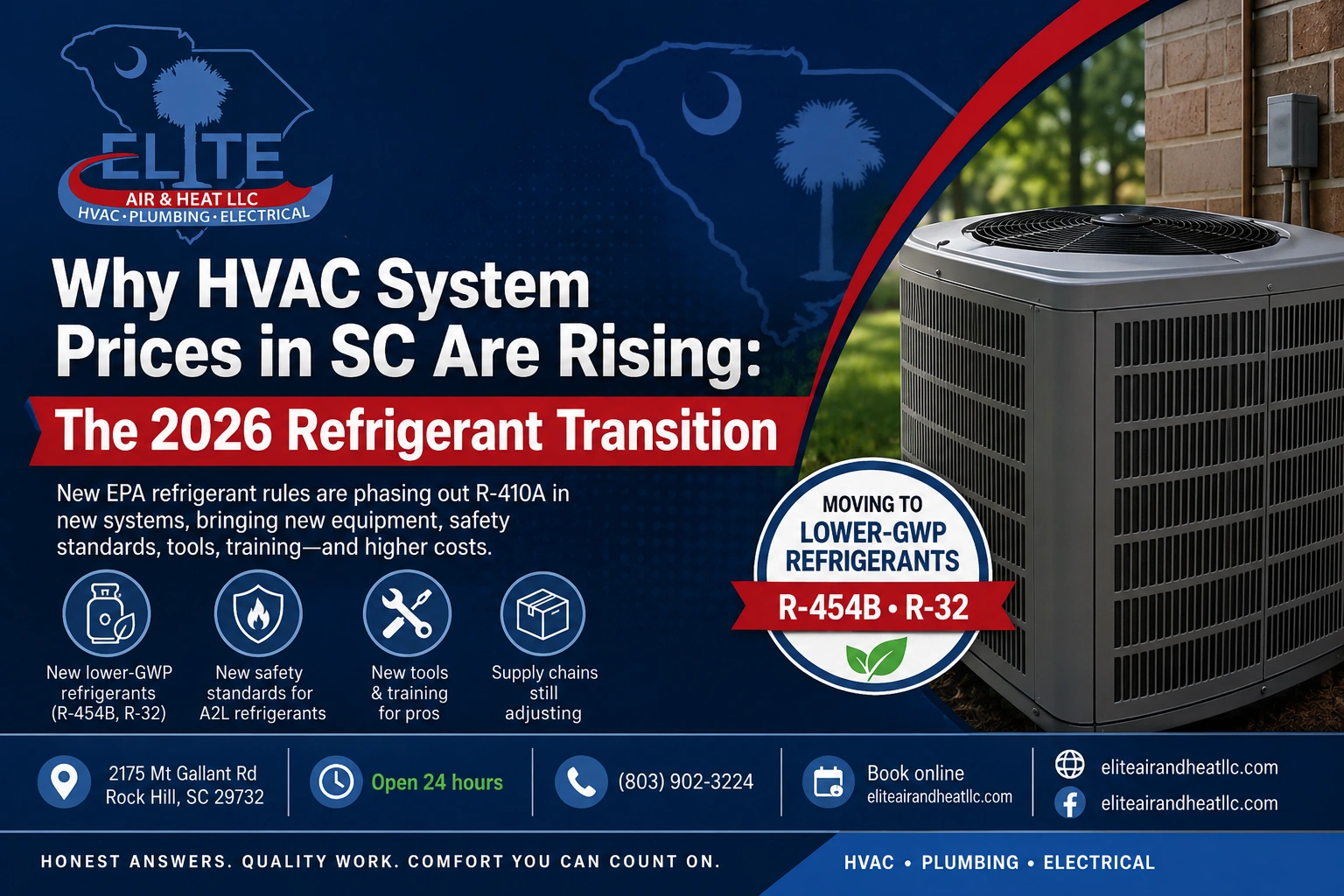
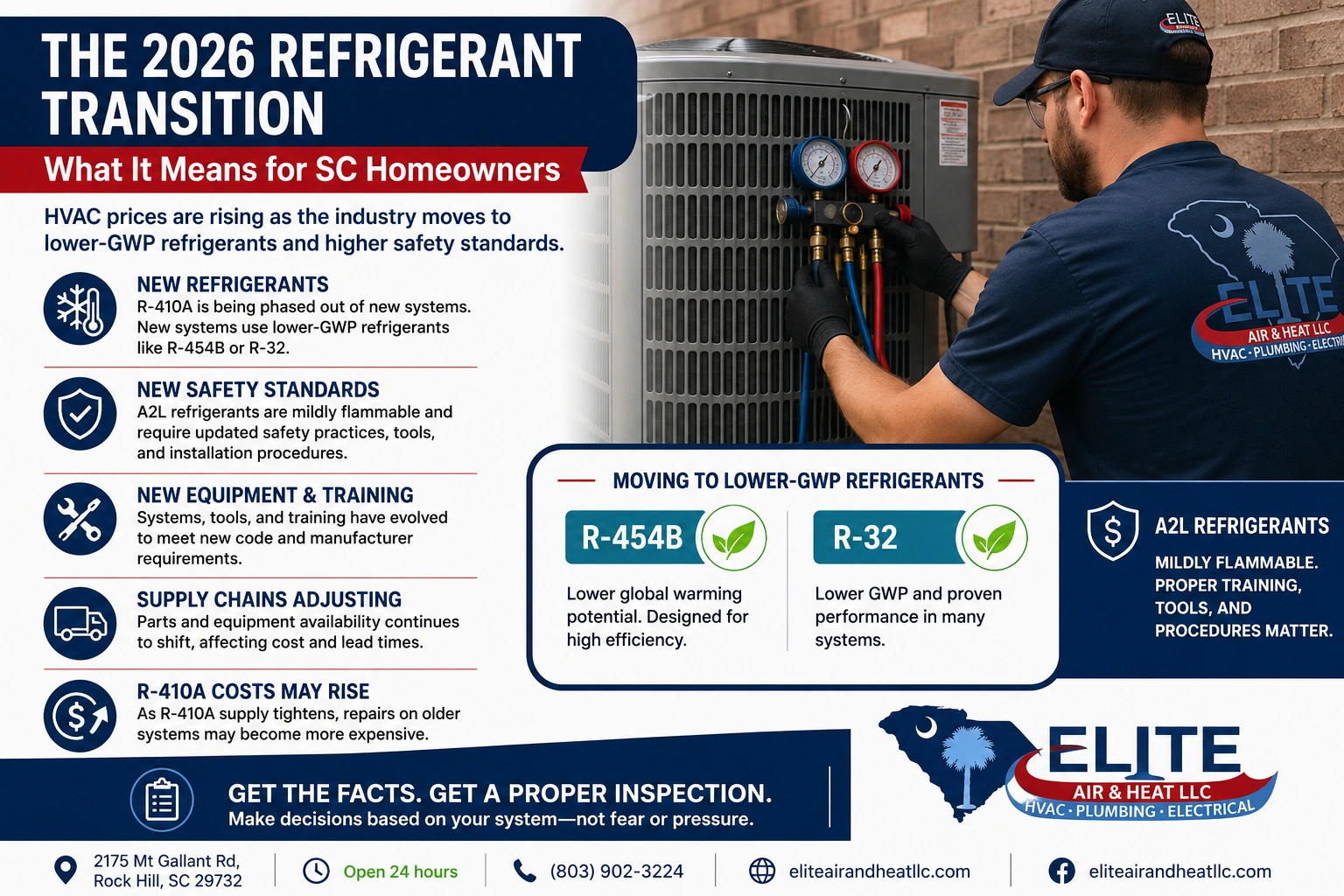
Here’s the plain answer: part of the increase is tied to the national refrigerant transition away from R-410A and toward newer lower-GWP refrigerants like R-454B and R-32. This affects equipment design, parts, training, tools, supply chains, and installation practices.
It does not automatically mean every homeowner needs a new system right now.
What changed?
The EPA’s refrigerant rules restrict the use of higher-GWP refrigerants in new residential and light commercial air conditioners and heat pumps. R-410A, the refrigerant used in many existing systems, is being phased out of new equipment because of its higher global warming potential. New systems are moving to lower-GWP refrigerants, commonly R-454B or R-32.
That means 2026 is not just “business as usual” for HVAC replacement pricing.
Homeowners comparing new systems may also want to understand the HVAC installation and repair differences between R-32 and R-454B, since each refrigerant can affect equipment design, service procedures, and long-term maintenance.
Why does this raise HVAC prices?
A few things are happening at the same time:
- New equipment is different. Manufacturers had to redesign systems around new refrigerants.
- A2L refrigerants require added safety practices. A2L means mildly flammable, so installation, storage, detection, and service procedures matter more.
- Contractors need new tools and training.
- Supply chains are still adjusting.
- Older R-410A systems may become more expensive to repair over time as supply tightens.
The cheaper option is not always wrong, but it should make sense. A low quote may not include needed code updates, proper matching equipment, new safety requirements, permits, or warranty-backed installation practices.
What does this mean for South Carolina homeowners?
In SC, cooling demand is high. Long AC run times, humidity, and hot summers put real stress on equipment. So when system prices rise, homeowners feel it quickly.
A typical replacement may cost more in 2026 than it did a few years ago because the equipment itself, refrigerant handling, and installation requirements have changed. The exact price still depends on system size, efficiency, ductwork condition, electrical needs, access, permits, and whether you are replacing only part of the system or the full matched system.
When comparing options, it can also help to review R-32 and R-454B for your climate and comfort needs, especially if you are deciding between different equipment platforms for a hot, humid South Carolina home.

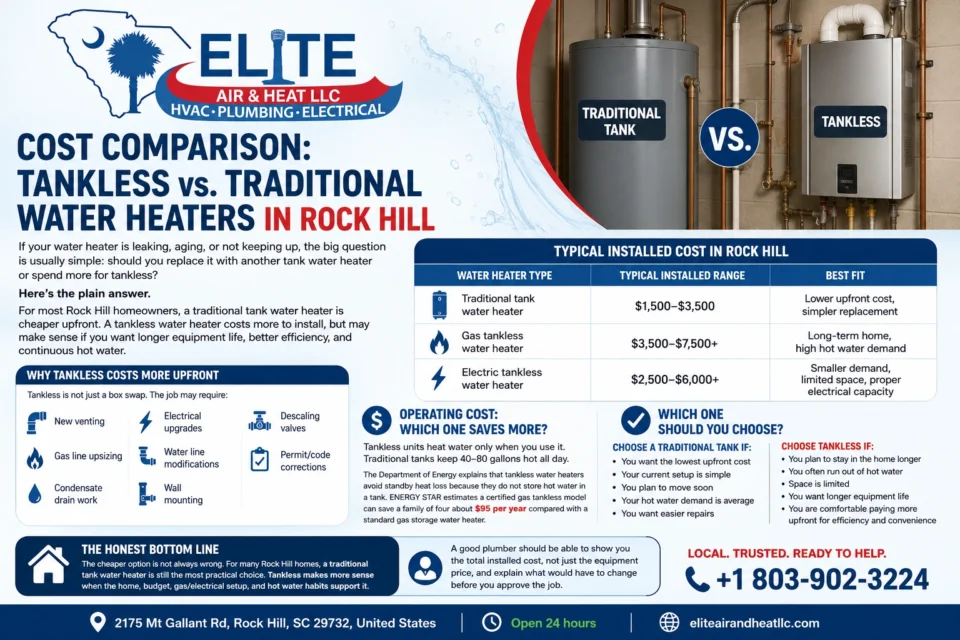
Cost Comparison: Tankless vs. Traditional Water Heaters in Rock Hill
If your water heater is leaking, aging, or not keeping up, the big question is usually simple: should you replace…
Should you replace your R-410A system now?
Not automatically.
If your current system is cooling well, not leaking refrigerant, and repair costs are reasonable, keeping it may still make sense.
Replacement becomes more worth discussing when:
- The system is 12–15+ years old
- It has a major refrigerant leak
- The compressor has failed
- Repair costs are getting close to 30–50% of replacement
- Comfort problems keep coming back
- The indoor and outdoor units are mismatched or aging together
A good technician should be able to show you why replacement makes sense before asking you to approve it.
What should a good estimate include?
A solid HVAC replacement estimate should explain:
- Which refrigerant the new system uses
- Whether the indoor and outdoor units are properly matched
- SEER2 efficiency rating
- Warranty terms
- Required electrical or code updates
- Ductwork concerns
- Permit details
- What is included and what is not
The goal is not to buy the biggest repair. The goal is to understand the actual problem.
What can homeowners safely check?
You can check simple things first:
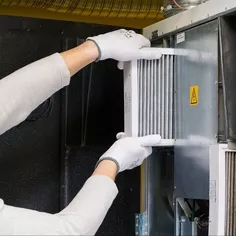
- Replace or inspect the air filter
- Make sure vents are open
- Check thermostat settings
- Look for ice on the refrigerant lines
- Listen for unusual outdoor unit noises
- Note whether the system runs constantly but does not cool
Do not try to add refrigerant yourself. Refrigerant work requires proper licensing, tools, and safe handling.
The bottom line
If you only remember one thing, remember this: HVAC prices are rising partly because the industry is moving into a new refrigerant generation, but that does not mean every older system needs immediate replacement.
The smart move is a proper inspection, a clear explanation, and a repair-vs-replace conversation based on your actual system not fear, guessing, or pressure.