
If you are on a private well in York County, the “best” whole-home water filter depends on what is actually in your water.
That is the part homeowners sometimes skip.
A neighbor’s system may work perfectly for iron problems but do almost nothing for sulfur smell, sediment, bacteria, or hard water.
The goal is not to buy the biggest filter.
The goal is to solve the actual water problem without creating new maintenance headaches.
Get cleaner, healthier water from every tap.
Upgrade your private well with a whole-home water filter installed by experienced professionals. Call now for fast service.
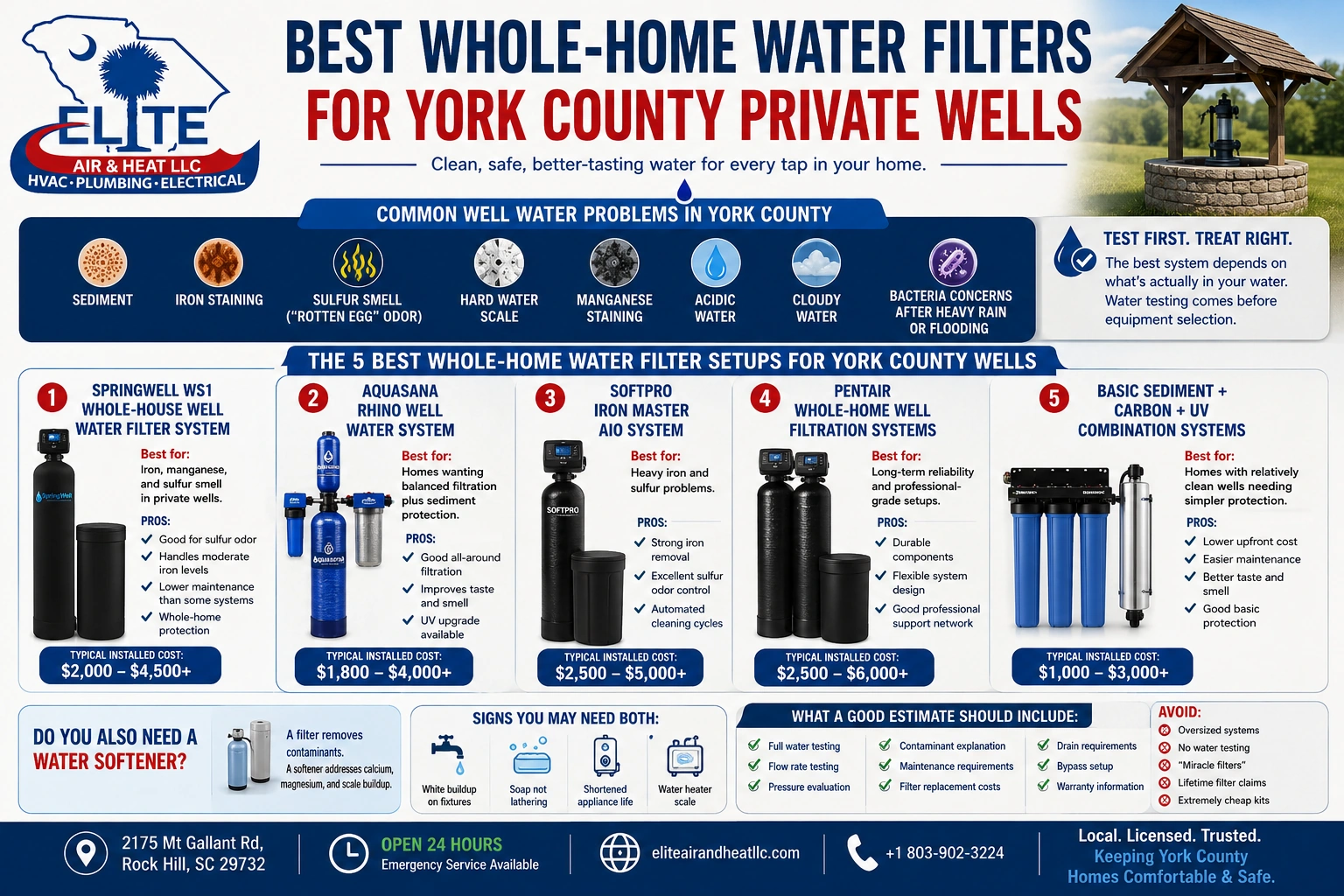
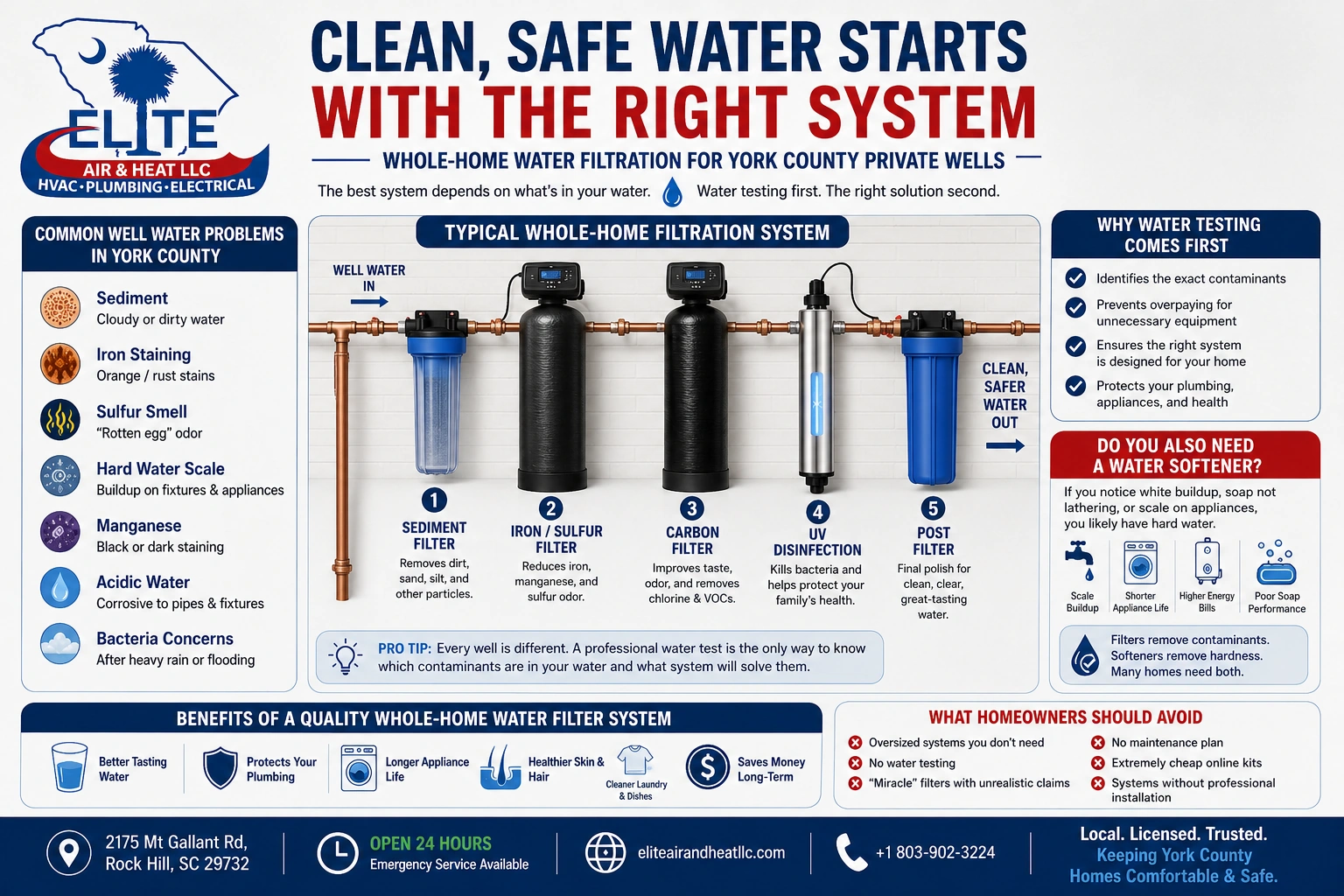
The most common well water problems around York County
Private well water in this area commonly causes issues like:
- sediment
- iron staining
- sulfur smell (“rotten egg” odor)
- hard water scale
- manganese staining
- acidic water
- cloudy water
- bacteria concerns after heavy rain or flooding
Some homes have one issue.
Some have three or four layered together.
That is why a proper water test matters before buying equipment.
The 5 Best Whole-Home Water Filter Setups for York County Wells
1. SpringWell WS1 Whole-House Well Water Filter System
Best for:
Iron, manganese, and sulfur smell in private wells.
This is one of the better all-around systems for homeowners dealing with:
- orange staining
- metallic taste
- rotten egg smell
- dark staining in toilets or tubs
Why homeowners like it
It combines:
- air injection oxidation
- filtration media
- automatic backwashing
That helps remove common well contaminants without constant chemical feeding.
Pros
- Good for sulfur odor
- Handles moderate iron levels
- Lower maintenance than some older systems
- Whole-home protection
Cons
- Higher upfront cost
- Needs electricity and drain access
- May not solve bacteria problems alone
Typical installed cost
- $2,000–$4,500+
Best fit
Homes with visible staining and sulfur smell.
2. Aquasana Rhino Well Water System
Best for:
Homes wanting balanced filtration plus sediment protection.
Aquasana systems are popular because they combine:
- sediment filtration
- carbon filtration
- UV options
- scale reduction
Why it works well
Many York County wells have layered issues:
- sediment
- mild odor
- chlorine shock-treatment taste
- moderate hardness
This type of system addresses several at once.
Pros
- Good all-around filtration
- Improves taste and smell
- UV upgrade available
- Lower maintenance than some systems
Cons
- Not ideal for very high iron wells
- Filter replacements matter
- Flow rate sizing is important
Typical installed cost
- $1,800–$4,000+
Best fit
Moderate well water issues without severe iron contamination.
3. SoftPro Iron Master AIO System
Best for:
Heavy iron and sulfur problems.
This is a strong choice for homes with:
- orange staining
- black staining
- strong sulfur smell
- metallic water taste
Why it performs well
The Air Injection Oxidation (AIO) process helps separate contaminants before filtration.
Pros
- Strong iron removal
- Excellent sulfur odor control
- Automated cleaning cycles
- Good long-term performance
Cons
- Requires maintenance
- Needs proper sizing
- Installation quality matters heavily
Typical installed cost
- $2,500–$5,000+
Best fit
Older wells with significant staining and odor issues.
4. Pentair Whole-Home Well Filtration Systems
Best for:
Long-term reliability and professional-grade setups.
Pentair systems are commonly installed by water treatment professionals because they offer:
- customizable filtration stages
- strong component quality
- scalable designs
Why some homeowners prefer Pentair
They are often easier to expand later if:
- water conditions change
- hardness increases
- additional filtration becomes necessary
Pros
- Durable components
- Flexible system design
- Good professional support network
Cons
- Can become expensive quickly
- Requires proper water testing
- Overbuilding is common
The most expensive filtration setup is not automatically the best one.
Typical installed cost
- $2,500–$6,000+
Best fit
Long-term homeowners wanting scalable filtration.

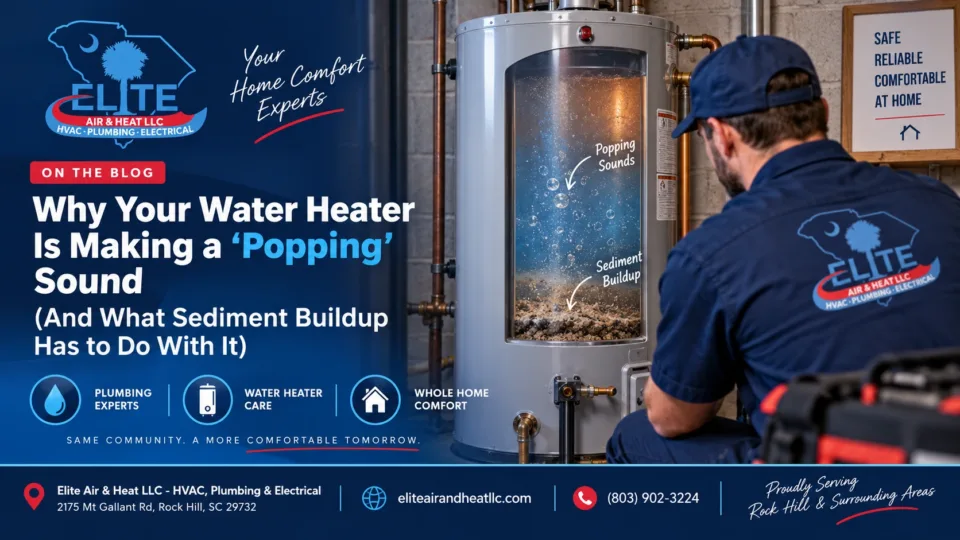
Why Your Water Heater Is Making a “Popping” Sound (And What Sediment Buildup Has to Do With It)
If your water heater sounds like it's popping, crackling, rumbling, or even making noises that resemble popcorn popping, you're not…
5. Basic Sediment + Carbon + UV Combination Systems
Best for:
Homes with relatively clean wells needing simpler protection.
Sometimes homeowners do not need elaborate treatment systems.
A properly designed setup with:
- sediment filtration
- carbon filtration
- UV disinfection
may be enough.
Pros
- Lower upfront cost
- Easier maintenance
- Better taste and smell
- Good basic protection
Cons
- Limited iron removal
- Does not soften water
- May not solve severe contamination
Typical installed cost
- $1,000–$3,000+
Best fit
Newer wells with mild water-quality issues.
Do You Also Need a Water Softener?
Sometimes yes.
This is where homeowners often confuse filtration with softening.
A filter removes contaminants.
A softener addresses:
- calcium
- magnesium
- scale buildup
If you notice:
- white buildup on fixtures
- soap not lathering
- shortened appliance life
- water heater scale
you may need both filtration and softening.
Water quality also affects other plumbing equipment in the home, so homeowners comparing upgrades may want to review a tankless vs traditional water heater cost guide for Rock Hill when deciding how filtration, scale buildup, and long-term maintenance could affect their water-heating system.
A good water treatment company should test for:
- hardness
- iron
- pH
- manganese
- sulfur
- bacteria
- sediment
- nitrates
before recommending equipment.
What a Good Well Water Estimate Should Include
A proper evaluation should include:
- full water testing
- flow rate testing
- pressure evaluation
- contaminant explanation
- maintenance requirements
- filter replacement costs
- drain requirements
- bypass setup
- warranty information
Not just:
“Here’s our biggest system.”
What Homeowners Should Avoid
Be cautious about:
- oversized systems
- vague “miracle filters”
- no water testing
- lifetime filter claims
- systems without maintenance plans
- extremely cheap online kits for severe well problems
Cheap filtration that does not solve the issue usually becomes expensive twice.
The Bottom Line
The best whole-home water filter for a York County private well depends on:
- what contaminants are present
- how severe they are
- your water usage
- maintenance expectations
- whether hardness is also a problem
If you only remember one thing, remember this:
Water testing should come before equipment selection. A good system is designed around the water, not around marketing claims.
Is your well water affecting your family's health?
Get expert whole-home water filter installation for cleaner, safer well water. Call today for a personalized solution.