
If you’re buying an older home, planning a renovation, or facing electrical repairs, you’ll eventually hear the question:
“Should I keep the aluminum wiring or replace it with copper?”
The answer is not always as simple as aluminum bad, copper good.
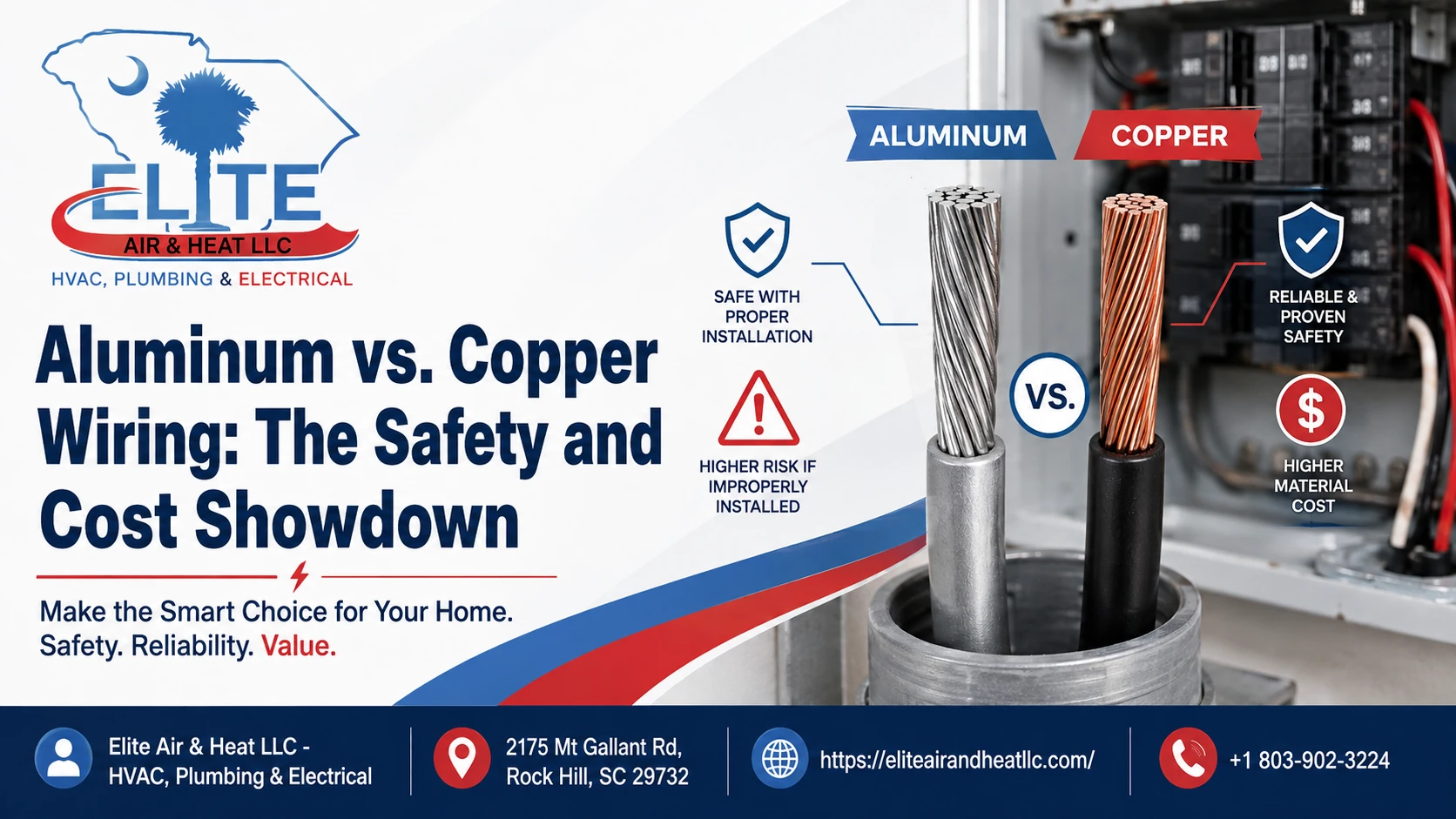
Here’s the plain answer: copper wiring is generally considered the more reliable and preferred residential wiring material today. Aluminum wiring can still be safe when properly installed and maintained, but it requires more attention to connections and repairs.
The real decision often comes down to safety, condition, repair costs, and long-term plans for the home.
The Quick Comparison
Aluminum vs. Copper Wiring Comparison
Relative comparison of common homeowner concerns. Higher score indicates better performance.
Copper
Aluminum
036912Connection Reli…Corrosion Resis…Installation CostLong-Term Maint…Modern Compatib…
Why Copper Became the Standard
Copper is the material used in most modern residential branch wiring.
Electricians prefer it because it:
- Expands and contracts less
- Resists corrosion well
- Creates reliable connections
- Is compatible with modern devices
- Requires less specialized connection methods
For homeowners, that usually means fewer long-term concerns.
The downside?
Copper costs more.
Why Aluminum Was Used
Many homes built during the late 1960s and 1970s used aluminum branch-circuit wiring because copper prices increased significantly.
Builders could save money while still meeting code requirements of the time.
Thousands of homes were wired this way.
Many remain in service today.
The presence of aluminum wiring does not automatically mean a home is unsafe.
Where Aluminum Wiring Can Create Problems
The biggest issue is not usually the wire itself.
It’s the connections.
Aluminum expands and contracts more than copper as electrical loads heat and cool.
Over time, that movement can loosen connections.
When connections loosen, you can see:
- Flickering lights
- Warm outlets
- Intermittent power issues
- Damaged switches
- Overheated connections
This is where homeowners sometimes get into trouble.
The wiring hidden in the wall may be fine, while a single deteriorated connection creates the safety concern.
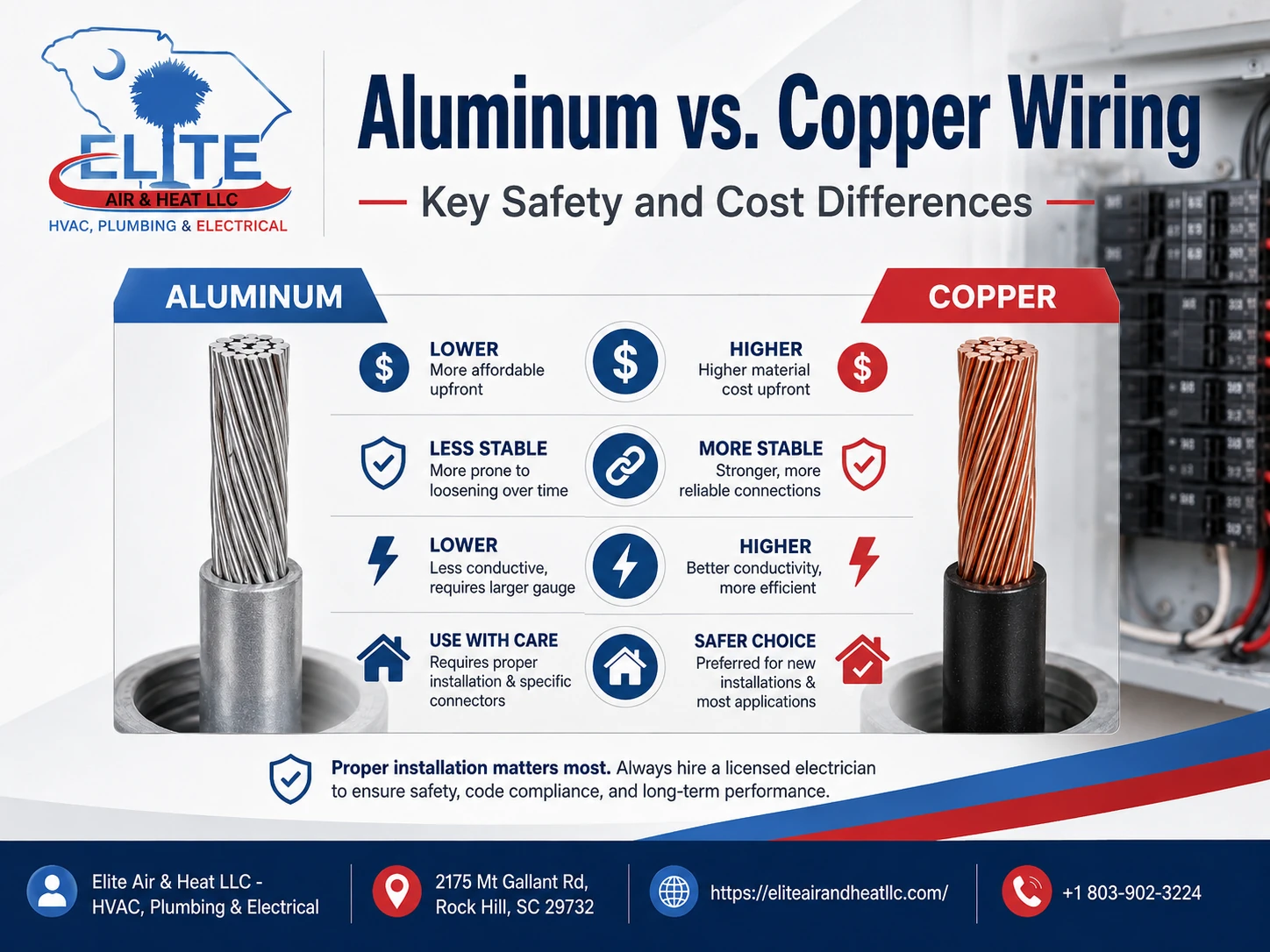
Cost Comparison
New Construction or Rewiring
Copper wiring generally costs more than aluminum.
For a whole-home project, copper may increase material costs significantly compared to aluminum.
However, most residential branch-circuit wiring today is still installed using copper because of its reliability and compatibility.
Existing Aluminum Wiring
If your home already has aluminum wiring, your options may include:
| Option | Typical Cost Range |
| Electrical inspection | $200–$600 |
| Device replacement and corrections | $500–$3,000+ |
| Aluminum remediation/pigtailing | $2,000–$10,000+ |
| Whole-home rewire | $12,000–$35,000+ |
Actual pricing depends on home size, accessibility, circuit count, and repair methods.
That does not automatically mean you need a complete rewire.
When Repair Makes More Sense Than Rewiring
Many aluminum-wired homes can be improved through:
- Approved connector systems
- Proper copper pigtailing methods
- Device replacement
- Connection upgrades
- Panel inspections
A good electrician should evaluate the system before recommending a full rewire.
The goal is not to buy the biggest electrical job.
The goal is to understand the actual condition of the wiring and connections.
When a Full Rewire May Be Worth Considering
Rewiring may make sense when:
- Major remodeling is already planned
- Significant electrical upgrades are needed
- The wiring has been modified improperly
- Multiple circuits show overheating issues
- The home lacks capacity for modern electrical loads
In these situations, combining electrical upgrades with renovation work can sometimes reduce overall costs.
What About Insurance?
Some insurance companies pay closer attention to aluminum branch wiring.
Requirements vary widely.
You may be asked for:
- An electrical inspection
- Documentation of corrective work
- Proof of approved remediation methods
If you’re buying a home with aluminum wiring, it’s worth speaking with your insurance provider before closing.
What Homeowners Can Safely Check
You can look for:
- Flickering lights
- Warm switches or outlets
- Burning odors
- Discolored receptacles
- Frequent breaker trips
If these signs are present, schedule an inspection rather than assuming the issue is minor.
The Bottom Line
If you only remember one thing, remember this:
Copper is generally the safer and lower-maintenance choice for new wiring, but aluminum wiring does not automatically mean a home is unsafe.
Many homes with aluminum wiring continue operating safely when the connections are properly maintained and repaired using approved methods.
Before approving a costly rewire, have the system inspected by an electrician familiar with aluminum wiring. A good electrician should be able to explain what is safe, what needs correction, and whether repairs or replacement make the most sense for your home and budget.