

If your water heater sounds like it’s popping, crackling, rumbling, or even making noises that resemble popcorn popping, you’re not imagining things.
And in many cases, the culprit is not a failing water heater.
It’s sediment.
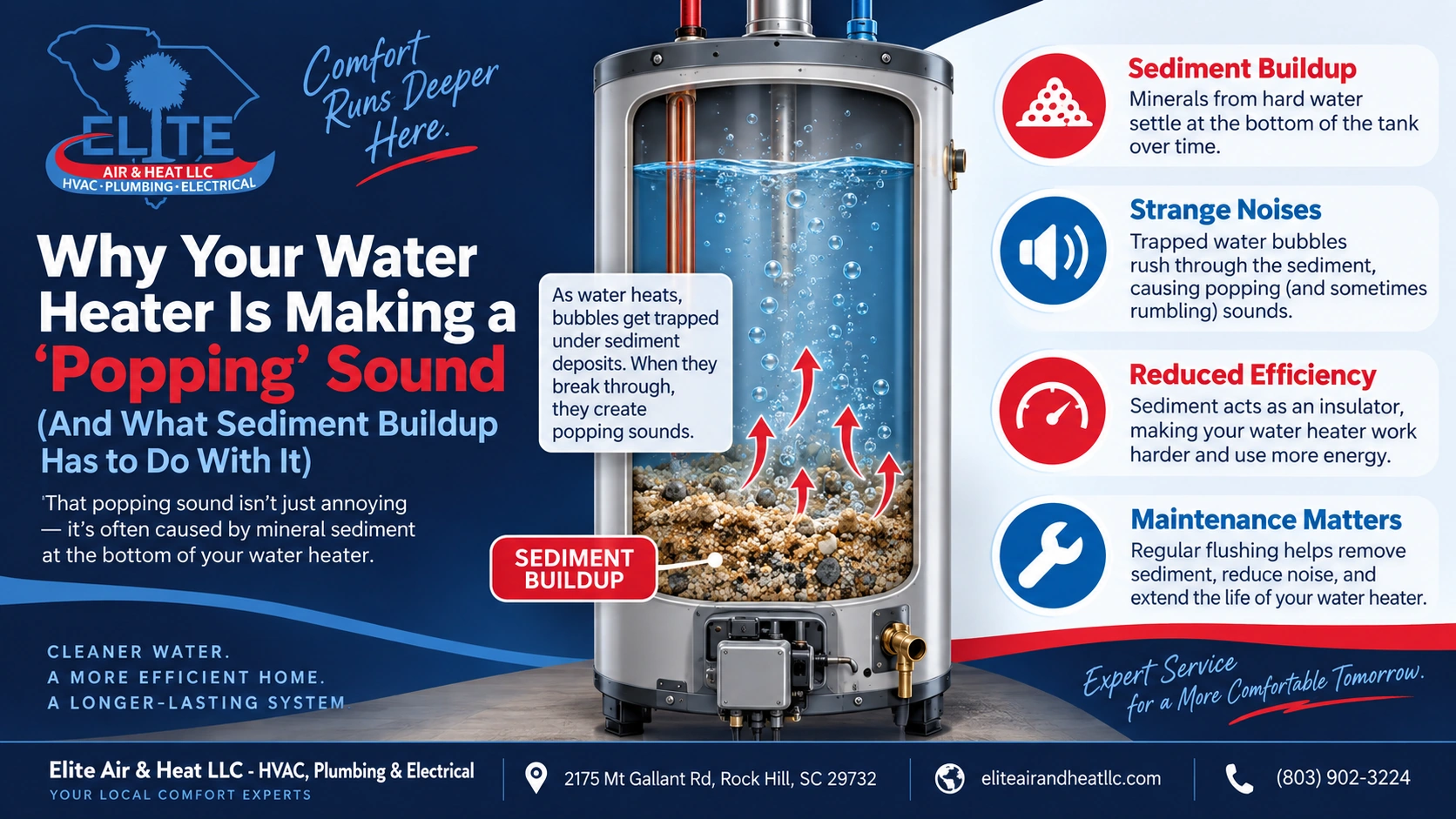
Here’s the plain answer: a popping water heater is often caused by mineral deposits that have settled at the bottom of the tank. As the burner heats the water beneath that layer of sediment, steam bubbles become trapped and then burst through the buildup, creating the popping or rumbling sounds you hear.
That does not automatically mean you need a replacement.
But it does mean the tank is telling you something.
Why Sediment Builds Up in the First Place
Every gallon of water contains naturally occurring minerals.
Over time, minerals such as calcium and magnesium settle to the bottom of the tank.
As years pass, that layer can become surprisingly thick.
The problem is especially common in:
- Older water heaters
- Homes with harder water
- Water heaters that have never been flushed
- Gas water heaters
The sediment acts like an insulating blanket between the burner and the water you’re trying to heat.
Why the Tank Starts Popping
Here’s what’s happening inside the tank.
The burner heats the metal bottom of the water heater.
Instead of heating water directly, it first heats the layer of sediment sitting on the bottom.
Water trapped underneath that buildup begins turning into steam.
As pressure increases, steam bubbles force their way through the sediment layer.
That’s the popping, crackling, and rumbling sound you hear.
Think of it like boiling water beneath a layer of gravel.
Other Sounds a Water Heater Might Make
Not every noise points to sediment.
Popping or Rumbling
Most commonly caused by sediment buildup.
Hissing
May indicate water dripping onto hot surfaces or excessive internal pressure.
Whistling
Can sometimes point to valve restrictions or pressure issues.
Banging
May indicate water hammer, loose pipes, or severe internal tank issues.
A good plumber should be able to identify the difference before recommending repairs.
Why Sediment Is More Than Just a Noise Problem
This is where homeowners sometimes get into trouble.
Many people ignore the noise because the water heater still produces hot water.
The problem is that sediment can cause:
- Longer heating times
- Higher energy bills
- Reduced hot water capacity
- Overheating of the tank bottom
- Increased wear on heating components
- Shorter water heater lifespan
The water heater may continue working for years.
Or the extra stress may accelerate failure.
Every situation is different.
Can You Flush the Sediment Out?
Sometimes.
If the buildup is moderate and the tank is in reasonably good condition, a professional flush may help remove sediment and improve efficiency.
Many manufacturers recommend periodic flushing as part of normal maintenance.
However, there is an important exception.
Older Neglected Water Heaters
If a tank is 10 to 15 years old and has never been flushed, aggressive flushing can occasionally expose existing weaknesses.
That’s why many plumbers inspect the age and condition of the tank before recommending maintenance.
The goal is not to perform maintenance blindly. The goal is to understand the condition of the equipment first.
What Homeowners Can Safely Check
You can safely:
- Listen for where the noise is coming from
- Check the age of the water heater
- Look for leaks around the base
- Verify whether hot water production has changed
- Note whether energy bills have increased
If you find water leaking from the tank itself, that’s a different conversation and should be evaluated quickly.
When Not to DIY
Avoid:
- Removing pressure relief valves
- Disassembling gas components
- Draining a severely corroded tank without understanding the risks
- Adjusting gas controls beyond manufacturer recommendations
Water heaters involve electricity, gas, high temperatures, and pressure.
A mistake can create serious safety hazards.
What a Professional Should Inspect
A proper inspection should include:
- Tank age and condition
- Sediment accumulation
- Burner operation
- Temperature settings
- Pressure relief valve condition
- Anode rod condition
- Signs of corrosion
- Water quality factors
A good plumber should be able to explain whether the noise is a maintenance issue, a repair issue, or a sign that replacement should at least be discussed.
When Replacement May Make More Sense
Replacement may be worth considering when:
- The tank is near the end of its expected lifespan
- Significant corrosion is present
- Leaks are developing
- Heating performance continues declining
- Repeated repairs are becoming necessary
That does not automatically mean a noisy water heater needs replacement.
Many sediment-related issues can be addressed before reaching that point.
The Bottom Line
If you only remember one thing, remember this:
A popping water heater is usually the sound of water trying to heat through a layer of sediment.
The noise itself may not be an emergency, but it is often a sign that maintenance has been delayed or that the tank is working harder than it should.
Before assuming you need a new water heater, have the system inspected. A good plumber should be able to show you whether the issue is simple sediment buildup, a developing problem, or a sign that the tank is reaching the end of its useful life.