
Homes built in the 1980s are not usually “old” in the historic-home sense, but they were built for a very different electrical lifestyle.
Back then, most homes did not have multiple laptops, large entertainment systems, home office equipment, smart devices, EV chargers, high-demand kitchen appliances, or sensitive HVAC control boards. So the issue is not always that the electrical system is failing. Sometimes it just needs a few targeted upgrades to make the home safer and easier to live in.
Here’s the plain answer:
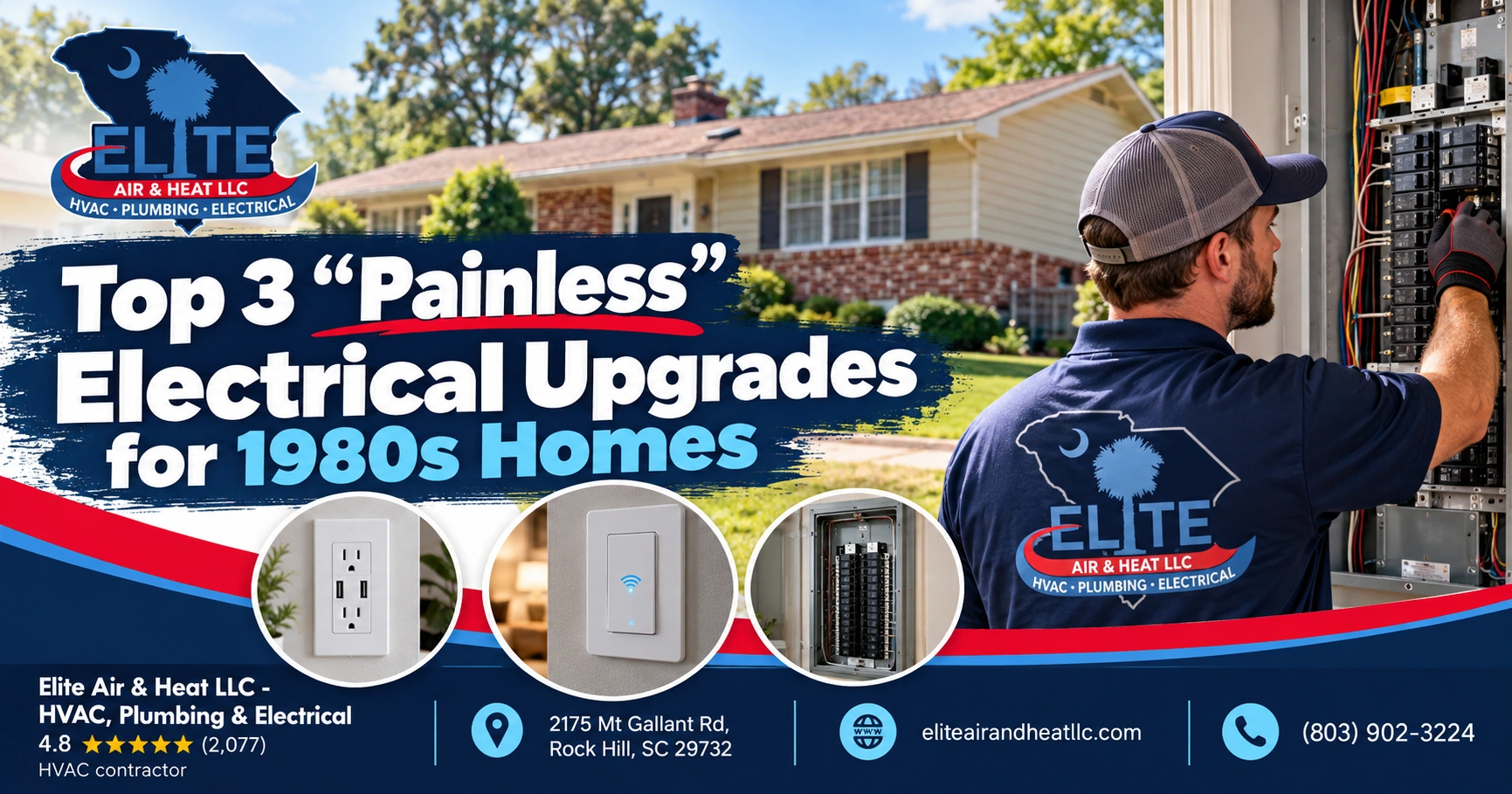
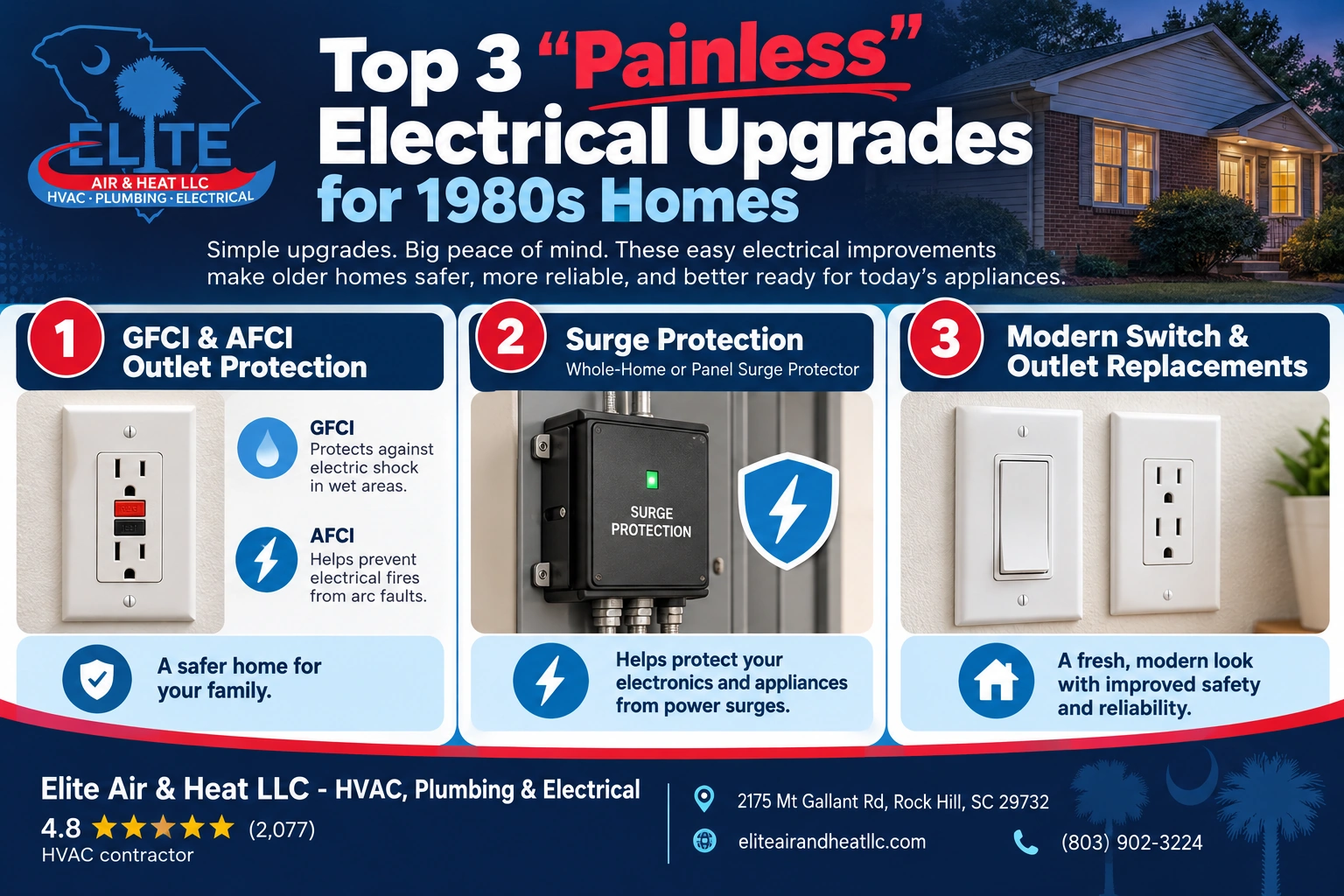
The three most practical, low-stress electrical upgrades for many 1980s homes are GFCI/AFCI protection where needed, whole-home surge protection, and added outlets or dedicated circuits in high-use areas. These upgrades usually do not require tearing open the whole house, but they can make a noticeable difference in safety, convenience, and protection for modern electronics.
1. Upgrade GFCI and AFCI Protection
This is one of the best safety upgrades for a 1980s home because it targets risk without requiring a full rewire in most cases.
GFCI protection helps reduce shock risk. You usually see it in bathrooms, kitchens, garages, laundry areas, crawl spaces, and outdoor outlets.
AFCI protection helps reduce fire risk from electrical arcing, which can happen when wiring, cords, or connections are damaged or loose. A helpful way to think about it: GFCI protects people from shock; AFCI helps protect the home from certain electrical fire risks.
Why this matters in 1980s homes
A home from the 1980s may have some GFCI protection, but not necessarily in all the places modern standards expect. AFCI protection was also not common in homes from that period.
That does not automatically mean your home is unsafe. It does mean a licensed electrician should look at where protection is missing and whether it can be added at the outlet or breaker.
Why it is usually “painless”
In many cases, this can be done by replacing selected outlets or breakers rather than opening walls.
Typical cost ranges can vary, but a single GFCI outlet replacement often falls around $120–$260, while adding new GFCI protection where wiring or breaker work is needed can cost more. GFCI breaker work is commonly several hundred dollars per breaker depending on panel access and the setup.
A good electrician should tell you whether outlet-level protection, breaker-level protection, or a larger correction makes the most sense.
2. Install Whole-Home Surge Protection
This is one of the simplest upgrades that can protect a lot of expensive equipment.
A whole-home surge protector is installed at or near the electrical panel. It helps reduce damage from voltage spikes before they move through the house.
It can help protect:
- HVAC equipment
- Refrigerators
- Computers
- Televisions
- Smart thermostats
- Routers and home office equipment
- Appliances with control boards
This is where homeowners sometimes get into trouble. Many people assume plug-in surge strips are enough. They help, but they only protect what is plugged into them. A whole-home surge protector adds a broader layer of protection at the panel.
Why this matters in 1980s homes
Many 1980s homes now have far more electronics than the electrical system was originally expected to support. Even basic appliances today often have circuit boards that can be damaged by surges.
No surge protector can stop every possible event, especially a direct lightning strike. But for many homes, it is a smart, relatively low-disruption layer of protection.
Why it is usually “painless”
This is typically a panel-side installation. It does not usually require cutting into finished walls throughout the home.
A good estimate should include the device, installation, any required breaker space or panel adjustments, grounding review, and whether your panel has room for the equipment.
3. Add Outlets or Dedicated Circuits Where You Actually Need Them
If your 1980s home relies on permanent extension cords or overloaded power strips, the home may not have enough outlets for how you live today.
This does not always mean you need a new panel or a complete electrical overhaul. Sometimes the most practical upgrade is adding outlets or dedicated circuits in the rooms that carry the most load.
Common areas include:
- Home offices
- Kitchens
- Garages
- Laundry rooms
- Media rooms
- Outdoor living areas
- Workshops
A dedicated circuit means one appliance or area has its own electrical circuit instead of sharing with several other loads. That can be important for equipment like microwaves, freezers, treadmills, sump pumps, garage refrigerators, or certain HVAC-related equipment.
Why this matters in 1980s homes
A lot of 1980s homes were not designed around remote work, charging stations, extra kitchen appliances, or garage equipment. When too many devices share one circuit, you may notice nuisance breaker trips, dimming lights, warm plugs, or constant reliance on power strips.
Why it is usually “painless”
If the panel has capacity and the wiring path is accessible through an attic, crawl space, basement, or garage, this can often be done without major disruption.
Typical outlet installation pricing varies widely, but basic new outlet work is often in the $130–$300+ range, while specialty outlets or dedicated circuits can cost more depending on distance, access, breaker type, and whether permits are required.
The cheaper option is not always wrong, but it should make sense. A quote should explain whether the electrician is adding a true new circuit or simply extending an existing one.
Bonus Upgrade: Smart Thermostat Wiring
This is not always thought of as an electrical upgrade, but it comes up often in 1980s homes.
Many smart thermostats need a C-wire, also called a common wire, to provide steady power. Some older thermostat wiring does not include one.
A smart thermostat can help manage heating and cooling more efficiently, and ENERGY STAR notes that certified smart thermostats are independently verified based on real field data to deliver energy savings.
This is usually a good upgrade when:
- Your thermostat loses power.
- Your HVAC system short-cycles after a thermostat swap.
- The thermostat relies on batteries but should not.
- You want better scheduling or remote control.
A good technician should confirm the thermostat is compatible with your HVAC system before installing it.
What Should an Electrician Inspect First?
Before recommending any upgrade, a good electrician should check:
- Panel condition and available breaker space
- Breaker brands and compatibility
- Grounding and bonding
- GFCI protection in wet or outdoor areas
- Signs of overheating, corrosion, or loose connections
- Whether outlets are properly grounded
- Which circuits are overloaded or frequently tripping
The goal is not to buy the biggest repair. The goal is to understand the actual problem.
What Should Homeowners Not DIY?
Replacing a simple cover plate is one thing. Working inside a panel is different.
Do not DIY:
- Breaker replacement
- Panel work
- New circuits
- Whole-home surge protection
- Aluminum wiring repairs, if present
- Warm, buzzing, scorched, or loose outlets
- Any wiring you cannot clearly identify
If you smell burning, see scorch marks, or feel heat at an outlet or switch, stop using that device and have it checked.
If You Only Remember One Thing
For most 1980s homes, the most painless electrical upgrades are the ones that improve safety and daily convenience without turning the house into a construction project.
Start with modern GFCI/AFCI protection, whole-home surge protection, and added outlets or dedicated circuits where your home is clearly overloaded. A good electrician should be able to explain what can be done simply, what requires more planning, and what can safely wait.