
Most homeowners understand that what you breathe matters.
That is why people talk about vaping, smoke, allergens, and air quality.
But there is another indoor air issue that does not always get the same attention:
Moisture inside the HVAC system.
In humid places like Rock Hill, mold concerns around HVAC systems are not unusual. That does not mean every dark spot is a dangerous mold. It does not mean every home needs duct cleaning. And it definitely does not mean you should panic.
Here’s the plain answer: HVAC mold usually starts with moisture, not dirt. If your system, ductwork, drain pan, coil, or crawlspace is staying damp, mold-like growth can keep coming back until the moisture problem is corrected.
The goal is not to scare homeowners.
The goal is to help you understand what is actually happening before you spend money on the wrong fix.
Worried About Mold in Your HVAC System?
Protect your home's air quality with professional HVAC mold inspections in Rock Hill. Call today!
Why HVAC Mold Becomes a Concern in Humid Homes
Your HVAC system does more than heat and cool the house.
In the cooling season, it also removes moisture from the air.
That matters because mold needs moisture to grow. If humidity stays too high, or if part of the HVAC system stays wet, mold-like growth has a better chance of developing on surfaces like coils, drain pans, insulation, duct interiors, registers, and nearby building materials.
In a humid climate, the system has to work harder to manage moisture.
Problems usually show up when something interrupts that moisture control, such as:
- Oversized HVAC equipment that cools too fast without dehumidifying well
- Dirty evaporator coils
- Clogged condensate drains
- Standing water in the drain pan
- Leaky return ducts pulling humid air from a crawlspace or attic
- Poor airflow
- Damp crawlspaces
- Old duct insulation
- Poor filtration
- Systems that short-cycle
- Thermostat settings that allow humidity to stay high
This is where homeowners sometimes get into trouble.
They see mold around vents and assume the ductwork is the only problem.
Sometimes it is.
But often, the real issue is moisture getting into the system or failing to leave the home properly.
What HVAC Mold Looks and Smells Like
Homeowners usually notice one of three things first:
- A musty smell when the system turns on
- Dark staining around vents or registers
- Allergy-like symptoms that seem worse indoors
A musty smell does not automatically prove mold inside the ducts.
It could come from a dirty coil, damp insulation, a clogged drain, a wet crawlspace, or microbial growth on another nearby surface.
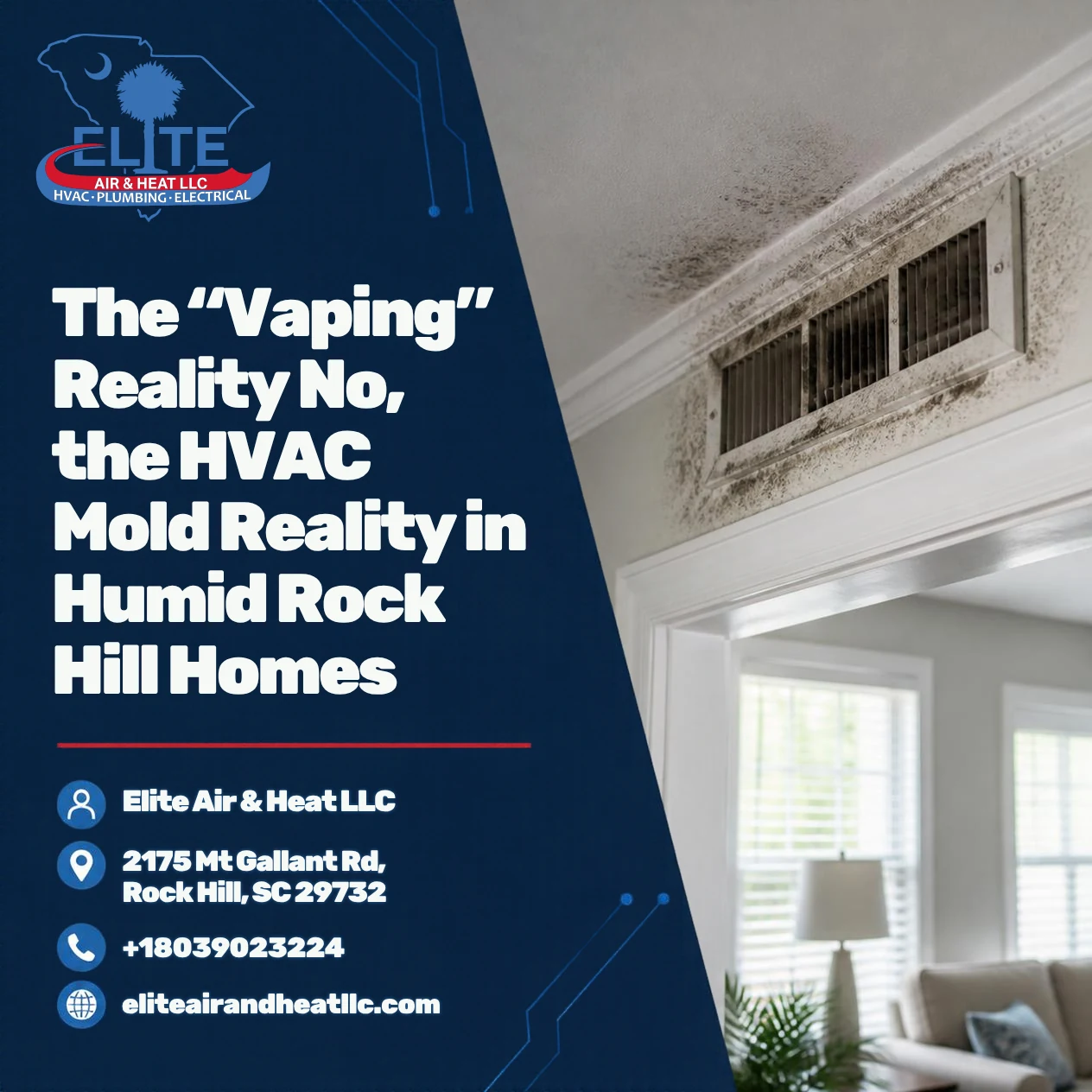
Dark staining around vents also needs context. Sometimes it is dust collecting where air leaks around the register. Sometimes it is soot, candle residue, or filtration bypass. Sometimes it may be mold-like growth caused by condensation.
The important thing is not guessing.
A good technician should inspect the moisture source before recommending a cleaning, treatment, or equipment repair.
Why Duct Cleaning Alone May Not Solve It
Duct cleaning can be helpful in certain situations.
But duct cleaning is not a moisture repair.
If the system is pulling humid air from a crawlspace, the drain pan is holding water, the coil is dirty, or the ductwork is sweating, the growth can return after cleaning.
That does not mean duct cleaning is always wrong.
It means duct cleaning should make sense.
A good recommendation should answer:
- Where is the moisture coming from?
- Is the HVAC system draining properly?
- Is the coil clean?
- Is airflow restricted?
- Are ducts leaking?
- Is the crawlspace damp?
- Is the system oversized or short-cycling?
- Is indoor humidity too high?
- Is insulation wet or deteriorated?
If those questions are not answered, the homeowner may pay for a temporary improvement without solving the reason the issue started.
The Difference Between Dust, Dirt, and Mold-Like Growth
Not everything around a vent is mold.
That is worth saying clearly.
Dark marks around registers may be caused by:
- Dust sticking to condensation
- Air leakage around the vent boot
- Dirty filters
- Candle soot
- Fireplace residue
- Poor filtration
- High humidity
- Actual mold-like growth
A visual inspection can raise concerns, but proper identification may require testing if the homeowner needs confirmation.
Most HVAC technicians can identify moisture conditions and visible growth concerns, but they usually are not performing laboratory mold diagnosis unless that service is specifically included.
That is an important distinction.
An honest technician should be able to say, “This appears to be microbial growth,” or “This looks like moisture-related staining,” without pretending a quick glance is the same as lab testing.

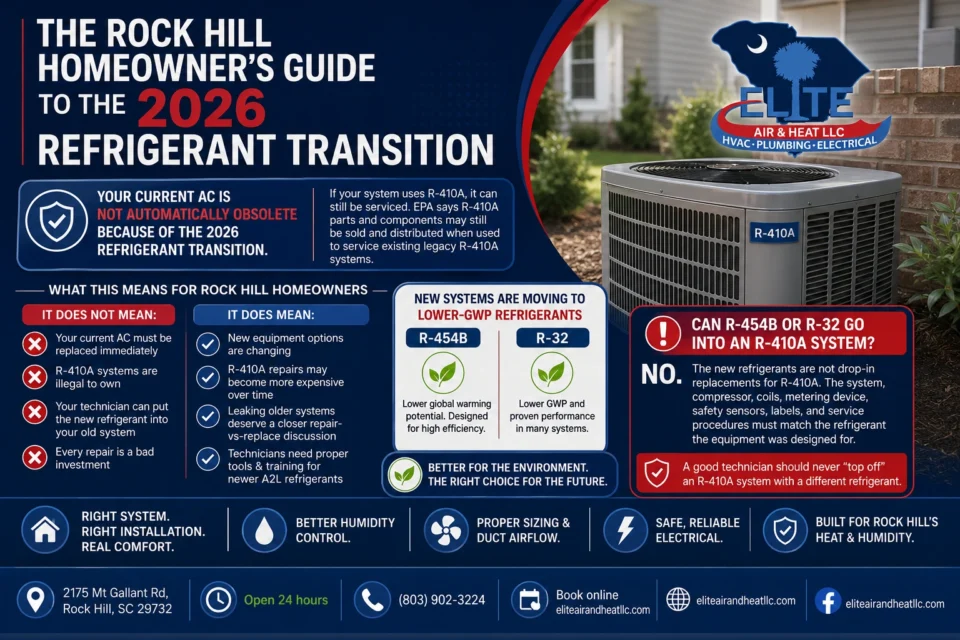
The Rock Hill Homeowner’s Guide to the 2026 Refrigerant Transition
Your current AC is not automatically obsolete because of the 2026 refrigerant transition. If your system uses R-410A, it can…
What a Good HVAC Inspection Should Include
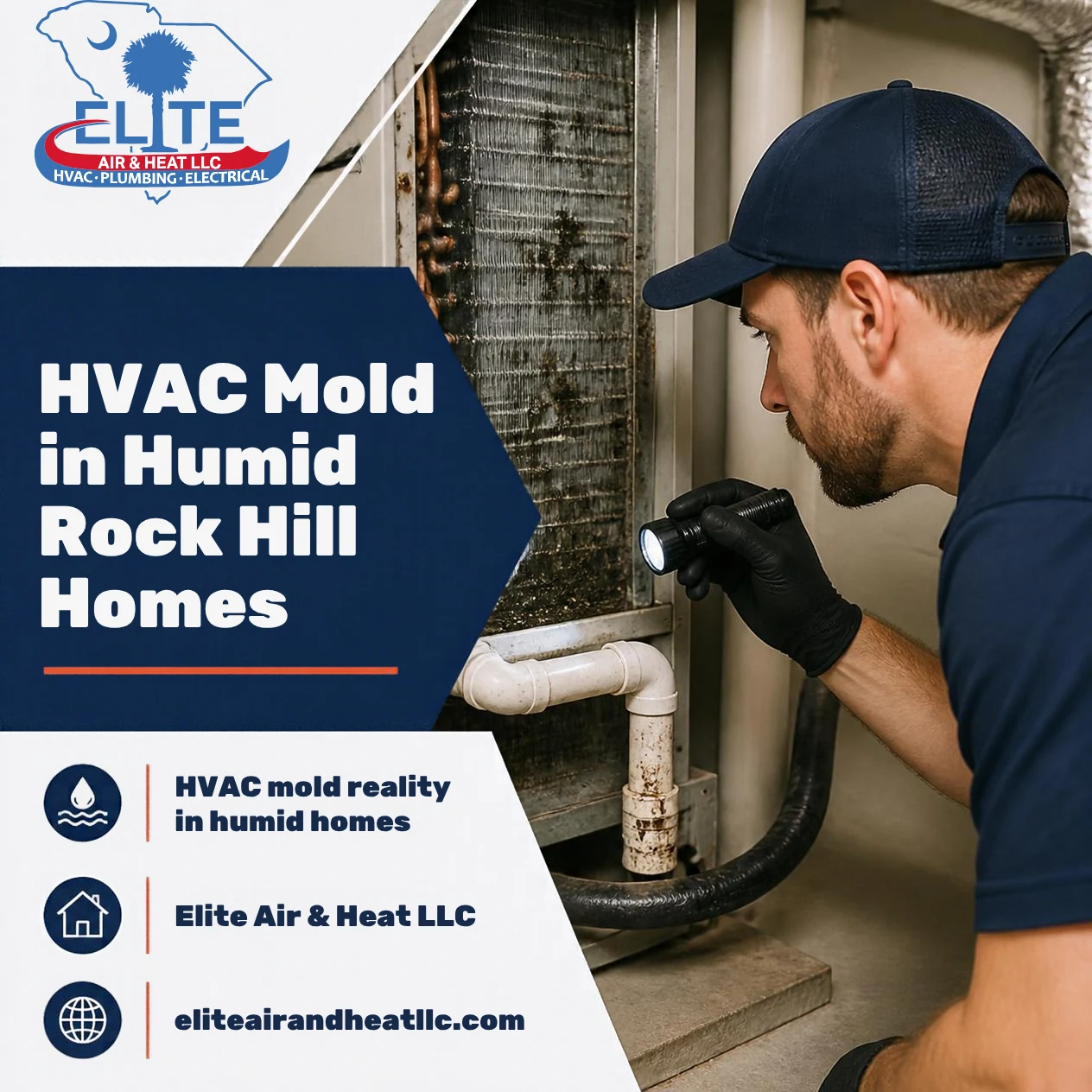
If you are worried about HVAC mold, the inspection should go beyond the vent covers.
A good technician should check:
- Evaporator coil condition
- Drain pan condition
- Condensate drain line
- Filter condition and fit
- Blower compartment
- Supply and return airflow
- Duct leakage
- Visible duct insulation condition
- Humidity levels
- Crawlspace or attic conditions where ducts run
- Signs of sweating ducts
- Thermostat operation
- Whether the system is short-cycling
The goal is not to sell the biggest repair.
The goal is to find out why moisture is present.
What Homeowners Can Safely Check
There are a few simple things you can check before calling anyone.
You can safely look for:
- A dirty or collapsed air filter
- A filter that does not fit tightly
- Musty smells when the system starts
- Water around the indoor unit
- A clogged condensate drain outlet
- Dark staining around vents
- Damp or sweaty supply registers
- High indoor humidity readings
- Standing water or dampness in the crawlspace
- Closed or blocked vents
- Furniture blocking returns
You can also check your thermostat or a basic indoor humidity monitor.
As a general comfort target, many homes do better when indoor relative humidity stays around the 40% to 50% range. If your home is regularly sitting above 60%, that can make mold and musty odors more likely.
When Not to DIY
Do not open sealed HVAC compartments if you are not comfortable doing so.
Do not spray bleach into ductwork.
Do not fog chemicals into the HVAC system without understanding the product, the label, the safety requirements, and whether the source of moisture has been corrected.
Do not ignore water around the indoor unit.
Do not keep running the system if there is electrical equipment near standing water.
Do not disturb heavy growth or contaminated insulation without proper protection.
This is where homeowners sometimes make the problem worse. They try to kill the smell instead of fixing the moisture.
A cleaner smell does not always mean the problem is gone.
Repair Options Depend on the Cause
The right fix depends on what is actually causing the moisture.
| What Is Happening | Possible Fix |
| Dirty filter restricting airflow | Replace filter and verify proper size |
| Dirty evaporator coil | Coil cleaning and airflow check |
| Clogged drain line | Clear drain and inspect pan |
| Standing water in drain pan | Repair drainage issue |
| Leaky return duct | Seal duct leakage |
| Sweating ducts | Check insulation, airflow, and humidity |
| Damp crawlspace | Address moisture source and duct exposure |
| Oversized HVAC system | Evaluate run times and humidity control |
| High indoor humidity | Improve dehumidification or humidity control |
| Growth inside ductwork | Inspect cause before cleaning or replacement |
The cheaper option is not always wrong.
Replacing a filter or clearing a drain may solve a simple issue.
But if the system is sweating because humid crawlspace air is being pulled into the return side, a basic cleaning will not hold for long.
Does HVAC Mold Mean You Need a New System?
Not automatically.
Some mold and moisture concerns can be corrected with maintenance, drainage repairs, duct sealing, insulation corrections, or humidity control.
A new system may be worth discussing if:
- The system is oversized and does not dehumidify well
- The indoor unit is heavily contaminated or deteriorated
- The coil or cabinet is badly corroded
- Ductwork is damaged, wet, or deteriorated
- Repairs are becoming frequent
- The system cannot maintain comfort and humidity
- The equipment is near the end of its service life
But replacement should be explained clearly.
A good technician should be able to show why cleaning, repair, or maintenance is not enough before recommending a larger investment.
How to Prevent HVAC Mold From Coming Back
Prevention is mostly about moisture control.
Helpful steps include:
- Change filters regularly
- Use the correct filter size
- Keep returns clear
- Have the evaporator coil inspected
- Keep the condensate drain clear
- Maintain proper airflow
- Seal duct leaks
- Watch indoor humidity
- Address crawlspace moisture
- Avoid setting the thermostat in a way that causes long periods of high humidity
- Schedule HVAC maintenance before heavy cooling season
- Ask about dehumidification if humidity remains high
The main question is simple:
Is the system removing moisture, or is it accidentally helping moisture stay in the home?
The Bottom Line
The HVAC mold reality in humid Rock Hill homes is not that every home has a dangerous mold problem.
The reality is that moisture problems are common, and HVAC systems can either help control them or make them worse if something is off.
If you notice musty smells, dark staining around vents, water near the indoor unit, high humidity, or repeated mold-like growth, the next step is not guessing.
The next step is a proper inspection.
A good technician should be able to explain where moisture is coming from, what can be safely cleaned or repaired, what needs to be corrected so the issue does not return, and when a larger repair is actually justified.
If you only remember one thing, remember this:
Mold-like growth is usually the symptom. Moisture is usually the problem.
Don't Let Humidity Turn Into Mold!
Keep your home comfortable and healthy. Schedule a professional HVAC inspection today!