
Almost everyone has seen a light flicker.
Sometimes it’s exactly what you think it is: a loose bulb or a failing light fixture.
Other times, it’s your home’s electrical system trying to warn you that something bigger is happening.
Here’s the plain answer: occasional flickering from a single light is often a minor issue. Flickering that affects multiple lights, entire rooms, or happens repeatedly can indicate loose electrical connections, overloaded circuits, panel problems, or utility issues that should not be ignored.
The key is figuring out which category you’re dealing with.
Flickering Lights? Don't Ignore the Warning!
Protect your home from hidden electrical hazards. Call now for professional inspection and repairs!
When Flickering Is Usually a Minor Problem
Not every flickering light is an emergency.
Common simple causes include:
A Loose Bulb
This is the easiest fix.
If the bulb isn’t making solid contact with the socket, it can flicker intermittently.
A Failing LED Bulb
LED bulbs do not always fail completely.
Many start flickering before they burn out.
A Faulty Dimmer Switch
Older dimmers and certain LED bulbs are not always compatible.
The result can be visible flickering, especially at lower brightness settings.
A Single Fixture Problem
If only one fixture flickers while everything else in the house works normally, the issue may be isolated to that fixture or switch.
When Flickering Becomes More Serious
This is where homeowners sometimes get into trouble.
Many electrical problems start small.
A flicker today can become a tripping breaker, damaged equipment, or overheated connection later.
Multiple Lights Flicker at the Same Time
If lights throughout the home flicker together, the problem is usually not the bulb.
Possible causes include:
- Loose electrical connections
- Service connection issues
- Panel problems
- Utility supply issues
Lights Dim When Appliances Start
Some brief dimming can be normal when large equipment starts.
For example:
- Air conditioners
- Heat pumps
- Refrigerators
- Well pumps
However, excessive dimming may indicate:
- Voltage drop
- Undersized wiring
- Circuit problems
- Electrical service issues
Flickering Accompanied by Burning Smells
This is not a wait-and-see situation.
Turn off the affected circuit if it can be done safely and have it inspected immediately.
Flickering With Buzzing Sounds
Buzzing outlets, switches, or panels can indicate loose connections or arcing.
Arcing occurs when electricity jumps across gaps instead of flowing through a solid connection.
That can create significant heat.
The Most Dangerous Cause: Loose Connections
One of the most concerning causes of flickering lights is a loose electrical connection.
Why?
Because loose connections create resistance.
Resistance creates heat.
Heat can damage wiring, outlets, switches, breakers, and electrical panels.
In some cases, it can create a fire hazard.
The dangerous part is that the lights may continue working while the connection slowly deteriorates.
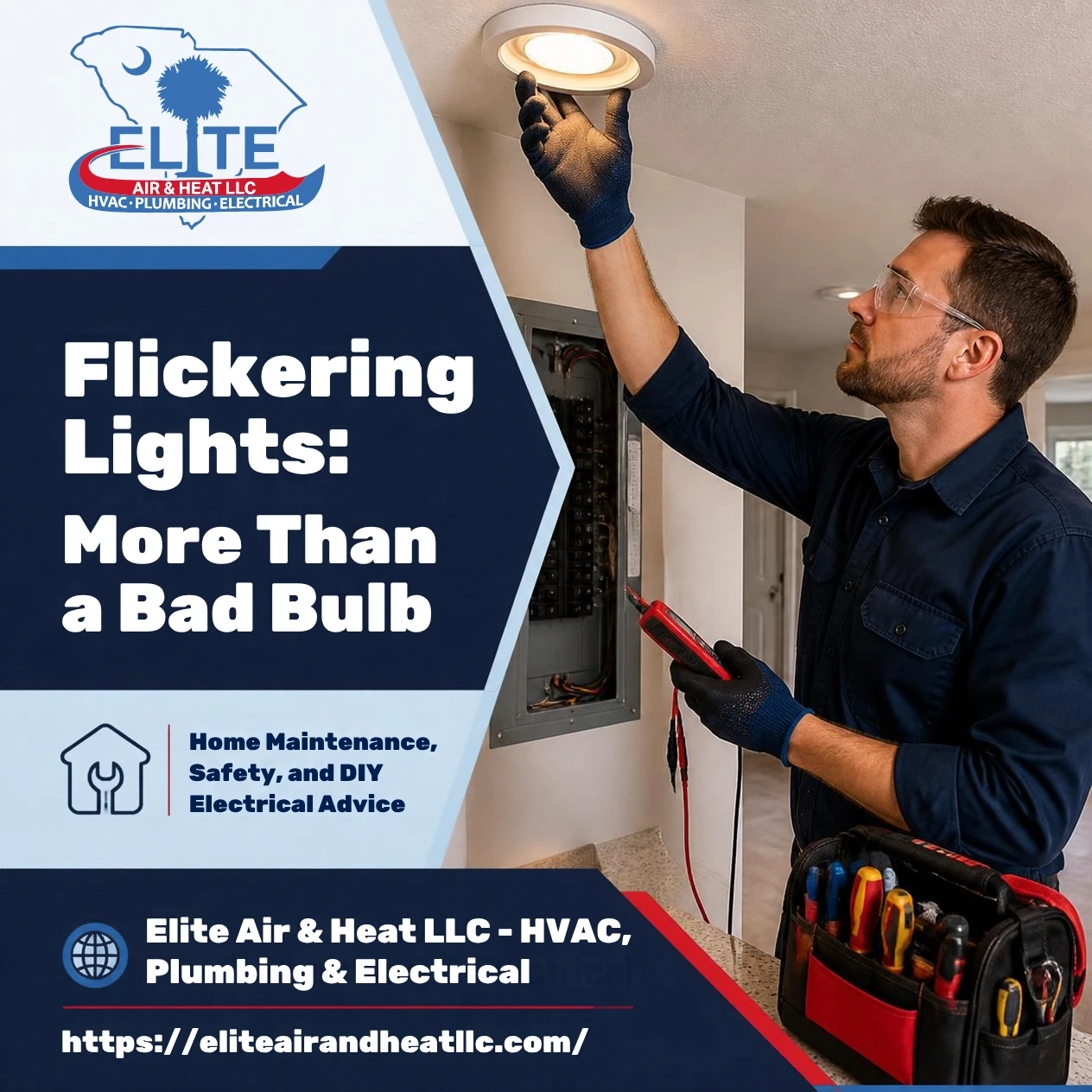
Could the Electrical Panel Be the Problem?
Yes.
In older homes, flickering lights can sometimes be linked to:
- Worn breakers
- Loose breaker connections
- Corrosion
- Aging electrical panels
- Improper previous repairs
A good electrician should inspect the panel whenever flickering affects multiple areas of the home.
The goal is not to replace the panel automatically.
The goal is to understand whether the panel is contributing to the problem.

Tankless vs. Tank Water Heaters: The “Rock Hill Water Quality” Battle
Both tank and tankless water heaters can work well in Rock Hill, but tankless systems are usually more sensitive to…

What Homeowners Can Safely Check
Before calling an electrician, you can safely check:
Whether One Light or Multiple Lights Are Affected
This helps narrow down the cause.
Whether the Flickering Happens at Certain Times
Notice if it occurs when:
- The AC starts
- The dryer runs
- The microwave is used
- Multiple appliances operate simultaneously
The Bulb Itself
Try replacing the bulb with a known good one.
Dimmer Compatibility
If LEDs are installed, verify the dimmer is designed for LED use.
When Not to DIY
Do not:
- Remove panel covers
- Tighten electrical connections inside the panel
- Replace breakers without proper training
- Investigate burning odors inside electrical equipment
This is where homeowners sometimes get into trouble.
Electrical systems can remain energized even when parts of the home appear to be off.
What a Good Electrician Should Inspect
A thorough inspection may include:
- Panel connections
- Breaker condition
- Circuit loading
- Voltage testing
- Service entrance connections
- Switches and receptacles
- Utility voltage issues
- Grounding and bonding
A good electrician should be able to explain what they found and show evidence of the problem before recommending repairs.
When You Should Call Immediately
Schedule an electrical inspection as soon as possible if flickering lights are accompanied by:
- Burning smells
- Hot outlets or switches
- Buzzing sounds
- Frequent breaker trips
- Partial power loss
- Multiple rooms flickering at once
These warning signs suggest something more serious than a bad bulb.
The Bottom Line
If you only remember one thing, remember this:
A single flickering light is often a fixture problem. Multiple flickering lights can be an electrical system problem.
The difference matters.
Before assuming it’s just an annoying bulb, pay attention to where the flickering occurs, when it happens, and whether other warning signs are present.
A good electrician should be able to identify whether you’re dealing with a simple repair, a loose connection, a panel issue, or a larger electrical problem before you spend money on unnecessary upgrades.
Lights Keep Flickering? Get Help Fast!
Don't wait for a bigger electrical problem. Schedule a professional inspection today!