
It seems backward.
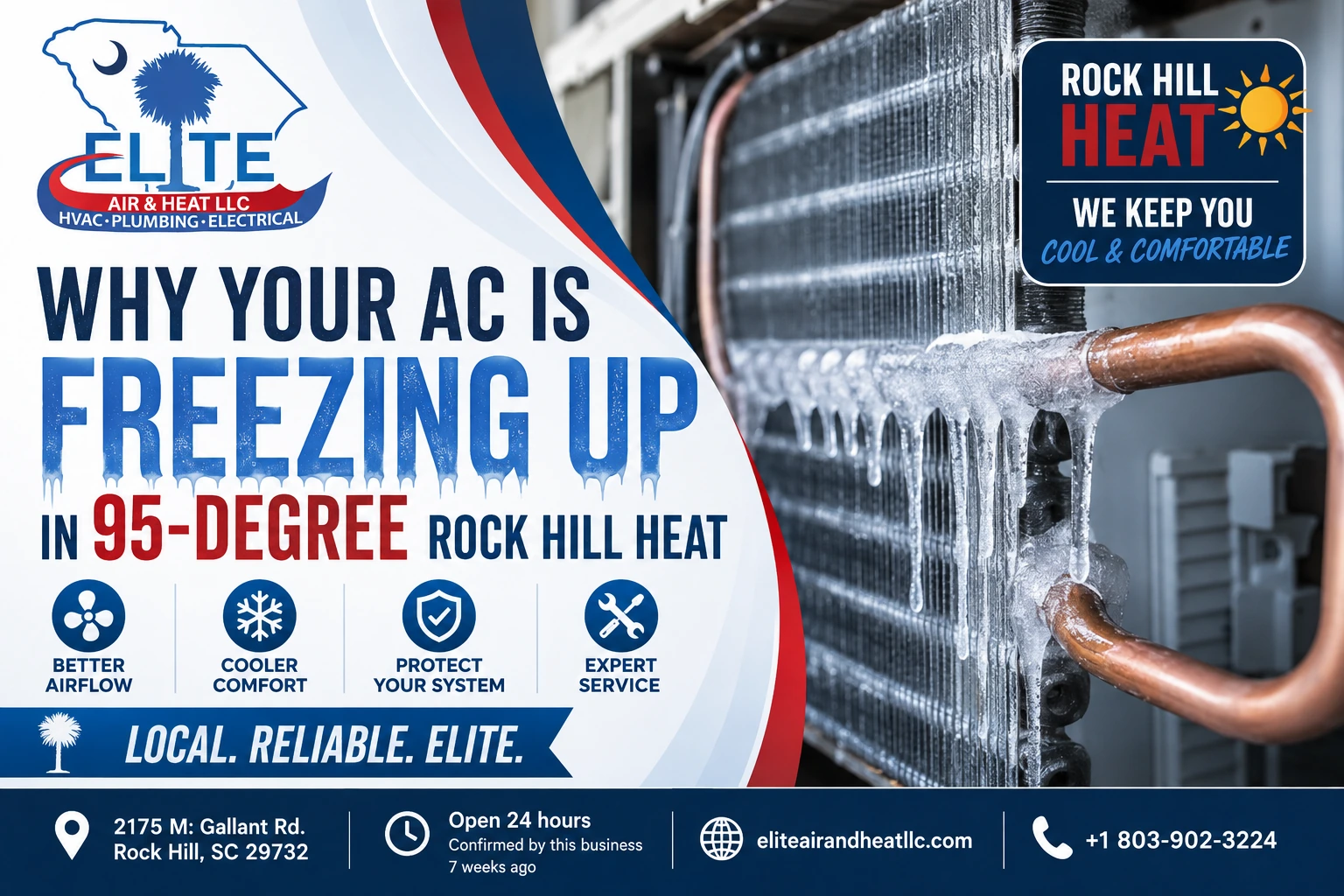
It’s 95 degrees outside, your air conditioner has been running all day, and then you discover ice covering the refrigerant line, indoor coil, or even the outdoor unit.
Many homeowners assume that means the AC is working extra hard.
Usually, it means the opposite.
Here’s the plain answer: an air conditioner freezes when something causes the evaporator coil to get too cold. The most common causes are restricted airflow, low refrigerant, a dirty filter, a blower problem, or a clogged coil.
And no, freezing does not automatically mean you need a new system.
Ice on Your AC? Act Fast.
A freezing AC can signal airflow or system problems that need attention. Call now for professional diagnosis and dependable repair.
Why an AC Can Freeze When It’s Extremely Hot Outside
Your AC cools the home by absorbing heat from indoor air.
The evaporator coil inside your home gets cold, and warm air passes across it.
When everything is working properly:
- Airflow stays strong
- The coil stays above freezing
- Moisture drains away normally
When airflow drops or refrigerant levels become incorrect, the coil temperature can fall below 32 degrees.
Moisture that normally drains away turns into ice.
Once ice starts forming, airflow gets even worse, creating a cycle that causes more freezing.
The Most Common Cause: Restricted Airflow
In many service calls, the problem starts with airflow.
Common airflow issues include:
Dirty Air Filters
A clogged filter can dramatically reduce airflow through the system.
This is the first thing homeowners should check.
If the filter looks dirty, replace it and allow the system to thaw completely before restarting.
Blocked Supply or Return Vents
Furniture, rugs, or closed vents can restrict airflow.
Many homeowners close vents in unused rooms thinking it saves money.
Sometimes it actually reduces airflow enough to contribute to freezing.
Dirty Evaporator Coil
Over time, dust can build up on the indoor coil.
The coil becomes insulated from the airflow it needs.
The result is colder coil temperatures and potential icing.
Blower Motor Problems
A failing blower motor may not move enough air across the coil.
The system can continue running while the coil slowly freezes.
Low Refrigerant Is Another Common Cause
Low refrigerant often gets blamed immediately, but it is not the only reason an AC freezes.
When refrigerant levels drop because of a leak:
- Pressure inside the system drops
- Coil temperatures drop
- Ice begins forming
If the refrigerant is low, simply adding more refrigerant is not the real fix.
A good technician should identify and repair the leak first.
Otherwise, the problem usually returns.
Signs Your AC May Be Freezing Up
Watch for:
- Ice on the copper refrigerant line
- Ice around the indoor coil
- Weak airflow from vents
- Warm air despite the system running
- Excessive runtime
- Water around the indoor unit after thawing
Many homeowners first notice the house feels warmer even though the AC never shuts off.

Top 5 HVAC Systems for Rock Hill Homes in 2026
The “best” HVAC system for a Rock Hill home in 2026 depends less on brand hype and more on: South…

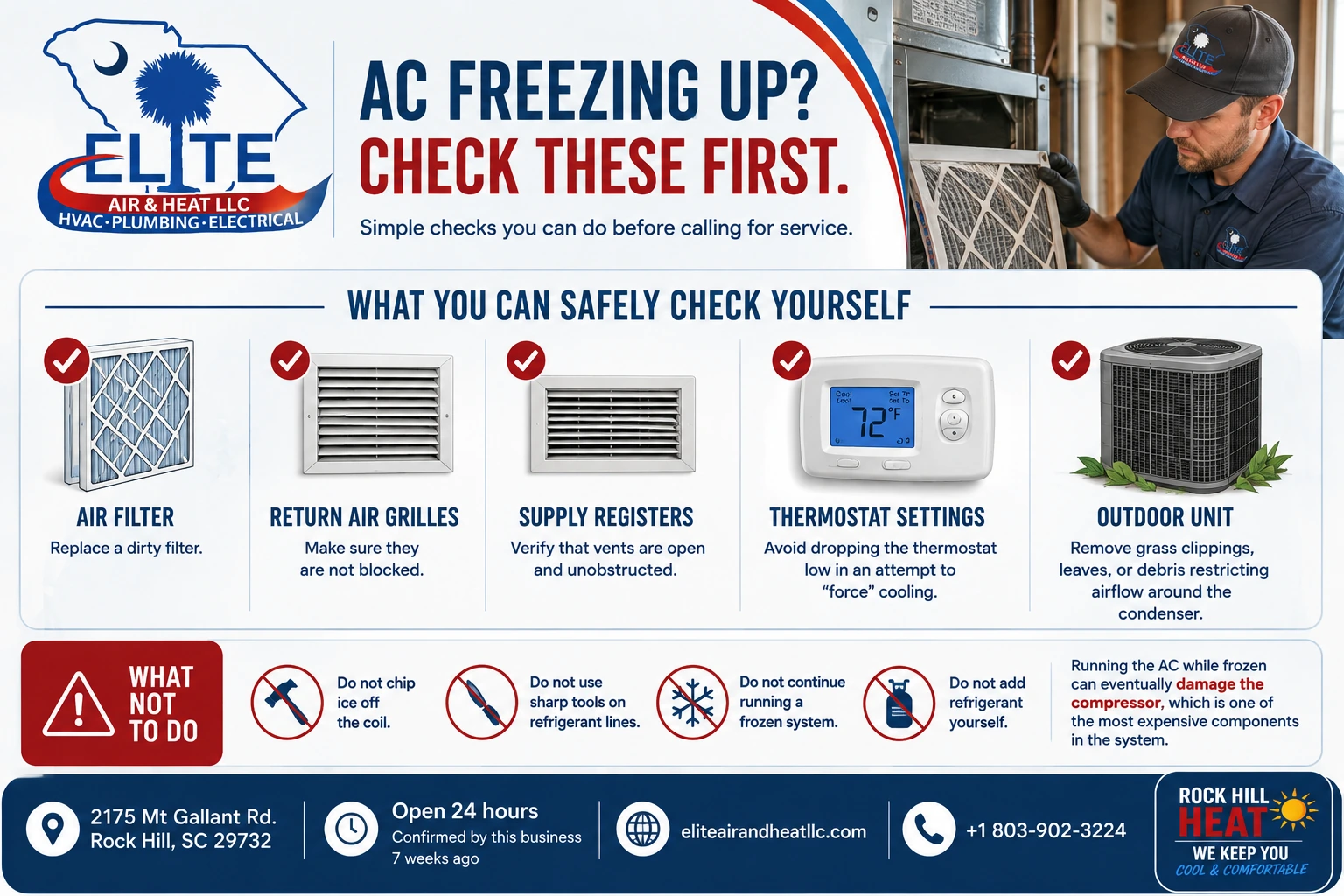
What You Can Safely Check Yourself
Before calling for service, check:
Air Filter
Replace a dirty filter.
Return Air Grilles
Make sure they are not blocked.
Supply Registers
Verify that vents are open and unobstructed.
Thermostat Settings
Avoid dropping the thermostat dramatically lower than normal in an attempt to “force” cooling.
Outdoor Unit
Remove grass clippings, leaves, or debris restricting airflow around the condenser.
What Not to Do
This is where homeowners sometimes get into trouble.
Do not:
- Chip ice off the coil
- Use sharp tools on refrigerant lines
- Continue running a frozen system
- Add refrigerant yourself
Running the AC while frozen can eventually damage the compressor, which is one of the most expensive components in the system.
What a Technician Should Inspect
A proper diagnosis usually includes:
- Airflow measurements
- Static pressure testing
- Refrigerant pressures
- Leak inspection
- Blower performance
- Evaporator coil condition
- Condensate drainage
- Thermostat operation
A good technician should be able to show you why the system froze instead of simply recommending parts.
When Freezing May Indicate a Bigger Problem
Occasional freezing can come from something simple like a dirty filter.
Repeated freezing often points to:
- Refrigerant leaks
- Undersized ductwork
- Severely restricted airflow
- Failing blower components
- Aging equipment
- Improper installation
If the issue keeps coming back, replacing filters repeatedly will not solve the underlying problem.
The Bottom Line
If you only remember one thing, remember this:
An AC freezes because it is getting too cold, not because it is cooling too well.
In 95-degree Rock Hillheat, the most common causes are restricted airflow and refrigerant-related issues. Before assuming you need a replacement, check the filter, allow the system to thaw, and have the system properly diagnosed.
The goal is not to buy the biggest repair. The goal is to understand why the coil is freezing in the first place.
If the freezing keeps returning, it is worth having the system inspected before replacing parts blindly.
AC Freezing Up in the Heat?
Get fast, professional AC troubleshooting before the problem gets worse. Call now for reliable service and cooling you can count on.