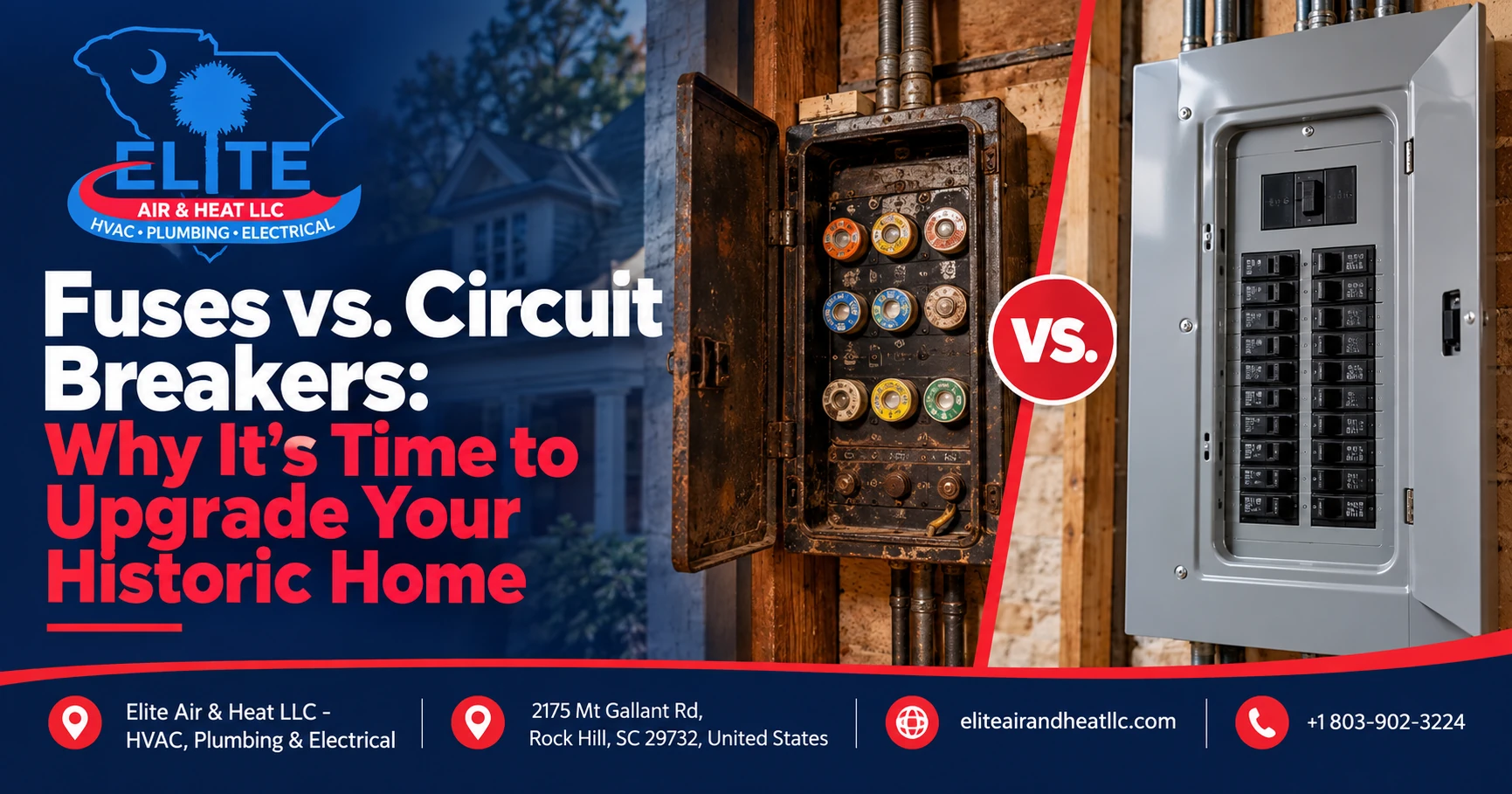

Walk into the basement or utility room of some older homes and you may find something that looks more like a museum piece than a modern electrical panel.
Instead of breakers, you’ll see rows of screw-in fuses.
If your home still has a fuse box, you’re not alone. Many historic homes were built long before today’s electrical demands existed.
The question is whether that old fuse panel is simply outdated or becoming a safety concern.
Here’s the plain answer: a properly functioning fuse system is not automatically unsafe. The problem is that most historic homes now use far more electricity than those systems were designed to handle. In many cases, the issue isn’t the fuses themselves. It’s the age, capacity, and limitations of the entire electrical system.
What’s the Difference Between a Fuse and a Circuit Breaker?
Both devices perform the same basic job.
They protect wiring from overheating when too much electricity flows through a circuit.
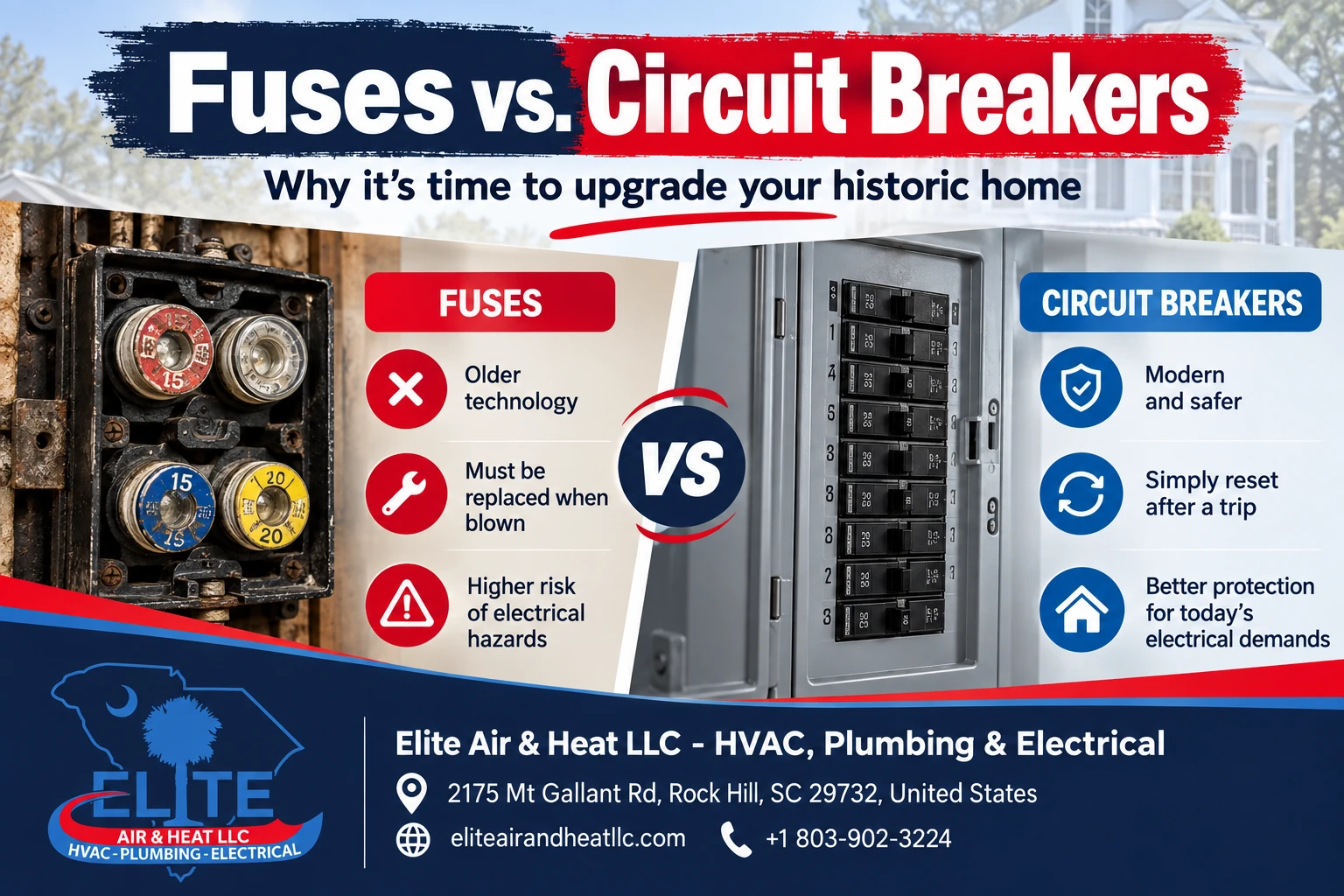
A Fuse
When a fuse experiences excessive current, a small metal element inside melts and breaks the circuit.
Once it blows, it must be replaced.
A Circuit Breaker
A breaker trips when excessive current is detected.
Instead of replacing it, you simply reset it after the problem has been addressed.
Neither system is inherently dangerous when operating properly.
The differences appear when you look at convenience, capacity, and modern safety features.
Why Historic Homes Struggle With Fuse Panels
Most older fuse panels were designed for a very different lifestyle.
Many historic homes were built before:
- Central air conditioning
- Heat pumps
- EV chargers
- Multiple televisions
- Home offices
- Large kitchen appliances
- Modern entertainment systems
A home that originally used a few lights and small appliances may now be expected to power dozens of electronic devices.
This is where homeowners sometimes get into trouble.
The electrical system may still technically work while operating beyond what it was originally designed to support.
The Biggest Safety Concern: Oversized Fuses
One of the most common dangers isn’t the fuse panel itself.
It’s what previous homeowners may have done to keep it working.
When a fuse blows repeatedly, some people install a larger fuse instead of fixing the overloaded circuit.
For example:
- A circuit designed for a 15-amp fuse receives a 20-amp or 30-amp fuse.
- The fuse stops blowing.
- The wiring remains undersized.
Now the wiring may overheat before the fuse provides protection.
A good electrician should inspect this immediately.
Modern Safety Features Fuse Panels Don’t Have
Most fuse systems lack safety features that are standard today.
Modern breaker panels can incorporate:
- AFCI protection (arc-fault protection)
- GFCI protection (shock protection)
- Whole-home surge protection
- Better grounding systems
- Easier circuit identification
- Expanded circuit capacity
These upgrades don’t just improve convenience.
They improve safety.
Signs Your Historic Home May Need an Upgrade
Consider an electrical evaluation if you have:
- Frequently blown fuses
- Flickering lights
- Warm outlets
- Two-prong receptacles
- Extension cords used permanently
- Limited outlet availability
- Window AC units on overloaded circuits
- Plans for an EV charger
- Plans for major renovations
These issues often indicate the home’s electrical demands have outgrown the original system.
Cost of Upgrading From Fuses to Breakers
The cost depends on the home’s condition.
Typical projects may include:
| Upgrade | Typical Cost Range |
| Panel replacement only | $2,000–$4,500+ |
| Panel plus service upgrade | $3,500–$8,000+ |
| Panel upgrade with additional circuits | $5,000–$12,000+ |
| Extensive historic-home electrical modernization | $10,000–$25,000+ |
Actual costs depend on:
- Service size
- Panel location
- Existing wiring condition
- Utility requirements
- Permit requirements
- Additional circuit needs
The cheaper option is not always wrong, but it should make sense.
Sometimes a panel upgrade solves the problem. Sometimes the wiring throughout the home also needs attention.
Does Every Historic Home Need a Full Rewire?
No.
This is one of the biggest misconceptions.
A fuse panel does not automatically mean the entire home must be rewired.
Many homes benefit from:
- Panel replacement
- Service upgrades
- Additional circuits
- Grounding improvements
- Targeted wiring upgrades
A good electrician should evaluate the entire system before recommending a full rewire.
What a Good Electrical Inspection Should Include
Before recommending upgrades, an electrician should inspect:
- Fuse panel condition
- Service size
- Grounding system
- Circuit loading
- Wiring type
- Signs of overheating
- Previous modifications
- Future electrical needs
The goal is not to sell the biggest project.
The goal is to understand whether the electrical system can safely support how the home is used today.
The Bottom Line
If you only remember one thing, remember this:
The biggest problem with fuse panels is usually not the fuses themselves, it’s that the rest of the electrical system was designed for a different era.
A well-maintained fuse system may continue operating safely, but many historic homes have outgrown their original electrical capacity.
If you’re experiencing blown fuses, adding major appliances, planning renovations, or simply wondering whether your system is keeping up, a professional electrical inspection is the next step.
A good electrician should be able to explain what is safe, what needs improvement, and whether a panel upgrade alone will solve the problem or whether a larger modernization plan makes more sense.