
When storms roll through South Carolina, the question is not always, “Will the power go out?”
It is often, “How long can my home safely function if it does?”
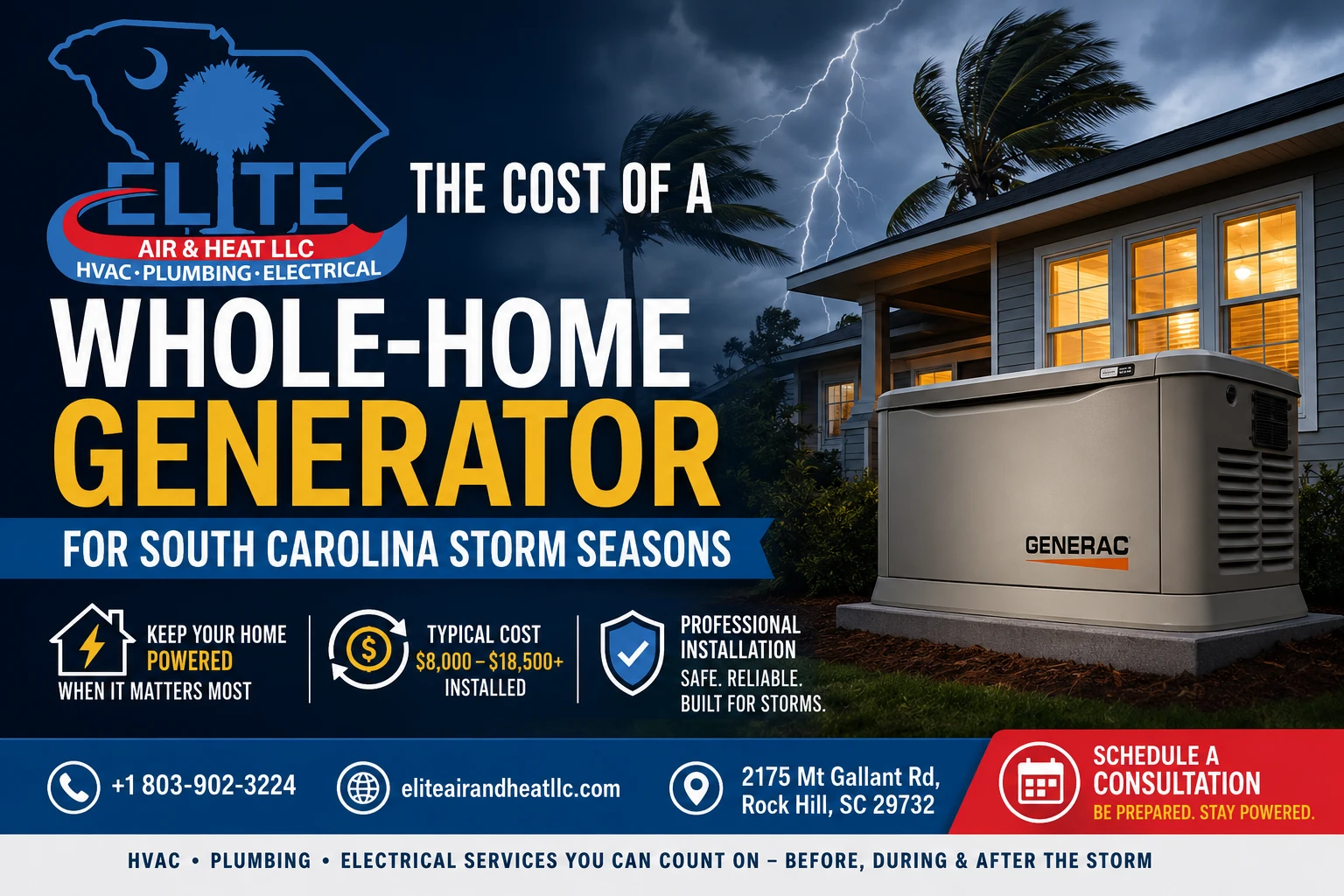
Here’s the plain answer: a professionally installed whole-home standby generator in South Carolina often costs somewhere around $8,000 to $18,500, depending on generator size, fuel setup, transfer switch, electrical work, permits, and how much of the home you want backed up. National cost guides commonly show broad installed ranges from about $6,000 to $25,000, with larger or more complex installs costing more.
Be Ready Before the Next Storm Hits
Protect your home from unexpected outages with a professionally installed whole-home generator. Call now to get started.
Why South Carolina Homeowners Consider a Generator
South Carolina storm season can bring hurricanes, tropical storms, severe thunderstorms, fallen trees, and long utility delays. Even in a quieter hurricane season, one bad storm can still create a serious outage. NOAA’s 2026 Atlantic outlook calls for 8 to 14 named storms, 3 to 6 hurricanes, and 1 to 3 major hurricanes, and the Atlantic hurricane season runs from June 1 through November 30.
For some homes, a generator is mainly about comfort.
For others, it protects refrigerated medication, medical equipment, sump pumps, wells, security systems, home offices, or elderly family members during an outage.
Homes with aging panels or repeated breaker problems should also pay attention to signs of electrical fire risk in your Rock Hill home before adding generator equipment, since existing electrical issues may need to be corrected first.
What Drives the Cost Up or Down?
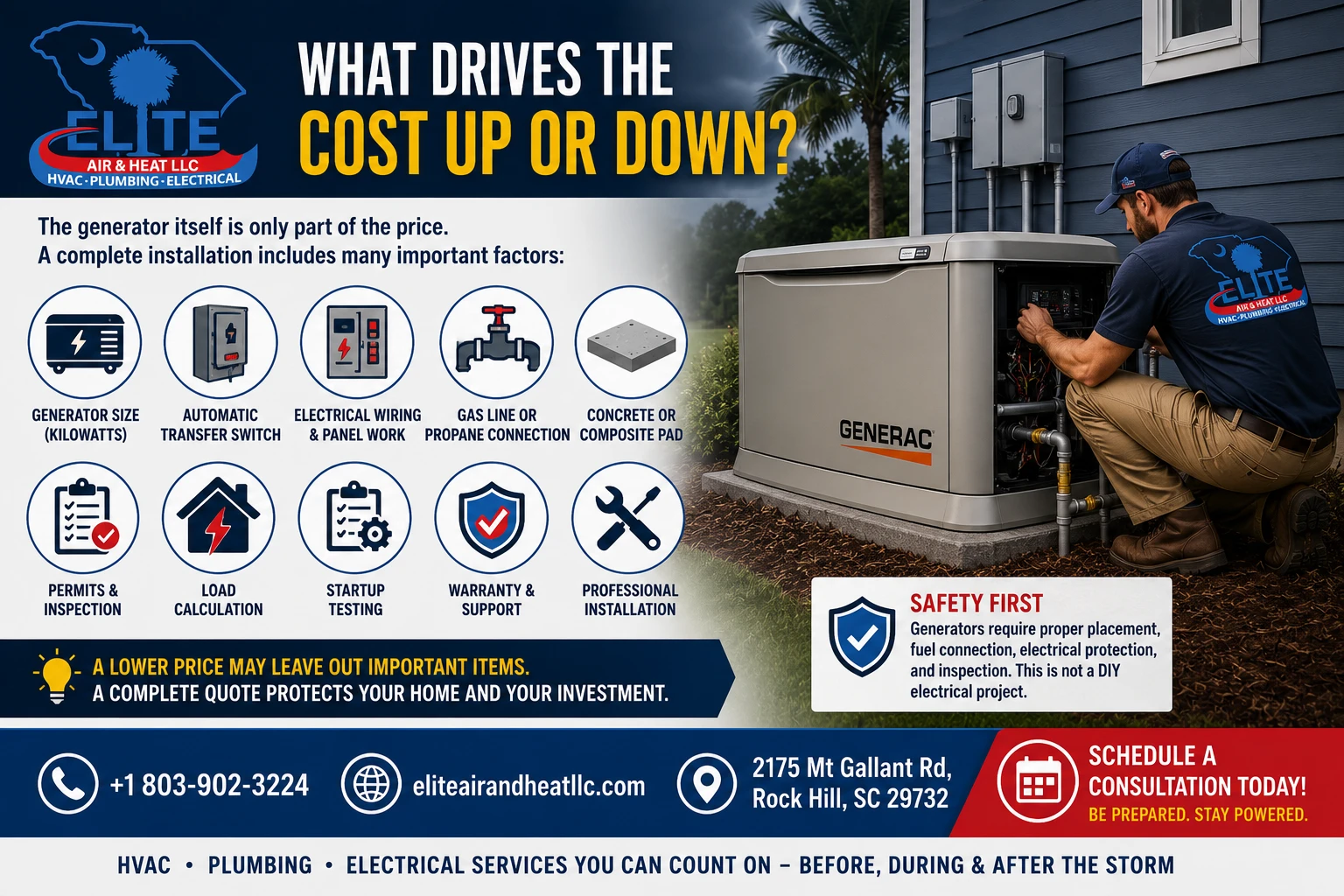
The generator itself is only part of the price.
A good estimate should include:
- Generator size, usually measured in kilowatts
- Automatic transfer switch
- Electrical wiring and panel work
- Gas line or propane connection
- Concrete or composite pad
- Permits and inspection
- Load calculation
- Startup testing
- Warranty and maintenance details
This is where homeowners sometimes get into trouble. A cheaper quote may only include the generator and basic hookup, but leave out gas line upgrades, permitting, load management, or needed electrical corrections.
Whole Home vs. Essential Circuits
Not every house needs every circuit backed up.
Essential-circuit backup may cover the refrigerator, freezer, HVAC blower or selected HVAC equipment, lights, internet, outlets, and medical equipment.
Whole-home backup is designed to run most or all of the house, depending on load size.
The cheaper option is not always wrong, but it should make sense. If the goal is to keep food cold, phones charged, lights on, and one HVAC system running, you may not need the largest generator available.
For homeowners also planning electrical modernization, comparing the smart panel upgrade cost for Tega Cay homes can help determine whether load management or panel improvements should be included with the generator project.

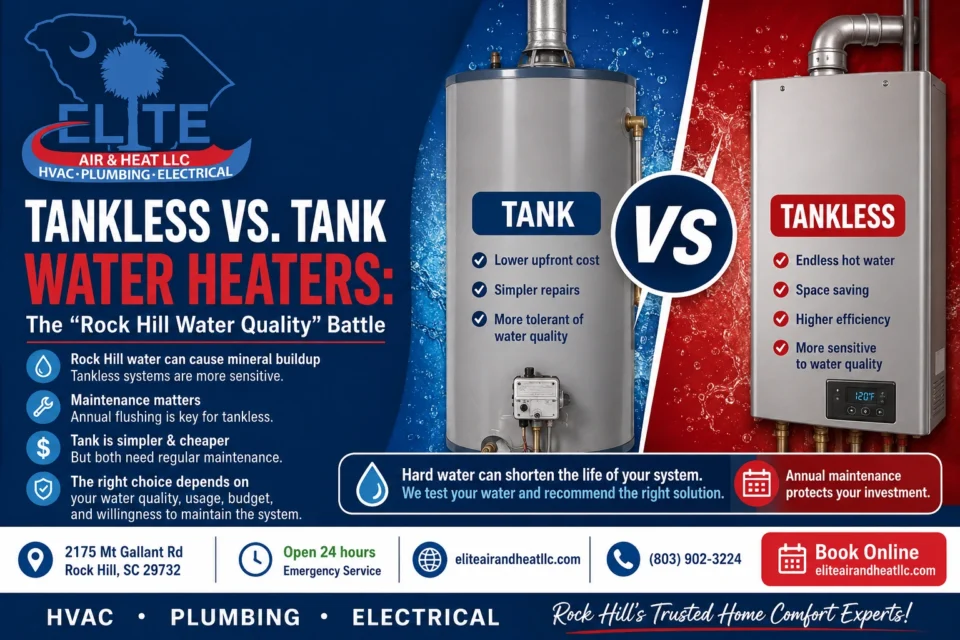
Tankless vs. Tank Water Heaters: The “Rock Hill Water Quality” Battle
Both tank and tankless water heaters can work well in Rock Hill, but tankless systems are usually more sensitive to…
Typical Cost Ranges
| Generator Setup | Common Installed Range | Best Fit |
| Portable generator with manual transfer setup | $1,000–$4,000+ | Short outages, limited circuits |
| Essential-circuit standby generator | $8,000–$13,000+ | Key loads only |
| Larger whole-home standby generator | $12,000–$18,500+ | Most major home systems |
| Complex large-home installation | $18,500–$25,000+ | Large homes, long gas runs, panel upgrades |
These are planning numbers, not a substitute for an on-site estimate.
Safety Matters
Portable generators are a major carbon monoxide risk when used incorrectly. The CPSC warns that storm-related generator use can create deadly carbon monoxide, fire, gas leak, and electrical hazards.
A standby generator still needs proper placement, fuel connection, electrical protection, and inspection. This is not a DIY electrical project.
What a Good Technician Should Check
Before recommending a generator size, a good technician should inspect:
- Main electrical panel capacity
- Utility service size
- Existing gas meter and gas line capacity
- Distance from generator to gas and electrical connections
- HVAC startup load
- Local clearance requirements
- Which circuits actually need backup power
- Whether load management is needed
A good technician should be able to show you why the recommended size fits your home.
The Bottom Line
If you only remember one thing, remember this:
The right generator is not always the biggest one. It is the one sized correctly for the loads you actually need during an outage.
For many South Carolina homes, budgeting $8,000 to $18,500 is a realistic starting point for a standby generator project. The next step is a proper load assessment, not guessing from square footage alone.
A good estimate should explain the equipment, installation work, fuel requirements, permits, and what happens during an actual outage before you approve the job.
Don’t Let the Next Storm Leave You in the Dark
Get dependable whole-home backup power for South Carolina storm season. Call today to discuss the right generator for your home.