
If you live in York County and your drains keep slowing down after heavy rain, summer heat, or long dry periods, the problem may not just be inside your pipes.
In this area, the soil itself often plays a role.
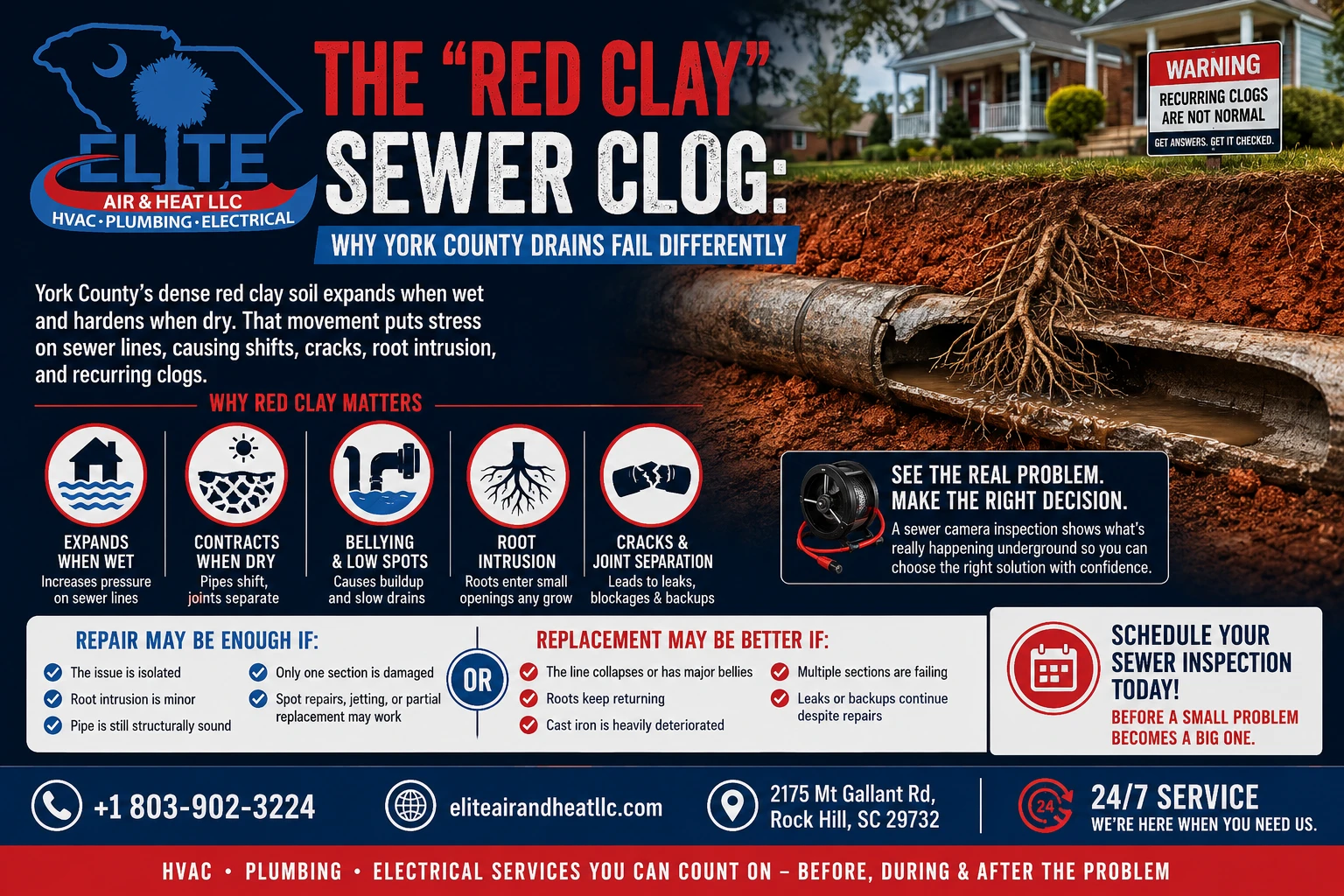
Here’s the plain answer: York County’s dense red clay soil creates unique pressure, drainage, and root conditions that can contribute to sewer line problems differently than sandy or loose-soil regions.
That does not automatically mean you need a full sewer replacement.
But it does mean recurring drain problems here sometimes behave differently than homeowners expect.
Why red clay matters
York County’s well-known red clay soil holds water differently than sandy soil.
It expands when wet and hardens significantly when dry.
That movement affects underground sewer lines over time.
The result can include:
- Pipe shifting
- Bellied sewer lines (low spots where water collects)
- Joint separation
- Cracks
- Root intrusion
- Drainage instability around older pipes
This is especially common in:
- Older homes
- Aging cast iron systems
- Clay sewer pipes
- Homes with large nearby trees
- Areas with repeated wet/dry soil cycles
Why sewer problems often appear after weather changes
Homeowners sometimes notice sewer symptoms:
- after long rainy periods,
- during droughts,
- or during seasonal transitions.
That is not random.
During wet periods:
Clay expands and becomes extremely dense.
This can:
- increase pressure on sewer lines,
- worsen existing weak spots,
- and slow natural groundwater drainage around pipes.
During dry periods:
Clay contracts and hardens.
That movement may:
- shift older pipes,
- separate joints,
- or create small openings where roots begin entering.
This is where homeowners sometimes get into trouble. They clear the same clog repeatedly without investigating why the blockage keeps returning.
Common sewer symptoms in York County homes
Slow drains throughout the house
Usually points toward a main sewer issue rather than a single sink clog.
Gurgling toilets
Can indicate restricted sewer airflow or partial blockage.
Sewage smell outside
May suggest a damaged underground line or leak.
Frequent backups after rain
Often points toward infiltration, root intrusion, or compromised pipe sections.
One drain keeps clogging repeatedly
Sometimes caused by a localized issue, but recurring patterns deserve inspection.
Tree roots and red clay are a bad combination
Roots naturally seek moisture.
When clay soil shifts and tiny pipe openings develop, roots often find their way inside.
Once roots enter:
- they trap debris,
- slow wastewater flow,
- and continue expanding.
Many homeowners assume root problems only happen in older clay pipes.
Not true.
Even newer PVC systems can develop root intrusion if joints separate or installation problems exist.
What a professional should inspect
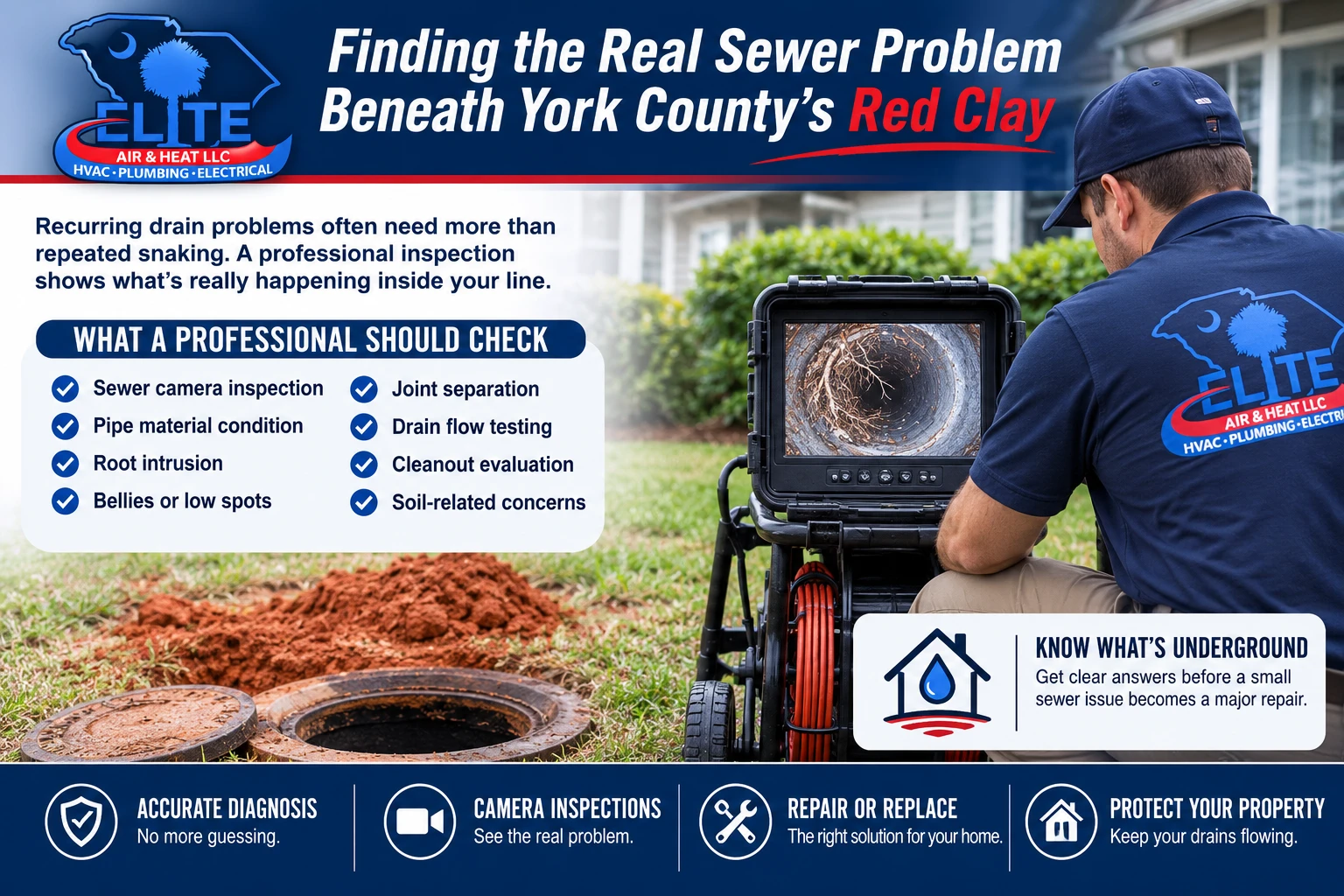
A good plumber should not guess at sewer problems.
A proper sewer evaluation may include:
- Sewer camera inspection
- Drain flow testing
- Pipe material identification
- Root intrusion assessment
- Belly or sag detection
- Offset joint inspection
- Cleanout evaluation
- Moisture and soil-related concerns
A camera inspection is important because two sewer problems can look identical from inside the house while requiring completely different repairs underground.
What homeowners can safely try first
For minor slow drains, homeowners can safely:
- Reduce grease disposal
- Avoid flushable wipes
- Watch for multiple drain symptoms
- Monitor whether backups worsen after rain
- Check accessible cleanouts for overflow signs
Avoid repeatedly using harsh chemical drain cleaners on recurring sewer issues.
They often:
- fail to solve the actual blockage,
- can damage older piping,
- and sometimes make camera inspections harder later.
When repair may be enough
Repair may make sense if:
- the issue is isolated,
- the pipe structure is still solid,
- root intrusion is minor,
- or only one section is damaged.
Spot repairs, hydro jetting, or sectional replacements are sometimes enough.
When replacement becomes more realistic
Replacement discussions become more reasonable when:
- the line collapses,
- major bellies develop,
- roots repeatedly return,
- cast iron deteriorates heavily,
- or multiple sections fail together.
The goal is not to jump straight to excavation.
The goal is to understand whether you have:
- a simple blockage,
- a maintenance issue,
- a root problem,
- or a structurally failing sewer line.
The bottom line
York County sewer problems often involve more than just “a clog.”
The region’s red clay soil creates movement, pressure, and drainage conditions that can stress underground sewer systems differently over time.
If you only remember one thing, remember this:
A recurring sewer clog that keeps coming back after snaking usually deserves a camera inspection before approving repeated drain cleaning visits blindly.
A good plumber should be able to show you what is actually happening inside the line and explain whether the issue is maintenance, roots, soil movement, repairable damage, or full system failure.